


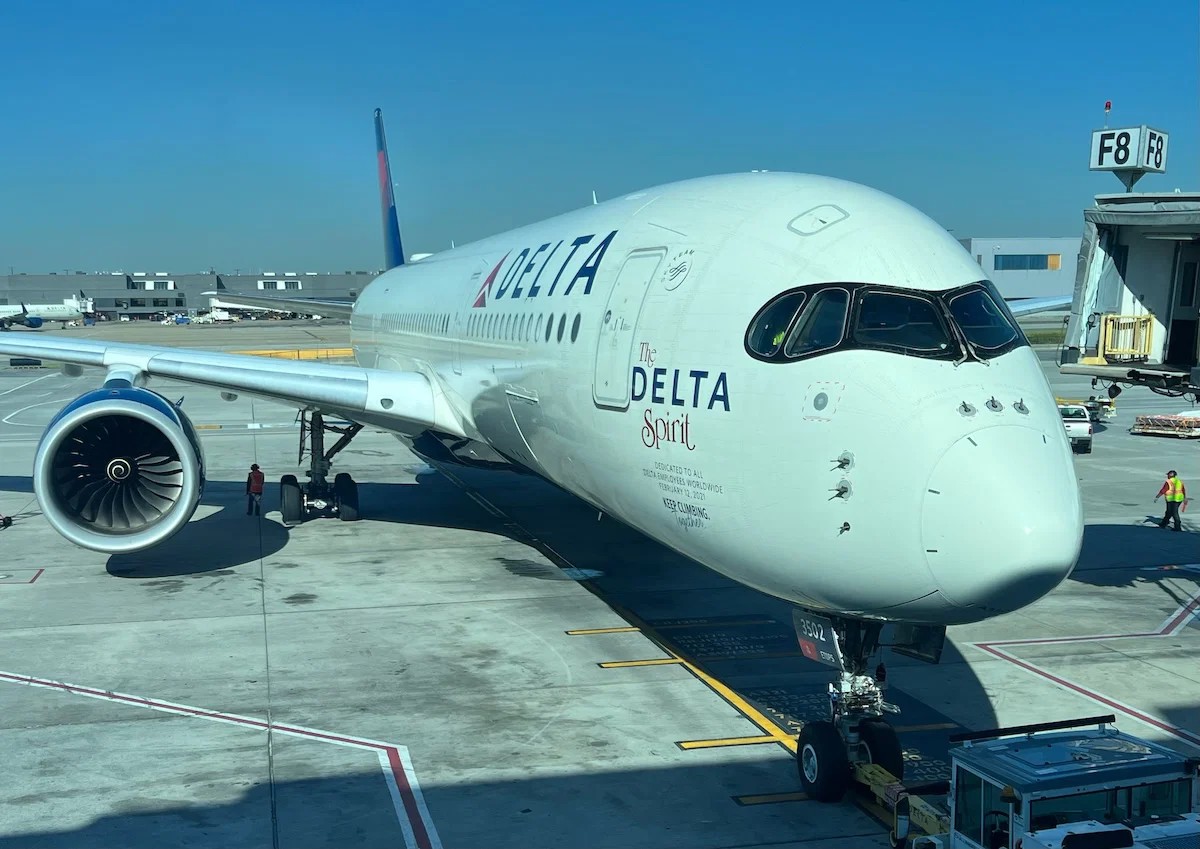
Delta is heading to Riyadh. Or at least, it says it is.
In late 2025 the airline announced nonstop service between Atlanta and the Saudi capital. CEO Ed Bastian has called the Kingdom a personal favorite. He’s also hinted that the route is a strategic play, one likely underpinned by the Air Connectivity Program. That program pays airlines to fly there.
The launch is scheduled for roughly three months out. So here is the million-dollar question: will Delta actually turn the engines on? Or is this just another expensive delay waiting to happen?
The seat map tells a different story
Bastian claims Delta’s long-haul network hits 50–60% booking rates 90 days before departure. That sounds healthy. Standard. Professional.
Now look at the data for Atlanta to Riyadh.
We are approaching that 90-day window. Public seat maps don’t show true load factors. But they are a decent proxy, especially on Delta long-haul flights where seat selection isn’t strictly monetized upfront. If the seat map shows a ghost ship, it’s probably mostly a ghost ship.
Let’s strip away the inaugural flight on October 23. We ignore that for the media circus. Look at the next eight days:
- Oct 24: 5 seats taken
- Oct 25: 1 seat taken
- Oct 26: 0 seats taken
- Oct 27: 0 seats taken
- Oct 28: 2 seats taken
- Oct 29: 0 seats taken
- Oct 30: 0 seats taken
- Nov 1: 0 seats taken
That is eight seats across eight flights. An average of one passenger per flight.
One.
You can try to spin this. You can argue that business travel hasn’t kicked in. You can say the demand curve is just lagging. But even if demand surged by 1000% tomorrow, we’d still be looking at a very thin passenger manifest. It’s not promising.
Empty planes with a massive price tag
New routes are never profitable in week one. That’s industry dogma. You build the habit. You wait for the leisure travelers and the government contracts to fill the seats.
But there is a difference between “ramping up slowly” and “starting at zero.”
I have spent years staring at aviation data. I have never seen a scheduled commercial route look this barren this far out. The operating costs are brutal. Fuel burns. Crews sleep. Maintenance costs rack up regardless of who sits in row 4A.
There is no economic reality where this flight makes money on ticket sales alone. It will bleed cash. Immediately.
Why fly empty? The subsidy factor
You might be asking, “Why would Delta do this?”
Look at the Middle East security landscape. Riyadh is safer than Doha. Safer than Dubai. It’s further from the Iranian border. In theory, Delta could capture the risk-averse Saudi traveler who doesn’t want to connect through a conflict zone. The origin-and-destination traffic should be there.
But it’s not showing up on the board.
Enter the subsidies. The Saudi government is incentivizing carriers. They are paying for the seats that don’t exist. Delta is chasing these subsidies because they know the underlying demand is weak.
Is the subsidy enough to turn a loss into a profit? If yes, maybe I should quit this job and start my own airline. If no, then Delta is essentially flying empty planes to collect a government check.
The bottom line
Delta is three months from launch. Bastian says 50–60% load factors are normal at this stage. The data shows 1%.
Seat maps aren’t perfect. They are snapshots, not final truths. But they rarely lie by an order of magnitude. One expects a delay. One expects a postponement when the numbers look this bad.
But subsidies change the math. If the payout from Riyadh is big enough, maybe Delta keeps flying. They keep burning jet fuel. They keep sending those empty Boeing 767s south.
We’ll see if the money runs out before the planes do.


