Etihad Airways is embarking on one of the most significant regional expansions in its history, dramatically increasing its footprint in mainland China. Moving from a single destination to six, the Abu Dhabi-based carrier plans to scale its service from seven weekly flights to 35 weekly flights over the next two years.
This aggressive growth strategy signals a major bet on the UAE–China economic corridor, aiming to position Abu Dhabi as a primary transit hub connecting China to the Middle East, Africa, Europe, and North America.
The Expansion Roadmap
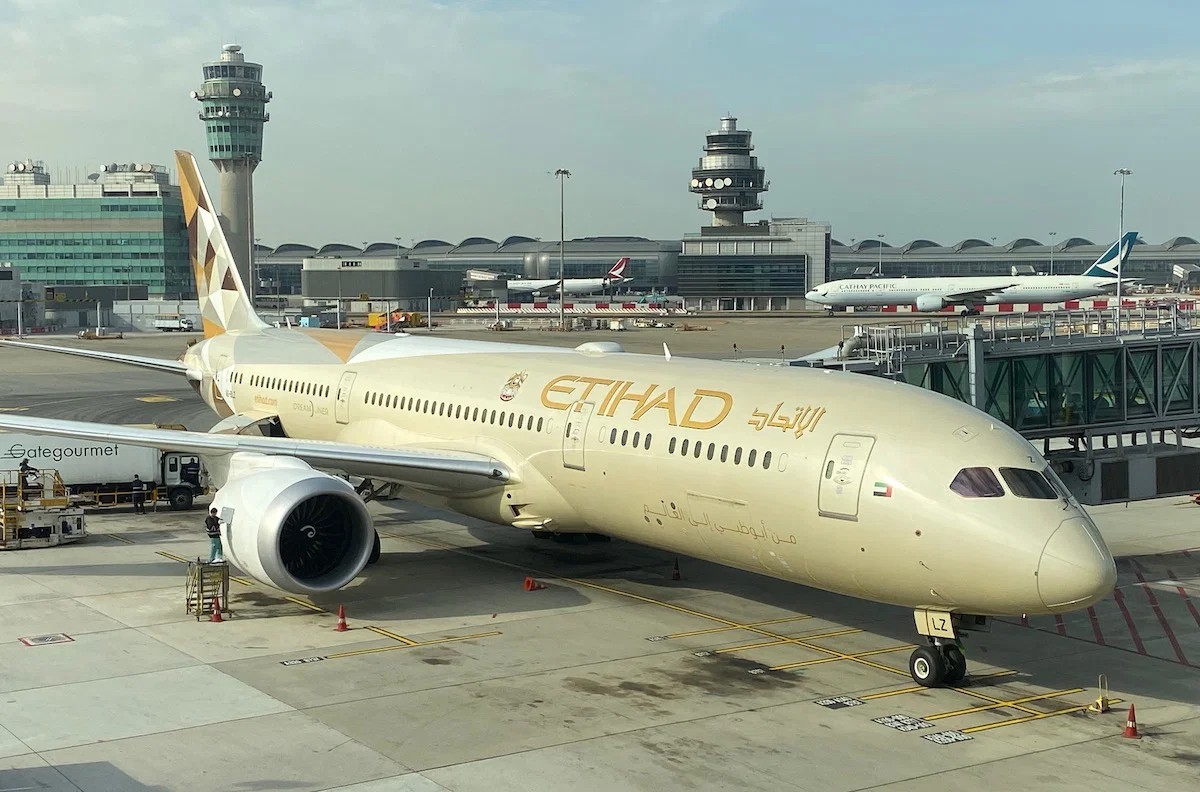
The rollout of these new routes is staggered, beginning in late 2026 and concluding in early 2027. All flights will be operated by Boeing 787-9 aircraft, configured with 290 seats (28 Business Class and 262 Economy Class).
The new flight schedule includes:
- Beijing (PKX): Existing service (7x weekly)
- Shanghai (PVG): Launching October 1, 2026 (7x weekly)
- Guangzhou (CAN): Launching March 4, 2027 (7x weekly)
- Hangzhou (HGH): Launching March 4, 2027 (5x weekly)
- Chengdu (TFU): Launching March 5, 2027 (4x weekly)
- Shenzhen (SZX): Launching March 7, 2027 (5x weekly)
Note: This expansion covers mainland China only and does not include Etihad’s existing services to Hong Kong and Taipei.
Strategic Drivers: Why Now?
This expansion is not merely about adding destinations; it is a calculated move driven by several geopolitical and commercial factors:
1. Regulatory Tailwinds
The scale of this expansion is made possible by recent improvements in bilateral air rights between the United Arab Emirates and China. These agreements have unlocked previously unused flight slots, allowing Etihad to significantly increase its capacity.
2. The China Eastern Joint Venture
Etihad’s growth is bolstered by its joint venture with China Eastern, which allows for coordinated services across major gateways. While China Eastern currently connects several Chinese cities to the UAE, Etihad’s expansion provides a much broader reach into China’s commercial and technological hubs.
3. Competitive Positioning in the Gulf
In the highly competitive Middle Eastern aviation market, Etihad often finds itself competing for market share against giants like Emirates and Qatar Airways. By aggressively expanding in China, Etihad is carving out a dominant niche in a high-value corridor where it can establish a stronger foothold.
Market Risks and Challenges
While the announcement is ambitious, it runs counter to broader industry trends. International travel demand from China has not yet fully returned to pre-pandemic levels, and many Chinese carriers are still working to restore their global capacity.
Furthermore, this expansion requires significant wide-body aircraft capacity. As Etihad allocates more Boeing 787s to the Chinese market, it faces an opportunity cost, potentially limiting its ability to expand long-haul services to other global regions.
“China is a strategically important market for Etihad and a key pillar of our network growth,” stated CEO Antonoaldo Neves. “This expansion represents a significant increase in capacity and a clear signal of our long-term commitment to the market.”
Conclusion
By pivoting heavily toward mainland China, Etihad is attempting to capitalize on strengthening diplomatic and trade ties between the UAE and China. If successful, this move will solidify Abu Dhabi’s role as a vital gateway for global trade and tourism, though the airline must navigate a complex and still-recovering international market.