Close calls in commercial aviation usually happen near airports. You know, the messy, congested airspace where towers are shouting instructions and planes are turning hard to land. It’s expected chaos.
So seeing a potential head-on collision at 36,00 feet over the open Atlantic is rare. And frankly, terrifying.
On the early morning of Friday, July 10. 2026, two major carriers almost crossed paths like traffic lights turning red on a two-way street. The Traffic Collision Avoidance System (TCAS) intervened. It saved the day. But you have to wonder how this even happened in the first place?
When the Atlantic Airway System Fails
The Aviation Herald picked up the details. At 1:23 AM UTC.
Two jets. One heading southwest from Madrid. One heading northeast from Recife.
An Air Europa Boeing 787 (Flight UX57). And an Iberia Airbus A331XLR (Flight IB140). They were flying airway N857. A specific track in the sky running between ETIBA and BIPAT reporting points off the West African coast.
Usually, planes on this track follow a strict rule. Westbound traffic flies at even thousands. 3600. 38000. Eastbound takes the odds. 3500. 3700. It’s a buffer. A vertical separation layer built to keep metal out of the way.
Oceanic airspace isn’t always perfect though. The system glitched or a human messed up because both planes were squashed together at the same level. 360 feet. Head-on.
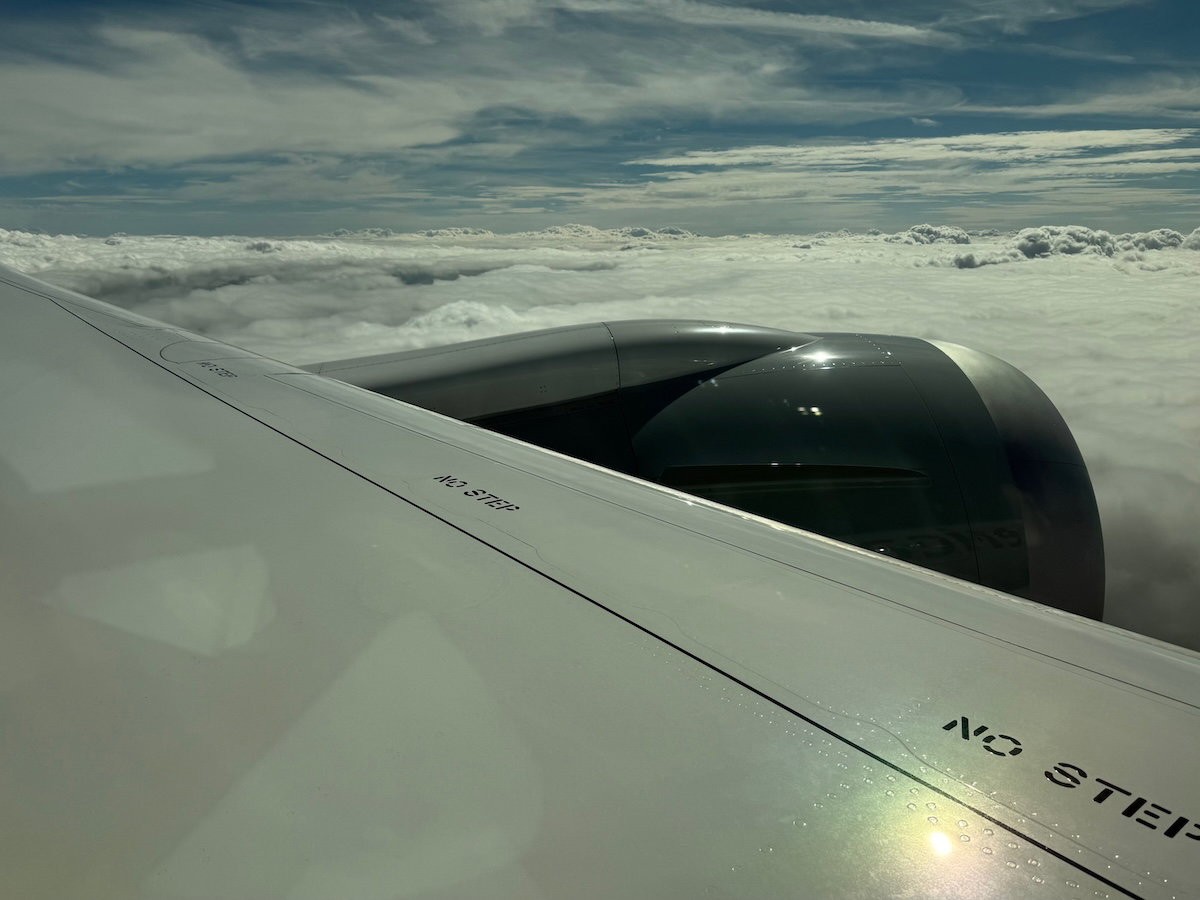
Imagine feeling your stomach drop as your jet suddenly pitches up, or dives down, while cruising comfortably at altitude. Passengers don’t need an announcement. The physics does the talking.
The TCAS screamed. Resolution advisories (RAs) flashed in both cockpits. The Air Europa jet climbed. The Iberia plane dove. It was a synchronized dance to avoid catastrophe. Both landed safely later. No one died. The planes didn’t kiss. But the margin for error was effectively zero.
Why Did They Collide Vertically?
You might ask why these two planes were on a collision course. Were they traveling the same path in opposite directions? Yes.
That means they were closing in at roughly 1000 mph combined. Assuming cruise speed around 500 knots each, that is fast. Too fast for visual confirmation. You can’t see another plane until it’s a bright light in the darkness, if that. By then. It is too late.
Who dropped the ball?
Pilot error? Air Traffic Control mistake?
The data suggests something weirder. The Iberia Airbus started at 36.0. Then the TCAS hit. It dropped to 35.0. Then climbed to 37.0. And eventually to 38.0000 feet. The rapid sequence of altitude changes points to a clearance mix-up. Perhaps the ATC issued bad instructions over radio comms that are notoriously staticky in the middle of the ocean. Maybe a transponder malfunction. Maybe someone just forgot the basic east-west rule.
It highlights a flaw. Even with automation, the sky relies on humans reading maps and radios correctly. And humans are terrible at consistency.
How TCAS Prevents Catastrophe
What actually saves the passengers is TCAS.
For the uninitiated. This isn’t a navigation system. It doesn’t care about waypoints. It cares about traffic. The system listens for nearby transponders. It calculates relative speed and closure rates. When the gap gets tight, it issues commands. Climb. Descend. Level off.
It doesn’t negotiate.
If you have an RA, you obey it immediately. Ignoring a TCAS alert is a massive regulatory violation. And potentially negligent. In this case. The Air Europa pilot pulled up. The Iberia pilot pushed down. The gap opened up. Crisis averted.
But the “bottom line” is unsatisfying.
We assume safety is guaranteed because we buy the ticket. We board. We recline the seat. We sleep. We forget that above the clouds. It’s just wind and wire. Two 50-ton missiles flying in the same direction on a global network.
The fact that this happened. In 2026. On established routes. Suggests the buffer isn’t as solid as we think.