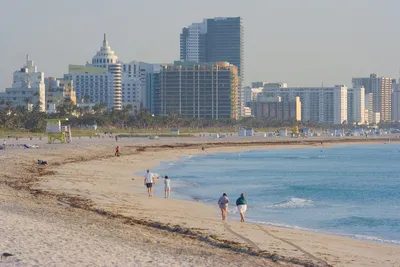
It wasn’t always this way. Before the high-rises, the neon, and the crowds, the land now known as Miami Beach was little more than a tangled mangrove swamp.
For centuries, it was home to the Tequesta people and later the Seminole. But if you walked here in the early 1900s, you’d see something else entirely. Growers were trying to plant coconut trees. They failed. Avocados? Those took root. It was a humid, wet place that felt forgotten by the mainland.
Then came the developers.
John S. Collins, Carl Fisher, and the Lummus brothers (John and James) saw potential where others saw mud. They didn’t just buy land. They built infrastructure. A bridge was constructed across Biscayne Bay to connect the island to Miami. By 1920, a causeway followed.
This wasn’t just a road. It was a lifeline.
With access came dredging. Workers pulled up mud to expand the island’s footprint. The shoreline changed shape. The geography itself was altered by human hands.
In 1915, the town incorporated. It had a simple name then: Ocean Beach.
One year later, the identity shifted. The name changed to Miami Beach.
It sounds like a branding decision. It was a declaration of intent. The swamp was gone. The city was born. Today, that history sits beneath the sand and steel of one of America’s most famous coastal cities.
The Depression, The War, and The Deco Boom
The city’s early expansion hit a wall. It wasn’t just one thing. It was a brutal combination of the Florida land boom collapsing, a terrifying hurricane in 1926, and the global economic crash. By the mid-1930s, things looked bleak. Then came the reversal.
Art Deco construction changed everything.
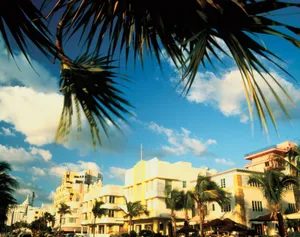
These weren’t just pretty facades. They were economic lifelines. The city began to look like the Miami Beach we know today because of this architectural shift. But the peace didn’t last. World War II interrupted the tourist trade immediately. Most hotels were seized by the military. Army trainees filled every room.
This requisition had a strange side effect. It popularized the city. People who never planned to visit suddenly had a reason to be there. They saw the streets. They saw the ocean.
When the war ended, the boom returned with force.
The region solidified its status as a dual-purpose destination. It became a hotspot for retirees and tourists alike. The infrastructure built for soldiers transitioned into infrastructure for vacationers.
The requisition of hotels for army trainees during WWII unexpectedly popularized the city among the general public.
Why Art Deco Matters for Your Trip
You can still see the results of that 1930s construction wave today. The architecture isn’t just decorative history. It defines the character of the neighborhood.
When planning your visit, look for the pastel colors and geometric lines. These buildings were constructed when the city’s fortunes reversed. They are concentrated in specific areas. Knowing where to look helps you appreciate the context.
The post-war growth shaped the modern experience. You are walking through streets designed for a retirement community that also welcomed visitors. The logistics of getting around reflect this dual purpose.
It is a landscape built on survival and rebirth. The hurricane and depression tried to stop it. The war tried to pause it. The Art Deco movement gave it style. The post-war era gave it scale.
Why Miami Beach Is More Than Just a Party Town
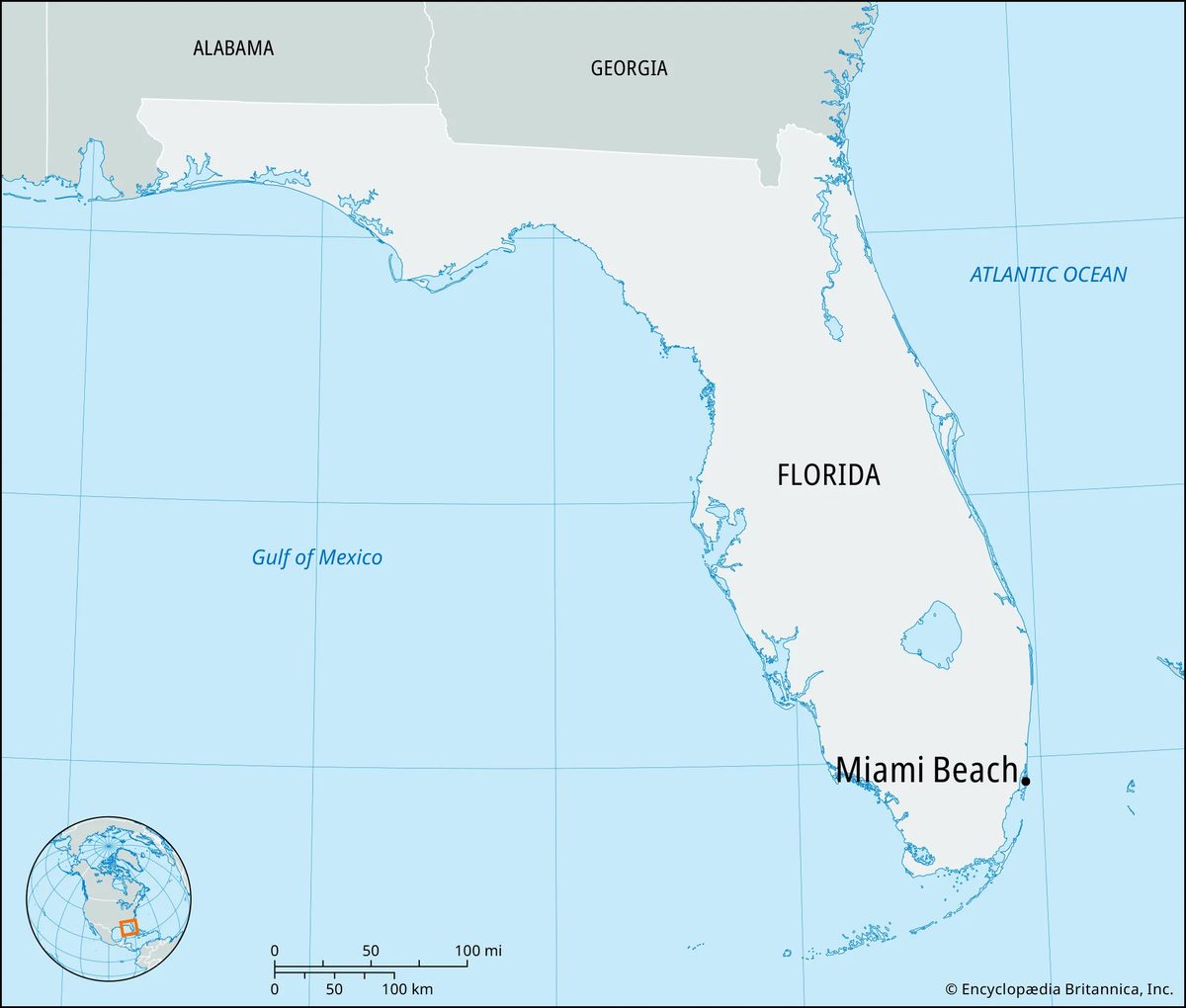
Let’s be honest. If you’re expecting gritty industry or complex logistics here, you’re in the wrong zip code. Miami Beach operates on a different frequency. It is a year-round luxury resort with a serious side hustle as a convention center. There are no factories. There is no rail network. The only way in or out is by car, relying entirely on road links to mainland Miami.
This isolation creates a specific kind of bubble. The culture inside it is curated. You will find museums that dig into the city’s deep roots, specifically the art scenes and the Jewish cultural institutions. This reflects a sizeable community that has shaped the island’s identity for decades.
The Holocaust Memorial: A Heavy, Necessary Stop
If you are planning a trip that involves more than sunbathing, you need to visit the Holocaust Memorial. It sits in a quiet corner of the island, demanding your attention.
The centerpiece is a 40-foot bronze hand bursting from the ground. It is a stark, physical manifestation of hope and survival. Surrounding it are panels listing the names of the victims. Reading them takes time. The weight of it lingers long after you leave. It is not a quick photo op. It is a place to stand still.
Art Deco Architecture in South Beach
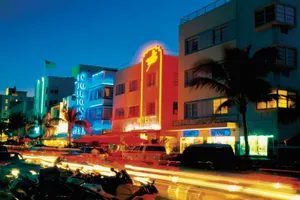
Head down to South Beach if you want to see the city’s aesthetic heartbeat. The area is a large district of restored Art Deco buildings. These are not replicas. They are original structures from the 1930s and 40s, meticulously cleaned up and preserved.
Walking through this district feels like stepping into a design museum. The pastels. The curves. The neon. It is one of the most popular spots for a reason. You can easily spend an entire afternoon just looking up.
Nature Just South of the City Limits
Sometimes you need to escape the concrete. Biscayne National Park lies about 10 miles south of Miami Beach. It is a massive block of protected waters and mangroves.
This park offers a stark contrast to the high-rises. You can boat through the coral reefs. You can hike the mangrove trails. It is roughly 15 kilometers from the center of the action, but it feels worlds away.
The Numbers Don’t Lie
The population stats tell a story of steady growth. In 2000, the city itself held 87,933 residents. The broader metro division, including Miami Beach and Kendall, sat at 2,253,362.
Fast forward to 2010. Miami Beach had 87,779 people. The metro division had swelled to 2,496,435. The city itself stabilized. The region exploded.
This is the reality of the place. Luxury. History. Architecture. Nature. All connected by asphalt.
You can navigate it. You can see it. The question is whether you can leave it behind when you get on that plane home.