Forget the shiny towers for a moment.
Head west. Past the center. Into Barrio Yungay. It was founded in 1839. Right after independence. Named after the Battle of Yung where Chile crushed the Peru-Bolivian Confederaation.
It feels older. Heavier.
“Resilience” is the theme here.
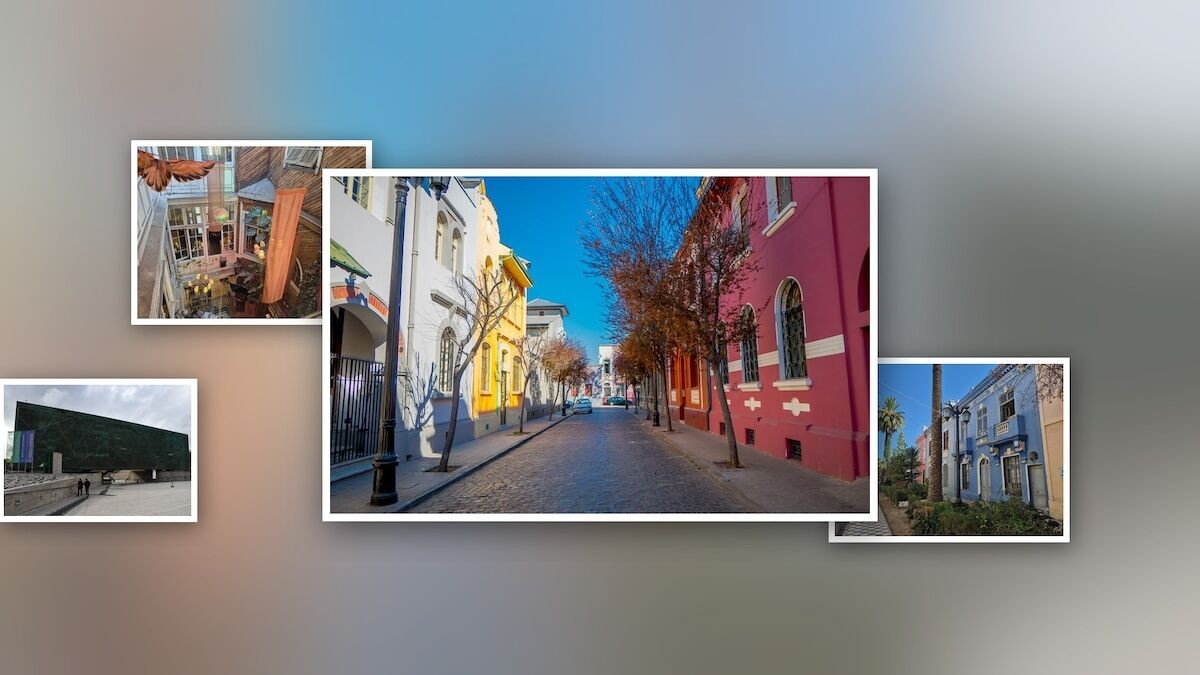
There’s a bronze statue of the Roto Chileno in Plaza Yungay. Not a hero on a horse. Just the everyday guy. The survivor. Wealthier types moved in back in the 19th century, dropping roots amidst a wild mix of styles. Neoclassical. Art Deco. Adobe colonial relics.
Then there are the “cités.” Narrow residential complexes that share a courtyard which doubles as a hallway. Pasaje Adriana Cousiňo is the prettiest. Painted blue. Painted pink. People live there. Actually live. Not Airbnb bots. Go get tea at Tetería Cleopatrix. Pet some cats. It’s allowed.
Later, when “Sanhattan” exploded east, Yungay got ignored. Paint peels. Buildings weather. But a bohemian pulse remains. Political hum. Street art. Former president Gabriel Boric lived right here on Huérfanos street. Why hide?
Memory comes first
Do the hard stuff first.
Before wandering into the colorful maze, visit the Museum of Memory and Human Rights. It’s on the edge. Essential. Brutal. You have to understand Pinochet. 1973 to 1990. Torture. Disappearances. Families left waiting for ghosts. It’s heavy. Two hours minimum. Maybe three.
Afterwards? Walk to Quinta Norma Park. Breathe.
Next door sits the National Museum of Natural History. It’s free. Biodiversity. Paleontology finds. Flora and fauna. The catch? Everything is in Spanish. No audioguide. Bring a translation app or you’re just looking at blurry pictures of bugs.
Walk it off
Now enter Yungay proper.
Just walk. Look up. The street art here doesn’t just decorate; it shouts. Gabriela Mistal shares space with Ana Gonzalez de Recarren. Another mural captures the cacerolazo—banging pots from balconies. A sound of protest. Started in the 70s. Returned in 2019. Angry people. Rising costs. Inequality.
Victor Jara is honored in mosaic too. The folk singer. The activist. Tortured and murdered. You can’t walk past these images and not feel it.
Elsewhere, chinchineros—street musicians with drums strapped to their backs—are immortalized on brick walls. Motifs from the Mapuche people appear again. From the island of Chiloe in the far south. Nature and myth collide.
It helps to have a guide. Hector knows his stuff. He knows where the bodies are buried metaphorically speaking. He also knows where to eat.
Food with soul
Everyone says go to Lastarria for food. Ignore them.
Yungay has bones.
Peluqueria Francesa hides behind what claims to be the world’s oldest barber shop. Opened 1868. Still cutting hair. The archive next door is neat, sure, but the food is the draw. Chilean meets French. Comforting. Cheap daily specials. They serve breakfast. And “once”—the Chilean light dinner of sandwiches and cake. Live music plays. Vintage clutter everywhere. Sit. Stay. Drink Pisco sours until last call.
Want something faster? Try Espacio Garola. Victorian mansion vibe. Art upstairs. Chorillanas below. Fries drowned in onion. Meat strips. Eggs. There are locos mayonesa too. Chilean abalone. But honestly? I grabbed an empanada de pino in the courtyard. Meat. Egg. Olive.
Watch the olive pit.
You leave with grease on your hands and the city buzzing behind you. What else is there to say?