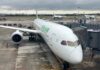
The global travel and hospitality sector is currently navigating a period of significant structural change. From massive fleet expansions in Asia to shifting consumer behaviors in the United States, industry leaders are adapting to new economic realities. Recent developments highlight a divergence in strategies: while some players are doubling down on growth through technology and scale, others are grappling with stagnant demand and changing visitor demographics.
The Asian Hotel Market: Evolution Over Expansion
In Asia, the hotel pipeline continues to grow, but the nature of that growth is shifting. Rather than relying solely on new construction, an increasing share of market expansion is coming from the rebranding and revitalization of existing properties.
This trend reflects a strategic pivot among Asian hotel owners who are turning to global brands like Accor to remain competitive. By partnering with established international groups, local owners gain access to:
* Global distribution networks that reach international travelers more effectively.
* Robust loyalty programs that drive repeat business.
* Enhanced pricing power through standardized brand positioning.
Why this matters: This shift indicates that the era of unchecked new-build construction in Asia is maturing. The focus has moved toward operational efficiency and brand leverage, suggesting that global hotel groups are becoming essential partners for local asset holders to survive in a crowded market.
AirAsia’s Historic Bet on the A220
In the aviation sector, Low-Cost Carrier AirAsia has made a monumental move that could reshape its long-haul capabilities. The airline has ordered 150 Airbus A220 aircraft in a record-breaking deal valued at $19 billion.
This single transaction underscores the critical importance of the A220 program for Airbus. In many ways, AirAsia’s commitment in one evening may have done more for the aircraft’s market viability than years of incremental sales. For AirAsia, this acquisition signals a serious expansion into thin routes and secondary markets where smaller, fuel-efficient jets offer a competitive advantage over larger traditional airliners.
Tech Meets Travel: Weather Forecasts as Booking Engines
On the digital front, The Weather Company is attempting to blur the lines between utility and commerce. In partnership with travel content platform Steller, the company is launching a new advertising model that aims to sell experiences and hotel bookings directly through weather forecasts.
The strategy positions Weather.com not just as a tool for checking rain probabilities, but as a **primary