


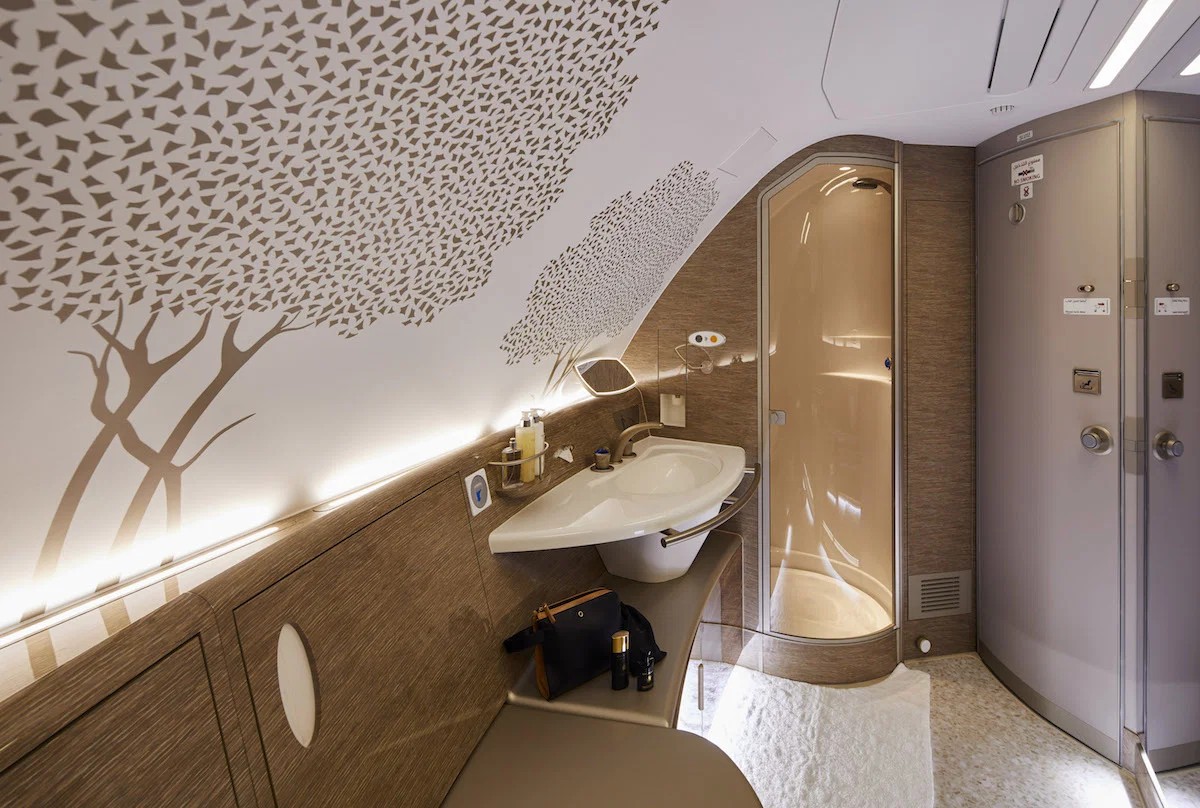
Emirates President Tim Clark has sparked significant interest in the aviation industry by announcing that the airline is exploring the possibility of en-suite bathrooms for its First Class cabins. During a recent interview at the CAPA Summit 2026, Clark emphasized the need for constant innovation to prevent the airline’s premium products from becoming “stale.”
While the prospect of a private bathroom in a commercial aircraft suite sounds like a game-changer, a closer look at the logistics and Emirates’ recent history suggests that this may be more of a “halo” feature than a fleet-wide rollout.
The Current State of Luxury Aviation
To understand why this announcement is significant, one must look at the current landscape of ultra-luxury air travel. Currently, true en-suite privacy is almost non-existent in standard commercial configurations:
- Etihad’s “The Residence”: This is the current gold standard, offering a three-room suite on the A380 that includes a private bedroom and shower. However, this is positioned as a product above First Class.
- Airbus Concepts: Airbus has previously floated the idea of a “Master Suite” on the A350, where a central, larger suite would feature an en-suite bathroom, while window suites remain standard.
If Emirates succeeds, they would be bringing a “residence-style” experience into the standard First Class cabin, potentially blurring the lines between traditional First Class and ultra-luxury private suites.
The Practical Challenges: Space and Fleet Logistics
Despite the excitement, several hurdles make the widespread implementation of en-suite bathrooms highly unlikely:
1. The Geometry of Aircraft Design
The physical footprint required for a private bathroom is substantial. On the Airbus A380, the upper deck width presents a massive engineering challenge; fitting a functional bathroom into every suite without drastically reducing the number of seats would be incredibly difficult. On the Boeing 777X, while modern, the space constraints remain a primary concern for cabin designers.
2. The “Stale Product” Paradox
Tim Clark noted that products must evolve to avoid becoming obsolete. However, Emirates’ track record with product updates tells a more cautious story. Since introducing its “Game Changer” First Class product in 2017, the airline has only rolled it out on nine aircraft—averaging just one plane per year.
While Emirates frequently retrofits its fleet, it has been slow to replace First Class seats in its Boeing 777s. This is largely due to economics : adding new, larger suites often reduces cabin capacity by up to 25%, which can hurt profitability.
Analysis: A “Halo” Effect vs. A New Standard
Given the high costs and space requirements, it is highly probable that if Emirates moves forward, they will not offer en-suite bathrooms to every passenger.
Instead, we are likely looking at a “First Class Plus” model. In this scenario, the airline would designate one or two “Master Suites” in the cabin—perhaps designed for couples or high-net-worth individuals—to act as a marketing flagship. This allows Emirates to maintain its reputation for cutting-edge luxury (the “halo effect”) without compromising the overall revenue-generating capacity of the cabin.
Conclusion
While Tim Clark’s vision promises a new level of privacy, the reality of airline economics suggests that en-suite bathrooms will likely remain a rare, ultra-premium luxury for a select few, rather than a standard feature for all First Class travelers.


