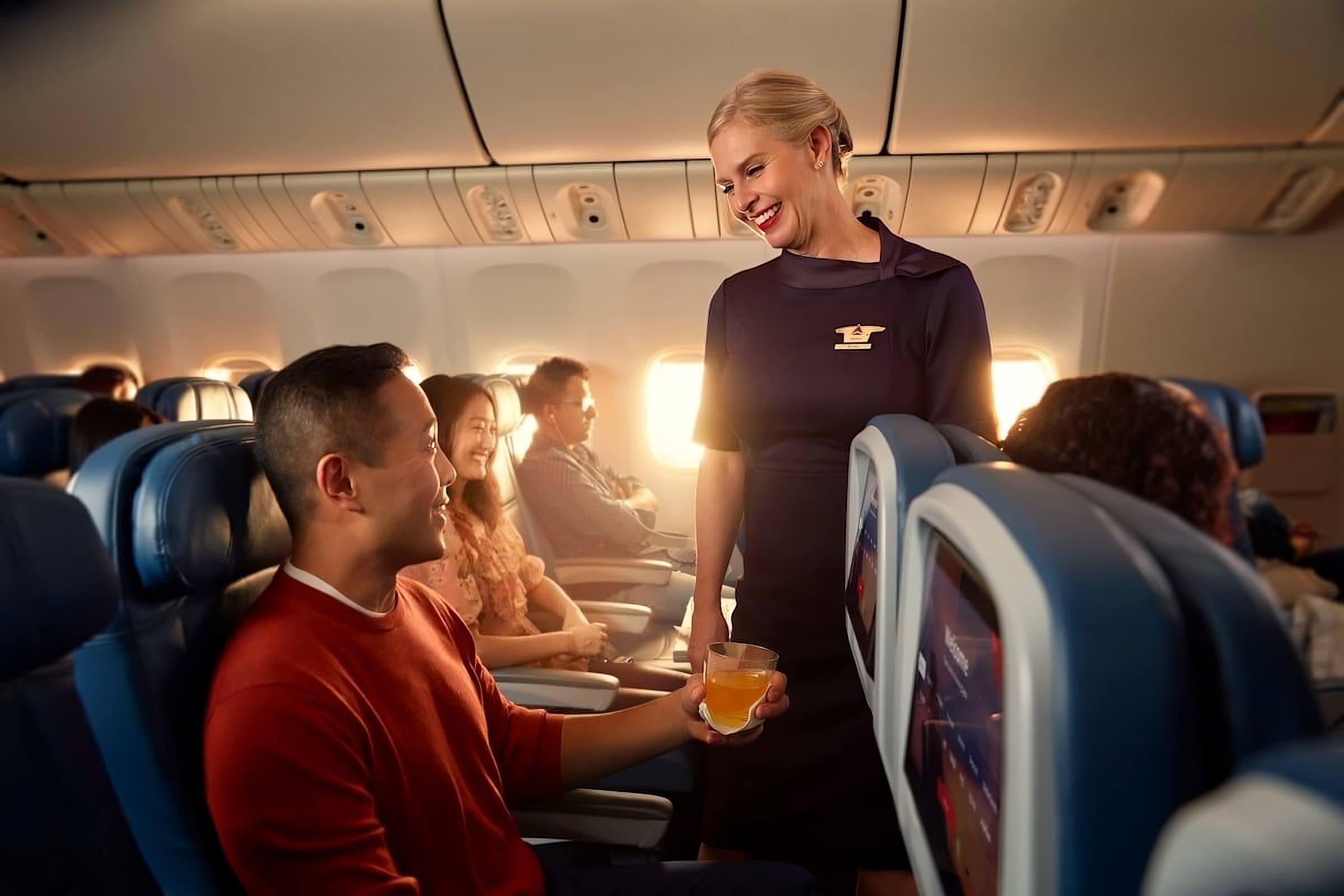
Starting May 19, Delta Air Lines will significantly reduce beverage service for Main Cabin and Delta Comfort passengers on short-haul flights. The airline will completely eliminate drink service for routes under 350 miles and downgrade service on others, marking a notable shift in strategy that leaves Delta trailing behind rivals United and American Airlines.
What Is Changing?
The new policy creates a two-tier system for short-distance travel:
- Flights under 350 miles: No complimentary beverages will be served. This affects approximately 450 routes.
- Flights between 350 and 499 miles: Passengers will receive standard beverage service. This upgrades about 600 routes from the current limited “Express Beverage Service” (which offered only coffee, tea, and water) to full service.
Previously, Delta offered “Express Beverage Service” on flights ranging from 251 to 499 miles. While some select flights in this category offered more, the standard was limited. The new policy effectively removes service from the shortest leg of this spectrum while restoring fuller service to slightly longer short-haul routes.
How Does Delta Compare to Competitors?
This move places Delta at a disadvantage compared to its primary domestic competitors:
- American Airlines: Offers drinks and snacks on flights of 250 miles or more.
- United Airlines: Provides service on flights starting at 300 miles.
- Delta: Will not offer any drinks on flights under 350 miles.
Key Takeaway: Delta is becoming the least generous major U.S. carrier for short-haul complimentary amenities.
Why Is Delta Making This Cut?
While Delta has not explicitly stated the reasons behind this decision, industry analysts point to several operational and strategic factors:
- Cost and Weight Savings: Removing beverages from galley carts reduces aircraft weight. Since fuel is a major expense, even small weight reductions can lead to savings, though this benefit is marginal on very short flights.
- Labor and Union Dynamics: Reducing the scope of service on short flights may be a tactical move in labor negotiations. The Airline Flight Attendants-CWA (AFA-CWA) has been pushing for a union election at Delta. By limiting service duties on short hops, Delta may argue that crew workload is manageable without union representation.
- Operational Efficiency: Serving drinks on flights lasting 45–60 minutes is logistically challenging. Service is often suspended due to turbulence or brief flight durations, leading to inconsistent customer experiences.
What Does This Mean for Travelers?
For many passengers, this change will be felt most acutely on connecting itineraries. Many of the affected routes are not high-competition point-to-point markets but rather links within Delta’s broader network.
- Competitive Routes: On heavily contested routes like Los Angeles to San Francisco, passengers still have alternatives like Southwest, Alaska, American, and United, which maintain their service standards.
- Connecting Passengers: Travelers on shorter segments of a multi-leg journey are more likely to be impacted, as these flights often fall into the sub-350-mile category.
The Bigger Picture: A Shift in “Premium” Strategy
This policy marks a departure from Delta’s historical approach. A decade ago, full beverage service was standard on these routes. Prior to the pandemic, flights between 350 and 499 miles received full service, a standard that is now being partially restored. However, the elimination of service on the shortest flights represents a tightening of perks that Delta previously used to cultivate customer loyalty.
Critically, this change affects Delta Comfort as well as Main Cabin. Since Delta Comfort is a key entry point for customers who may eventually upgrade to premium cabins, removing even basic amenities could impact the perceived value of this mid-tier product.
While some industry observers note that short-flight service is difficult to execute well—and that international carriers often serve meals on similarly short routes—the domestic landscape has shifted. Delta’s decision prioritizes operational simplicity and cost control over the generous amenity standards it once maintained.
In summary, Delta is streamlining its short-haul offerings, sacrificing immediate passenger convenience for long-term operational and financial efficiency, even as it falls behind competitors in the battle for short-distance traveler satisfaction.