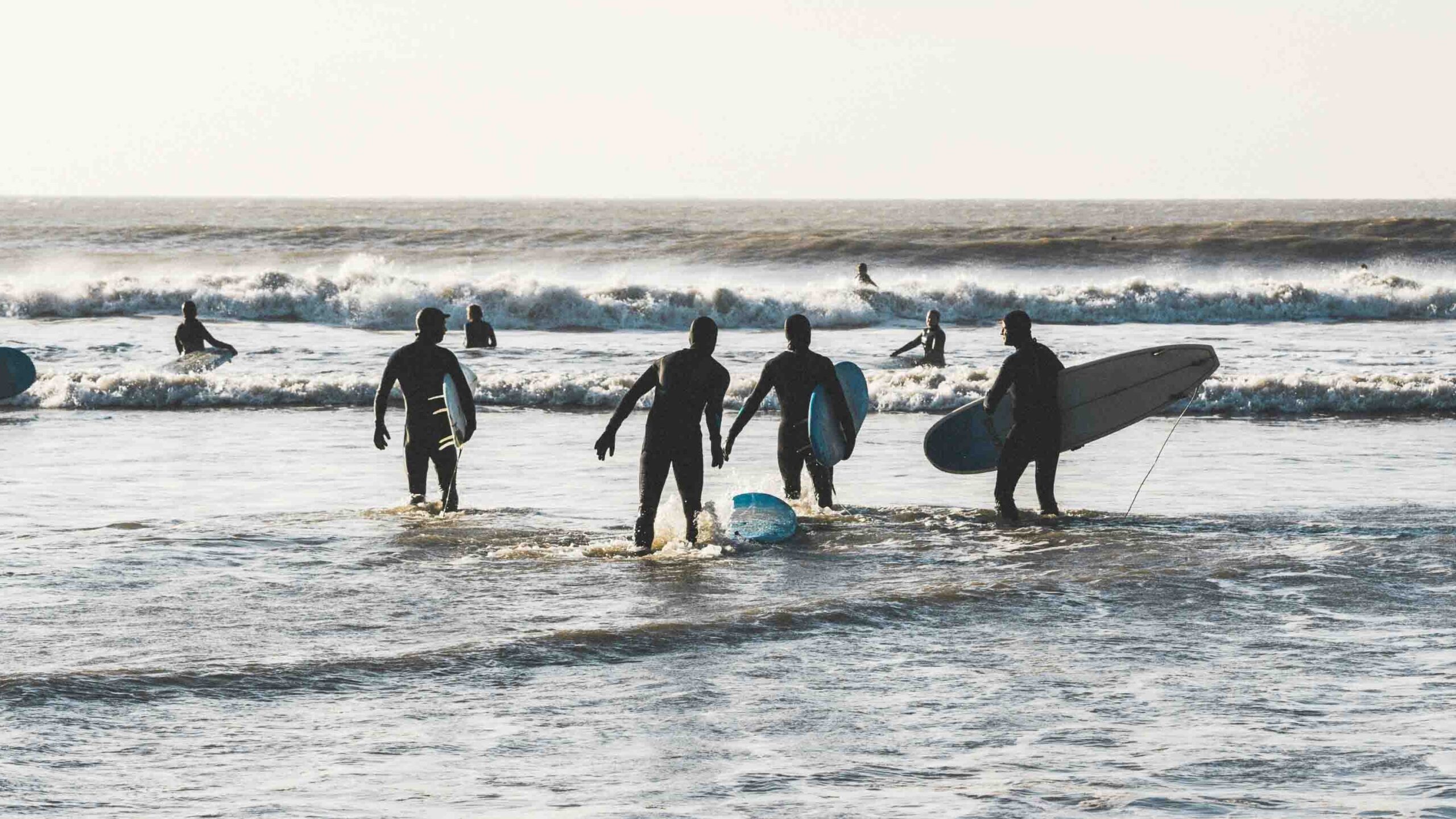
For decades, the pursuit of the “perfect wave” has driven surfers to the most remote corners of the globe. What began as a romantic era of nomadic voyagers—explorers like Peter Troy, who traversed oceans on cargo ships—has transformed into a massive, complex global industry.
But as surf tourism matures, it brings with it a difficult set of questions regarding economic inequality, environmental degradation, and the social friction of sharing finite natural resources.
The Evolution of a Legend: From Cape St Francis to Jeffreys Bay
The history of surfing is often written in celluloid. In 1964, filmmaker Bruce Brown captured the magic of South Africa in The Endless Summer, showcasing the flawless breaks of Cape St Francis. However, that cinematic perfection came with a catch: the film crew accidentally missed South Africa’s true crown jewel, Jeffreys Bay (J-Bay), by just 50 kilometers.
Today, the landscape has shifted. The pristine breaks seen in 60s films have often been altered by beachfront development, which disrupts the natural sand movement essential for consistent waves. Meanwhile, Jeffreys Bay has ascended to legendary status—home to the world’s fastest wave and a site of high-stakes drama, such as Mick Fanning’s shark encounter during the J-Bay Open.
The Economic Paradox: Wealth Amidst Inequality
As surfers travel to “bucket list” destinations, they often find themselves in a profound state of cognitive dissonance. In many premier surf locations, particularly in the developing world, the influx of tourism highlights stark social divides.
- South Africa: In towns like Jeffreys Bay, a booming construction industry driven by retirees and “semigrators” exists alongside impoverished townships like Pellsrus. The contrast between the “surf capital” and the surrounding areas of systemic unemployment serves as a constant reminder of the inequality tourism can inadvertently exacerbate.
- Indonesia and the Mentawai Islands: The Mentawai archipelago represents the pinnacle of surf travel, where many surfers opt for expensive boat charters to access remote reefs. To ensure local communities benefit from this industry, the government introduced the Mentawai Surf Tax in 2016. While intended to fund village infrastructure and waste management, the tax remains a point of contention regarding how funds are actually distributed.
Environmental and Social Challenges
The footprint of the surf traveler is not just economic; it is environmental and social.
🌊 Environmental Pressures
While rising sea levels are a looming threat, the immediate crisis for many surf destinations is plastic pollution. In places like Indonesia, seasonal rains often wash massive amounts of trash onto idyllic reefs, rendering once-perfect breaks unsurfable.
🏄 Social Friction and “Localism”
The “laidback” culture of surfing often masks intense territoriality. This manifests in two ways:
1. Cultural Custodianship: In places like Hawai’i, locals may use “tough justice” to protect their waters and heritage from being overwhelmed by crowds.
2. Hostility and Harassment: In more extreme cases, such as Lunada Bay in California, wealthy locals have been known to intimidate visitors through property damage and physical threats to maintain exclusive access to the waves.
The Digital Revolution: From Cargo Ships to Google Earth
The way surfers find these destinations has undergone a radical technological shift. The “Golden Age” of discovery required immense risk and seafaring skills. Today, the advent of Google Earth has democratized discovery, allowing anyone to scout remote coastlines from a kitchen table.
While this has led to the discovery of world-class spots like Namibia’s Skeleton Bay, it has also changed the nature of the “search.” We are no longer looking for the unknown; we are looking for the documented.
Conclusion
Surfing remains one of the few sports that offers a sense of true democratization—where a world champion like Kelly Slater might share a wave with a hobbyist in Jeffreys Bay. However, as the industry grows, the challenge for the surfing community will be to ensure that the pursuit of the perfect wave does not come at the expense of the very communities and ecosystems that make those waves possible.