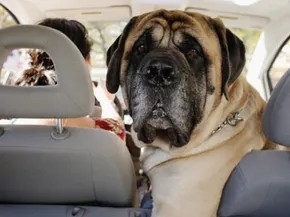
Driving with your pet seems like a no-brainer. You toss them in the back, lock the door, and hit the highway. It’s simple. But reality often gets messy. Maybe your dog, Princess, gets so excited during the ride that she has accidents on the upholstery. Or Buddy sheds enough fur that you’ve forgotten what color your seats originally were. Then there’s Rusty, who treats the backseat like a trampoline, distracting you with constant jumping, while Fifi just stares out the window, miserable.
The truth is, the “just put them in the back” approach doesn’t account for safety, comfort, or your vehicle’s longevity. Depending on your pet’s behavior and your car’s layout, there is a wide range of gear designed to make the journey bearable for you and safe for them. We are talking about car seat covers, travel crates, barriers, ramps, booster seats, and harnesses. It’s a lot of stuff to navigate. But before you buy anything, you need to know the basics of automobile safety for pets. And yes, that includes knowing that sticking a head out the window is a bad idea.
If you are traveling with a cat, skip the booster seats and harnesses. Cats are rarely the chill road-trippers that dogs can be. A sturdy travel crate or carrier is your best friend here. For dog owners currently using a towel or sheet to catch mud and hair, it’s time to stop. Those homemade fixes rarely work. It’s time to look at dedicated pet car seat covers.
Why Pet Car Seat Covers Are Worth the Investment
You love your dog. You love driving. You also love your car’s interior. These three things are currently at war.
Whether you are trying to keep shedding hair off leather seats or protect against the inevitable puddle of drool or worse, a dedicated cover is the solution. Imagine it’s mid-January. Your pet has an accident. If you don’t have a waterproof layer, you are now stuck trying to air out a wet, smelly car while the windows are frozen shut. A proper cover prevents that nightmare.
Pet car seat covers are exactly what they sound like: a protective layer of cloth that drapes over your seats. They come in various materials and colors. You can get single-seat covers, a long bench-style cover for the entire back row, or a large mat for the cargo area of an SUV.
The Hammock Style
If you have cargo on the floor, a hammock-style cover is a game-changer. It connects to the headrests of the front seats, creating a suspended bed for your pet. This keeps them off your belongings. It also stops nosy dogs from climbing into the front seat to investigate the driver.
What to Look For
Prices range from $25 to $100. Don’t just grab the cheapest option. Ensure the cover:
* Fits your specific car model.
* Has a waterproof backing.
* Is machine washable.
Cleaning should be easy. If you have to hand-wash or scrub for hours after every trip, you won’t use it.
The Safety Case for Pet Travel Crates
If your dog is anxious about car rides, or if you are transporting a cat, a travel crate is non-negotiable. Many experts agree this is the safest way to travel. It restricts movement, preventing the animal from becoming a projectile in a sudden stop.
Crates come in every shape and size. You have utilitarian metal cages, decorative plush carriers, and everything in between. But if safety is the priority, a hard-case carrier is superior. It withstands impact better than wire or soft-sided options.
Flying vs. Driving
If you plan to fly with your pet, you must adhere to airline crate requirements. Airlines have strict rules about size and material. You typically cannot use a wire or collapsible crate for air travel. If you buy a crate now, check if it’s airline-approved. Otherwise, you might end up buying a second one later.
Even if you never fly, follow these sizing guidelines for the best road-trip experience. A crate that is too small is cruel. One that is too big offers no security. When your pet is standing:
1. Measure from the tip of their nose to the base of the tail.
2. Measure from the floor to the highest point of their head or ears.
The pet must be able to turn around, stretch out, and lie down comfortably. If they are cramped, they will be stressed. If the crate is cavernous, they will slide around during turns. Look for a model with good ventilation and solid construction.
The Luxury Factor
Pet boutiques now offer high-end options. Think cabana-style mesh crates or literal pup tents. These look great. They let you spoil your pet. But be prepared to pay significantly more than you would for a standard plastic crate. And remember, you likely can’t take those fancy tents on a plane.
Where do you put the crate? That depends on your vehicle. In some cars, it fits in the backseat. In others, it goes in the cargo area. Securing it is key. A sliding crate can be dangerous if it isn’t strapped down.
Wire Barriers for Minivans and Sedans
Keeping your dog from treating the front passenger seat like a personal lounge chair requires the right gear. If you drive a sedan, a simple fabric or mesh barrier is usually enough. It clips between the front seats, blocking the center console gap. Cheap? Yes. Effective at stopping your pup from climbing up and distracting you with paws on the wheel? Also yes. You can use a hammock cover for the same result, but a rigid barrier feels more secure.
Minivan, SUV, or crossover drivers need something sturdier. Wire pet car barriers are the standard here. They look like one side of a cage, or the dividers you see in police cruisers. Your kids might want to play cops and robbers with them. Your dog? Not so much. These units adjust to fit different vehicle widths and are generally made of heavy-duty wire. They are more expensive than mesh, but they keep even escape-artist breeds in the back. Add extenders if your pet is particularly Houdini-like.
Steps and Ramps for Big Trucks
Driving a monster truck? You probably need a running board to get in. Your dog likely does too. Pet steps and ramps solve the problem of high entry points, especially for older dogs with stiff joints or tiny breeds that can’t make the leap.
Most models are foldable for travel. Some telescope for compact storage. Others are short, rigid ramps for smaller SUVs. Look for an anti-slip surface. Sliding around in a moving vehicle is no fun for anyone. Many options are adjustable to fit car doors or even porch steps. Outdoor versions work on decks too.
Pricey? Often. Sturdy? Absolutely. Heavy-duty ramps can support up to 250 lbs. That means you can step on them without fear of collapse.
Steps vs. Ramps: Which is Better?
Dogs know how to walk up stairs. But ramps are easier on aging bodies. Stiff joints hate the repetitive lifting of steps. A ramp allows them to shuffle up slowly. It’s gentler on their hips and knees.
For you, ramps are often cheaper and lighter than multi-step staircases. Less weight in the trunk means less effort loading the gear. And your back will thank you.
Pet Booster Seats for Small Dogs
Pamper your pooch on the next road trip. Pet booster seats lift small dogs to eye level. They enjoy the view. You enjoy the peace of mind that they’re contained.
These basket-like seats strap into front or back seats. Weight limits matter here. A full-grown Labrador won’t fit—and shouldn’t be in one anyway. These are for little dogs. Check the weight capacity before buying.
Washability is key. Accidents happen. Excitement happens. You need a removable, machine-washable liner. The rest should be padded for comfort. Durability ensures stability. No wobbly seats.
Strap design matters too. Some high-end models route straps behind the seat for an unobstructed view. Others might tangle. Make sure your dog can’t get caught in the buckles. Safety first.
Golf Cart Seats? Really?
Yes, really. You can buy booster seats for golf carts. Why? So your pet doesn’t have to sit at home while you play 18 holes. It’s oddly specific. But if you’re a golfer with a furry friend, it might be the perfect solution. Just don’t expect them to caddie.
Why Your Dog Needs a Seatbelt (And Why Regular Ones Fail)
You might think your furry friend is fine lounging in the back, but physics disagrees. If you are driving at 30 mph and slam on the brakes or get into an accident, a dog doesn’t just stop. It becomes a projectile. The force involved is immense—hundreds of pounds of impact against the seat, floor, dashboard, or worse, you.
Think of it like a toddler. You wouldn’t let a young child wander the backseat while you’re on the highway. Dogs are no different. A standard human seatbelt simply won’t work for them. You need a pet safety harness.
These aren’t just fancy collars. They are systems of straps and buckles designed to work with your car’s existing safety belts. They restrain your pet with the same logic as a human seatbelt: keeping them in place so they can’t fly forward.
There is also a legal angle you might not have considered. Several states and municipalities have enacted laws requiring some degree of restraint for pets in vehicles. You might find that a pet safety harness isn’t just a good idea—it’s the law in your area. Check your local regulations before you hit the road.
Finding the Right Fit
Not all harnesses are created equal. When you are looking for pet safety harnesses, fit is everything. The gear must be adjustable to accommodate your pet’s specific build.
When you first buckle your pet in, watch them closely. Does the harness choke them? Does it confine them in a way that feels cruel? If they are struggling, it’s wrong. Also, check the hardware. Cheap buckles can catch fur, pulling on skin and turning a short drive into a miserable experience. If the gear irritates them, they’ll be stressed. If they’re stressed, they’re a distraction. And a distracted driver is a danger to everyone.
The Golden Rules of Car Travel
You don’t need to buy every gadget on the market to keep your pet safe. You just need to follow the basics.
First, never leave your pet in a parked car. This is non-negotiable. It is not okay in the summer heat. It is not okay in the winter cold. It is not okay “for just a minute.”
Second, keep them inside the cabin. Leaving a dog in the bed of a pickup truck is dangerous. They can be threatened by strangers, or worse, become a target. Many dogs have been injured falling from open truck beds. Experts strongly advise against traveling with dogs in the back of a pickup.
Third, discourage window-dangling. Letting your dog stick their head out the window looks fun in movies. In reality, it’s a health hazard. Flying dust, grime, and debris can cause inner ear and lung infections. Something small and fast can strike their eye. It’s not worth the risk.
The Heat Trap
Here is a scenario you’ve probably seen before. You’re at the grocery store. It’s 85 degrees Fahrenheit outside. You tell yourself you’ll be quick. Just grab milk and bread. You crack the windows a couple of inches for airflow.
Wrong.
It takes only 10 minutes for the interior of a car to heat up to over 100 degrees. Even with the windows cracked. If you get stuck in line? If you decide to grab a few more items? Thirty minutes in, the temperature inside can skyrocket to 120 degrees.
Even on a mild 70-degree day, a parked car’s interior can rise by 20 degrees in a very short time. The glass traps the heat. The air inside becomes stagnant. Your pet’s body temperature can rise to fatal levels before you even notice the steering wheel is too hot to touch.
Planning Ahead
It sounds like a lot to manage. Harnesses. Laws. Temperature checks. Truck bed bans. But if you plan ahead and take these precautions, your next road trip doesn’t have to be a stress test. It can just be miles of fun for you and your dog.
“As long as you plan a bit and take proper precautions, you and Sparky can have miles of fun on your next road trip.”
For more details on pet-friendly hotels, airline travel rules, and how U.S. pet travel laws work, you can explore resources from the USDA, PetTravel.com, and various animal welfare organizations. The key is staying informed. The road is open, but it’s safest when everyone in the vehicle—four legs or two—is secured and safe.