Austria is located right in the heart of Europe and its population is about 8.5 million in an area of 83,855 square kilometers. It’s a landlocked country, which means you won’t find sandy beaches or saltwater tides here. Instead, the country is bordered by a dense ring of neighbors: Italy, Hungary, Slovakia, Slovenia, Liechtenstein, Germany, the Czech Republic and Switzerland. This central location has made Austria a crossroads of culture and history for centuries. The cities are densely built with architectural heritage, with a staggering number of castles, churches, towers and palaces that define its skyline. When wondering where to start your itinerary, historic sites provide the most compelling introduction to a country’s history.
The splendor of Schönbrunn Palace
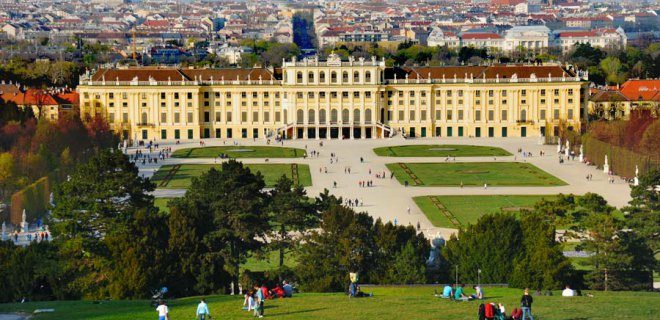
When you ask about the best sights in Austria, the name Schönbrunn Palace usually comes to mind first, and for good reason. This massive baroque complex on the outskirts of Vienna was the former imperial summer residence of the Habsburg dynasty. It’s not just a beautiful building; It’s a power statement. The palace has 1,441 rooms, but only a fraction of them are open to the public as part of the standard tour.
The architecture is striking, with its yellow facade contrasting with the green of the surrounding gardens. Particularly famous inside are the Grand Gallery and the Mirror Hall, which offer a glimpse into the lavish lifestyle of Emperor Franz Joseph and Empress Sisi. The gardens themselves are extensive and include the Neptune Fountain and the Gloriette, a temple-like structure atop a hill with panoramic views of Vienna. It’s the country’s most popular landmark, so timing your visit is crucial. Go early in the morning or later in the afternoon to avoid the crushing crowds. Tickets are often sold out days in advance, especially during the summer and early fall tourist seasons.
Behind the palace walls is the adjacent Tiergarten Schönbrunn, the world’s oldest, founded in 1752. It’s a nice addition to the day if you want to extend your stay. The sheer size of the complex can be overwhelming. You can easily spend three to four hours walking the grounds and touring the state rooms. For many travelers, this is the definitive introduction to Austria’s imperial history. It sets the tone for what lies ahead in the country’s other historic cities.
名前自体が物語を語っている。 ローマ皇帝マクシミリアン 2 世は近くの水を飲み、その水をとても気に入ったので、噴水の建設を命じました。 地元の人々はそれをシェーンブルン 、つまり美しい春と呼んでいます。 それは単なる水源ではありません。 何世紀にもわたってヨーロッパの広大な地域を統治したハプスブルク王朝の夏の離宮となりました。
建築家のヨハン ベルンハルト フィッシャー フォン エルラッハとニコロ パカッシがこのロココ様式の傑作を設計しました。 1699 年にオープンしました。 現在では、オーストリアで最も有名なシンボルとなっています。 ぜひ見てください。
しかし、帝国の物語は宮殿の門で終わりません。 王室の別の側面は市内中心部に位置し、国会議事堂と人民公園を見渡せます。
ホーフブルク宮殿
If Schönbrunn Palace is your summer paradise, ホーフブルク宮殿 is your winter command center. This is not an isolated building. It is a vast complex with 14 buildings, 18 courtyards and 26 halls. For more than six centuries, it served as the main winter residence of the Habsburg family.
It’s hard to appreciate its scale unless you’re standing in the square outside. The complex has several unique attractions and it’s easy to waste an entire day if you don’t plan for it.
Where do I start?
The Swiss Gate (Schweizertrakt ) is the main entrance, but don’t walk in blindly. The ホーフブルク宮殿 is a maze. If you are visiting for the first time, the most logical route is to go directly to Sisi Museum and 帝国の居室. These two sites are most often booked together, and for good reason.
Imperial Apartments (Kaiserappartements ) presents the private living quarters of Franz Josef I and Empress Elisabeth (シシ) from the 19th and early 20th centuries. 部屋は豪華だった。 Gold leaf, velvet and heavy curtains. You get a glimpse of a world where every morning routine is a performance. You can walk through the Throne Room and the 冬の応接間. The rich history of these halls is evident.
Next to the apartment is the Sisi Museum dedicated to Empress エリザベート. It has less to do with 彼女の生活 and more to do with 彼女の心理. This museum explores 彼女の悲劇的な人生, obsession with beauty and deep depression. This is the darker, more personal side of the Empire story. Many travelers find this area more attractive than the 一般的な展示室. Because this area answers the “why” behind the luxurious exterior.
What else is there in the ホーフブルク宮殿?
If you have time or have already been to the Imperial Palace, you can peel off a few more layers.
- Spanish Riding School: Located in a separate winter riding hall within the complex, where Lipizzaner stallions perform classical dressage. You don’t have to watch the whole show to enjoy it. Morning workouts are open to the public for a small fee. Just watching the 騎手 and horse move in perfect sync is worth the price of admission.
- Vienna Treasury (Schatzkammer ): This is the largest collection of royal and sacred relics in the world. 帝国の王冠
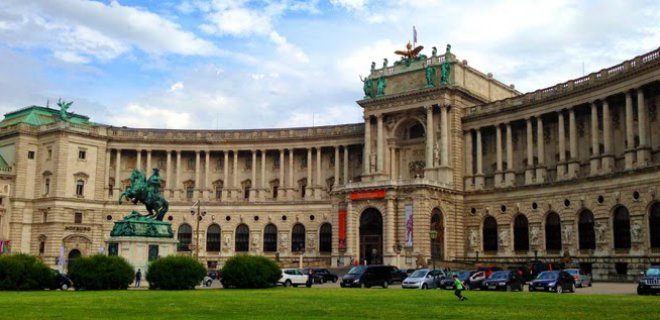
The Hofburg is not just a building. It is the heavy, stone heart of Vienna’s political history. Located right in the center of the city, this vast palace complex served as the official residence of Habsburg rulers and later heads of state since 1279. It’s nearly eight centuries of power, politics and palace intrigue in one place.
Here you go through the layers of architectural development. Thanks to the hands of giants such as Johann Bernhard Fischer von Erlach, his son Joseph Emanuel, Johann Lukas von Hildebrandt and Domenico Carlone, the complex showcases some of the most beautiful Baroque architecture in the country. Their work created a style that defined an era.
Inside, the size is overwhelming. Around 4,650 historical artifacts and relics are displayed in different wings. These aren’t just dusty memorabilia; They are tangible remnants of the centuries when this palace was the nerve center of European government. For anyone wondering where to see the true face of Austrian history, the Hofburg is the first answer.
Belvedere Palace
Behind the political weight of the Hofburg is the Belvedere Palace. If the decisions were made at the Hofburg, beauty was curated at the Belvedere. This two-part baroque palace complex was built as a summer residence for Prince Eugene of Savoy.
It is considered one of Vienna’s most important architectural and cultural sites. The gardens extend in the French style and lead to the Upper Belvedere, which now houses an important art collection.
Visitors come here primarily because of Gustav Klimt. Kiss is the star and attracts thousands of people to watch this gold leaf masterpiece. But the collection goes far beyond him. In addition to impressive French and Italian paintings, here you will also find works by Egon Schiele and Oskar Kokoschka.
The contrast is sharp. Leave the corridors of state power at the Hofburg, walk through the city and enter the world of artistic expression at the Belvedere. Both are necessary. One shows how Austria was governed; The other shows you what it was like to live in those times.
Logistics is important here. Both sites require time. A visit to the Hofburg can take half a day if you see the Imperial Apartments and the Spanish Riding School. At Belvedere, it takes at least two or three hours to enjoy the art without rushing. Buy tickets online in advance, especially for the Klimt exhibition. Lines at the door will eat up your day.
What should be prioritized? If you care about dynasties, uniforms, and the machinery of empire, start with the Hofburg. If you are looking for the colors, emotions and artistic soul of fin de siècle Vienna, visit the Belvedere. You really don’t have to choose. They are close. A walk between them takes you through the historic district, past cafes and markets and reminds you that Vienna’s past still lives on in its streets.
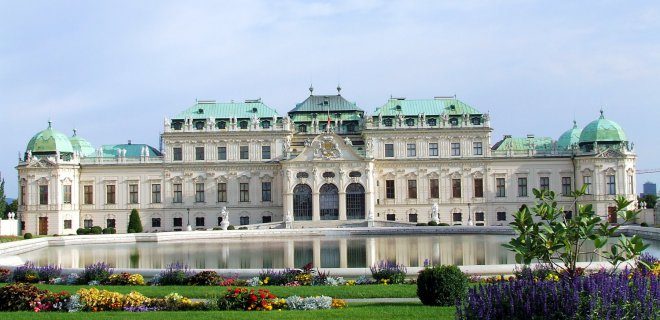
Belvedere Palace
In Vienna’s Landstrasse district, there is a palace that demands your attention. It is not just one building, but a pair: Upper and Lower Belvedere. Together they form an impressive example of Baroque architecture designed by Johann Lucas von Hildebrandt. The construction did not happen overnight. It spanned from 1668 to 1745.
Today it functions as an art museum. The collections are rich in historical objects and master drawings. You don’t just see walls and ceilings. You get a curated experience of centuries-old craftsmanship.
Anyone who leaves Vienna without seeing the architecture and spaces of the Belvedere is missing out on a central part of the city’s identity.
The layout is designed to be experienced in layers. Start at Lower Belvedere. The very former structure with its gardens still looks surprisingly intact. Walk to the Upper Belvedere. Here are the heavyweights. Egon Schiele’s works often draw a crowd here, but don’t discount the older masters. The lighting in the main halls is controlled and considered. It forces you to slow down.
Logistically, it is only a short tram ride from the city centre. The ticket price is in euros, but you should allow extra time for security checks. They can be slow during peak months. Go early. Go late. Avoid the lunch rush.
The gardens between the two palaces are freely accessible. Use them as a palate cleanser. Sit on the bench. Look at the locals. The contrast between the clean green of the interior and the decorative gold leaf is striking.
St. Stephen’s Cathedral
Just a short walk away is another giant of the Vienna skyline. St. Stephen’s Cathedral, or Stephansdom dominates the center. It’s not just a church. It is a geological and architectural record of the city.
The roof is the first thing you notice. The colorful tiles form the Habsburg double-headed eagle and the coat of arms of Vienna. It is a visual map that you can see from almost every corner of the old town. The main tower, the South Tower, is where you’ll climb. There are 343 stairs. They are narrow. They spiral. If you are afraid of heights, this is your limit.
Inside, the size is overwhelming. Gothic vaulted ceilings draw the eye upwards. The stone feels cold even in summer. The high altar is baroque luxury at the highest level. But look deeper. The pulpit is carved from a single piece of wood. It’s complicated. Almost too detailed to handle at a glance.
There is a catacomb under the church. It is a labyrinth of bones. It’s macabre, but it’s also factual information about Vienna’s population history. The exhibitions tell about burial practices over the centuries. It’s a stark reminder of plagues, wars and the density of life here.
Access varies depending on the season. Summer evenings see the most foot traffic. Winter mornings are quieter, but colder inside. Entry to the cathedral is free for prayer or quiet reflection. You pay to climb the tower or visit the catacombs. Ticket packages are usually worth the price.
You can stand in the nave and hear the acoustics of the room change as you move. The stone ampl
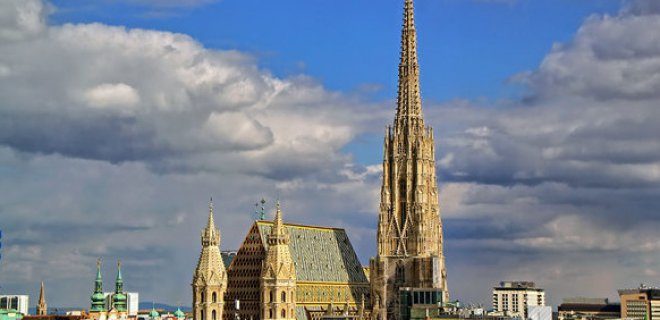
St. Stephen’s Cathedral: the Gothic heart of Vienna
St. Stephen’s Cathedral is not just a building. It is the spiritual anchor of Vienna. Built between 1147 and 1160, it has watched over the city for nearly nine centuries. You can see the red tile roof from almost every vantage point in the city center. It is unmistakable. The design goes back to Anton Pilgram, you’ll hear often in art history circles.
This isn’t just style. It is the battle of the ages. The building combines Romanesque foundations and tall Gothic towers. The sheer size is apparent before you step inside. The nave is 70 meters wide. The vaulted ceiling reaches a height of 107 meters. But it’s the south tower that dominates the skyline. At about 137 meters high, it is one of the tallest church buildings in Europe.
Is it a tourist trap? Yes. Is it important? Completely. It’s on every serious Vienna travel itinerary for a reason. The acoustics inside are steeped in history. Stained glass tells stories that are older than the printing press. If you only visit one religious place in the capital, you should visit this one. The logistics are simple. It’s right in the inner city. No need to look for it. Just follow the crowd.
Museum of Art History: Palace of the Arts
Next we go to the Ringstrasse. More precisely, you are looking for the Museum of Art History. This is not just a gallery. It is a monument of Habsburg power. The building itself was designed by Gottfried Semper and Karl von Hasenauer at the end of the 19th century. It looks like it was carved out of marble and gold.
Why come here? The collection is breathtaking. It houses one of the most important collections of Old Masters in the world. You talk about Vermeer, Bruegel and Rubens. The Vermeer collection alone is worth the price of admission. Only a few dozen of his works exist worldwide. There are several in this museum.
Architecture requires attention. The central rotunda is breathtaking. Natural light streams in from above. An atmosphere is created that resembles a palace more than a museum. And in a way it is. The Habsburgs built it to store their personal treasures. Now they are public property.
Plan for at least three hours. Maybe more. The sheer amount of art can be overwhelming. Don’t try to see everything. Select a wing. Focus on the Dutch Golden Age. Or lose yourself in Egyptian and Middle Eastern antiquity. The contrast is jarring in the best way.
Entrance fees apply. Check the current prices online before you go. Tickets are easy to buy in advance, especially during the high season. The museum is accessible, but the large stairs can be difficult if you have mobility issues. Elevators are available but you may have to wait.
Is it full? Yes. Is it worth it? Undoubtedly. This is where Vienna’s cultural weight lies. You leave feeling smaller, but smarter. That is the purpose of a museum like this.
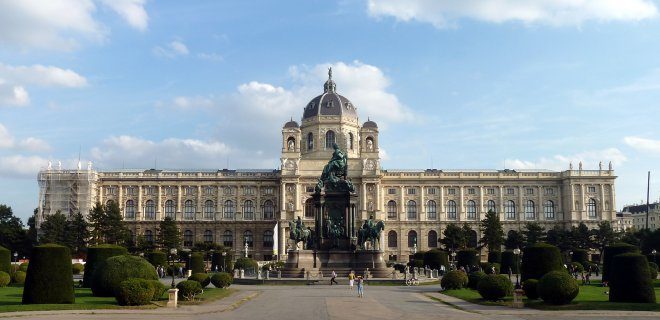
Art History Museum
The Kunsthistorisches Museum is not just another gallery on the Ringstrasse. It was built according to a certain, somewhat imperial whim of Emperor Franz Joseph I. Construction lasted from 1872 to 1891, a massive architectural project designed by Gottfried Semper and Karl Freiherr von Hasenauer. The result is a rectangular building that dominates Maria-Theresien-Platz and houses Austria’s most important art history collection.
About 600,000 visitors visit here every year. That means lots of people crowding through, which is filled with quirky plant head portraits by Jan van Eyck, Albrecht Dürer, Tintoretto and Giuseppe Arcimboldo.
Logistics is important. If you want to see the Tent of Darius or the Flemish masters without fighting the crowds, you have to choose the right time. Buy tickets online in advance. Always. Lines are legendary and they don’t shrink just because you’re holding a map. The building itself is a work of art – opulent, gold leaf and rich in marble – but the collection lives up to the reputation. It’s not just about watching The Birth of Venus ; The purpose is to understand the scale of the Habsburg accumulation.
Hohensalzburg Castle
We leave Vienna behind and turn our attention north to Salzburg. Here Hohensalzburg Castle dominates the horizon. It’s not a ruin. It is a fortress that was continuously inhabited until the 19th century, making it one of the largest and best preserved medieval castles in Europe.
It was built mainly in the 11th and 15th centuries and overlooks the old town and the Salzach.
The view is the real attraction.
You can take the cable car up from Festungsgasse, which is easier on your feet but costs extra, or walk up the steep incline if you want to prove something to yourself.
Inside, the rooms are decorated to feel less like a museum and more like a time capsule. The golden roof can be seen from here, but don’t get distracted.
The castle area offers a view of the city that is not available on the ground level.
Is the trip from Vienna worth it? If you’re doing a classic tour of Austria, yes. But don’t expect it to feel like the elegant palaces of Vienna. This is rock, iron and defense. It’s impressive. Contrast is part of it.
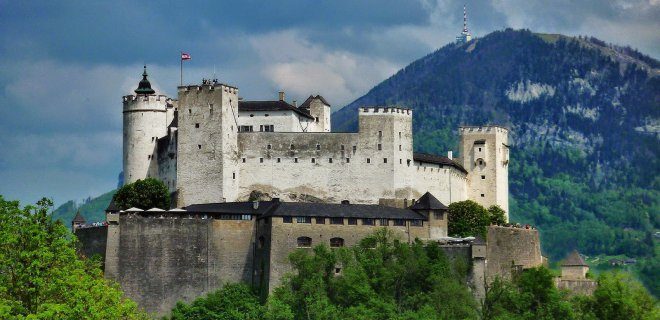
Hohensalzburg Fortress rises 506 meters above sea level and dominates the horizon. It’s not just a landmark; it is a looming presence. Construction started in 1077 due to fear. Especially the constant threat of Turkish invasions. This was not a quick project. The expansion and strengthening took well into the 17th century. The result is a huge structure: 250 meters long and 150 meters wide. Here you will find some of the most impressive towers in Europe. It is widely regarded as one of the continent’s largest medieval castles. For travelers planning a trip to Austria, this is non-negotiable. You can’t visit Salzburg without seeing this defensive powerhouse.
How to get to the fortressress
The journey is part of the experience. You can hike up the steep stone path. It takes about 20-30 minutes. The view improves with every step. Or you can go by funicular railway. The departure takes place from the Mönchsberg side of the old town. The journey is short. Fast. It will drop you right at the castle entrance. This is a better option if you have mobility issues or want to save energy for exploring. Tickets can be bought online to skip the line, especially during the peak summer months. Go early. The light is best in the morning. Shadows are shorter. Details pop.
What to see inside
Once inside, the scale hits you. The fortressifications are intact. You can walk along the ramparts. The view of the Alps stretches to the north. In the south, the city of Salzburg spreads out like a model village. The interior is divided into two main areas: Upper Palace and Lower Palace. The imperial apartments are located in the Upper Palace. Look for ornate ceilings and historical artifacts. The Armory and the Mint are located in the Lower Palace. Yes, they made money here. The armory displays weapons from various eras. The contrast between the deadly tools and the beautiful city below is stark.
“The castle is not just a museum, it is a strategic command center that survived centuries of conflict.”
Don’t miss the Felsenreise exhibition. The focus is on the rock passages and tunnels carved into the Mönchsberg. These were escape routes and storage areas. They bring an extra layer of intrigue to the visit. If you’re interested in history, the transition from a Roman outpost to a medieval fortressress to a Habsburg stronghold is fascinating. The castle changed hands several times. Each owner added their own twist. The result is a patchwork of architectural styles. But the defensive core remains pure.
Mirabell Palace and Gardens
A short walk downhill takes you to Mirabell Palace. It’s a different vibe. Lighter. More playful. It was built at the early of the 17th century and served as the residence of the prince-archbishops. The gardens are the main attraction. They are beautifully manicured. Baroque style. The fountains flow. Statues of mythological figures line the paths. It is a popular spot for photographers. The backdrop of the castle from here is iconic. Above you can see the fortress, a reminder of the power that once ruled this valley.
Inside the palace is the Marionette Museum. It features puppets
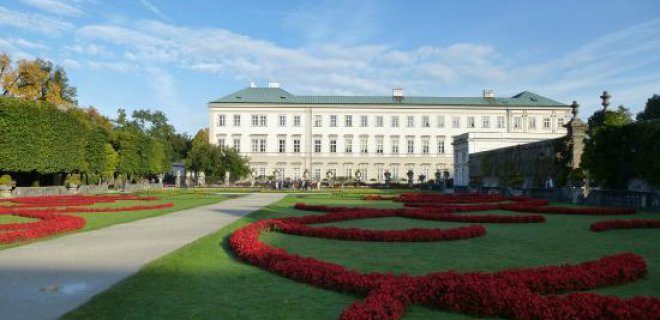
The story of Mirabell Palace begins with a love letter carved in stone. Mimar Wolf Dietrich von Raitenau built it for his lover, making it less of a royal seat and more of a romantic gesture. The building you see today is right in the heart of Salzburg and was not the original. The first iteration was completed in 1606, but the baroque style designed by Johann Lukas von Hildebrandt, which we associate with the current complex, was created about a hundred years later, around 1710.
The name itself reveals the atmosphere. “Mirabell” comes from Italy and means something “wonderful” or “great”. And it delivers. The palace and its gardens are so important that they are on the UNESCO World Heritage List. You don’t just see a pretty facade; You are standing at one of the most visited historical sites in Austria. Hundreds of thousands of tourists flock here every year, and honestly, you can understand why.
The gardens are a real attraction. They are carefully maintained and offer a mix of formal symmetry and playful sculpture. If you are planning a trip to Austria, it would be a mistake to miss this one. It is the anchor of Salzburg’s old town, easy to get to and impossible to miss.
Hellbrunn Palace
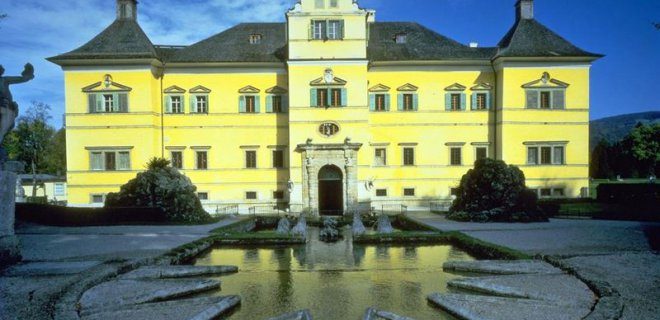
Just a short bus ride from the city center is Hellbrunn Palace. If Mirabell is the elegant, romantic face of Salzburg, Hellbrunn is a mischievous trickster.
This baroque-style residence was built in the early 17th century for Prince-Archbishop Markus Sittikus. It wasn’t just a home; It was a pleasure palace meant for entertainment and intrigue. The architecture is breathtaking – light, airy and distinctly different from the heavier structures one would expect from this period. But the real reason people visit Hellbrunn isn’t just to see the rooms.
It’s the gardens. Especially Water Games.
These are not your average sprinklers. The palace grounds feature hidden fountains, bubbling jets of water, and sudden sprays that erupt without warning. Historically, the purpose was to prank unsuspecting guests. You’d be walking along groomed trails, feeling refined and suddenly – soaked. It’s a weird, wonderful and very wet experience.
Visitors often describe it as chaotic fun. They watch people trying to maintain their dignity while the water rises from the ground beneath their feet. It breaks the rigid, formal atmosphere of typical European palaces.
Logistics for the Traveler
Getting to Hellbrunn is straightforward. From Salzburg’s main train station or the old town you can take bus number 25. The journey is quick, about 10-15 minutes depending on the traffic. The tickets are usually covered by the Salzburg Card, which is worth considering if you plan to visit several attractions.
When should you go? The Water Games are best in late spring or early summer. If you go in winter, the gardens are beautiful, but freezing and splashing doesn’t work. Spring brings back greenery and the temperature is mostly tolerable.
The interior of the palace has a rich history. You can visit the rooms where
Hellbrunn Palace: Baroque playground
Hidden on the southern slopes of Salzburg, Hellbrunn Palace isn’t just there – it plays tricks on you. The baroque villa built for Prince-Archbishop Markus Sittikus von Hohenems between 1613 and 1619 was never designed as a ceremonial seat of power. It was a summer retreat designed for amusement, and to be honest, it still feels like a prank waiting to happen.
The architecture is pure baroque splendor, but the real attraction is the landscape. The palace is surrounded by lush, manicured gardens that exude a sense of deliberate chaos. You’ll find ponds, fountains and statues everywhere, but don’t let the elegance fool you. This is where the “trick fountains” live.
Yes, those are the same jets of water that shoot up from benches, tables and even the floor to surprise unsuspecting guests. It is an interactive experience that few other European Palaces offer. You’re walking through the area, admiring the architecture and suddenly—splash. It’s lively, slightly chaotic and just such a change from the rigid history of the city’s main attractions.
For travelers planning a trip, Hellbrunn is less about passive observation and more about participation. It’s one of those places that defines the Salzburg experience because it doesn’t take itself too seriously. Here you can spend hours walking from one garden room to another watching the water features operate and pretending you don’t get wet. You will. And it’s worth it.
The location is crucial here. As it is located on the southern edge of the city, it feels secluded from the old town, yet incredibly accessible. As you plan your days, slot this in when you need some fresh air and a little laughter. It’s not just a museum; It’s a park with a conscience – and a sense of humor.
Albertina Museum
Moving from waterlogged gardens to paper-thin precision, the Albertina is considered one of Vienna’s most prestigious institutions, although its name often comes up in broader discussions of art tours in Central Europe. *
Albertina: printing and drawing center in Vienna
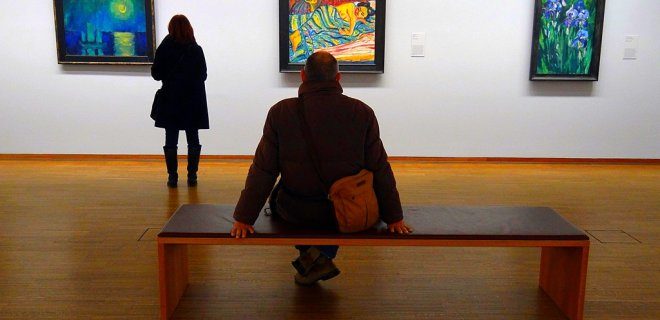
Located in the heart of the city, the Albertina is not just another museum on the list. It’s a heavyweight. Since its opening in 1745, this institution has quietly developed into one of the most important storage places for works on paper in Europe. We’re not talking about small sketches here. We are talking about an impressive collection that contains around 65,000 drawings and around a million prints and graphic works.
It’s easy to walk past places that don’t scream for attention, but Albertina invites you to stop. The architecture itself is eye-catching and sets the stage for what’s inside. In Galerien, die sowohl Historisch als auch Zeitlos wirken, finden Sie Meisterwerke des Impressionismus und des Modernismus des frühen 20. Jahrhunderts. If you are planning a trip to Austria as an art lover, it would be a real worry to miss this place. Die ständigen Sammlungen sind robust, aber die Wechselausstellungen zeigen oft seltene Blockbuster-Stücke, die allein schon einen Besuch rechtfertigen.
Natural Science Museum
Probably one of the most beautiful buildings in Vienna, the Natural History Museum moves from ink and paper to bones and minerals. It is located right next to the Art History Museum on the other side of Maria-Theresien-Platz and creates an architectural look that is second to none.
This is not some dusty relic of ancient science. It’s a vibrant, well-curated space with over 30 million items. The most important sights are immediately visible. When you walk in, you are greeted by a blue whale skeleton hanging from the ceiling of the main hall. It’s huge. It’s intimidating. It’s exactly what you want to see if you’re trying to understand the scale of nature.
In addition to marine life, the museum covers everything from geology to zoology. The dinosaur collection is surprisingly extensive and includes real fossils, not just models. You see the Argentinosaurus, one of the largest land animals to ever live on Earth. Equally impressive is the gemology department, which houses a display of crown jewels, including the 140-carat Regent Diamond. It’s not just about how things look; It tells the stories of how they got here.
Practical tip: There’s a lot going on here. Reserve your ticket in advance online. If you plan to visit both art and natural history museums, you can often buy a combination ticket, which makes sense because of their proximity and complementarity. Give yourself at least two hours to get everything right. Detailed exhibits on meteorites, human evolution, and the biodiversity of the Amazon basin are worth a tour. It is a place where curiosity is rewarded with sheer awe.
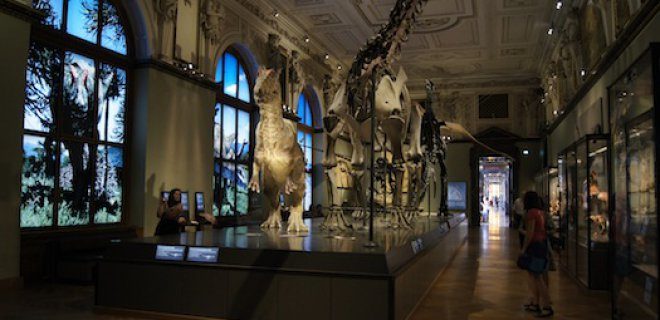
The Natural History Museum in Vienna is not just a building. It’s a time capsule. Founded in the 1750s, the institution has been anchored in the Austrian capital for centuries. With around 30 million objects, it is one of the most important collections in the world.
Why is it important? Because it is a center for human and animal research.
Opened in 1889, the museum has never stopped growing. Locals and tourists flock there. Secret? Modern exhibitions and topical presentations revive old science. You’re not just looking at dusty samples. You meet new species for the first time.
If you are planning a trip to Austria, this is a non-negotiable stop. It is one of the most popular sights in Vienna. The scope is overwhelming. The details are accurate. And history can be felt in every glass case.
Ambras Castle
Not far from the city center is Ambras Castle.
This is not your average museum. It is a renaissance fortress that gives the feeling of moving to another era. The castle has an incredible collection of armor and historical artifacts. But the real attraction is the atmosphere.
Walk through the corridors. See complex ceilings. Hear the silence that has echoed here for centuries.
There is more than just indoor exhibitions in the castle grounds. Parks are carefully maintained. The views of the surrounding hills are breathtaking. It is a perfect contrast to the urban energy of Vienna.
Plan your visit
When should you go? Spring and autumn are ideal. The weather is mild. The crowds are thinner.
How much time do you need? Set aside at least half a day for the natural history museum. A few hours to Ambras Castle.
What awaits you?
- Natural History Museum : Expect long queues during the high season. Buy tickets online. If you don’t have time, focus on Mineralogy and Paleontology sections.
- Ambras Castle : Wear comfortable shoes. The castle is big. The area is wide. The armor collection is particularly impressive.
Both sites offer a deep understanding of history and science. They are not just tourist traps. They are institutions that shape our understanding of the world.
The natural history museum connects you with nature. Ambras Castle connects you to the past. Together, they provide a comprehensive overview of Vienna’s cultural landscape.
Don’t rush through these places. Take your time. Ask questions. Let the exhibits speak for you.
There is always more to see. More to learn. More to wonder about.
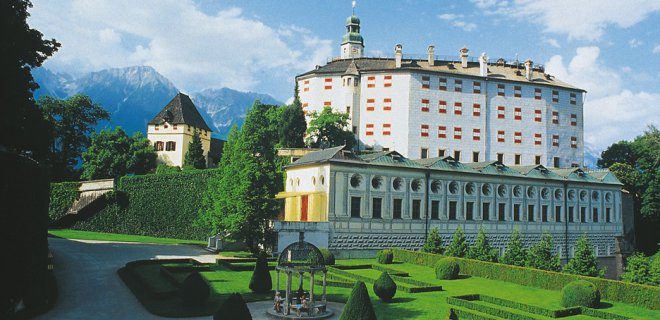
Located on a hill dominating Innsbruck’s skyline, the castle doesn’t just overlook the city – it dominates it. This is not a sterile stone and mortar fortress. It’s a Renaissance palace disguised as a castle, built to impress.
Located 587 meters above sea level, Ambras Castle above sea level and was built in the 16th century. Today, it holds the title of the city’s most popular tourist attraction, but looking from the outside reveals nothing of what’s inside. Beneath the battlements is one of the world’s oldest art collections.
The building served as the private residence of Archduke Ferdinand II for about 42 years from the mid-1500s. He turned it into an Kunstkammer – a cabinet of curiosities. You don’t just walk through the rooms; You go through history. The items here are old. Really old.
Path to the highest peak
Leaving the Renaissance artifacts behind and head north. The Grossglockner High Alpine Road is the next logical step if you’re planning a trip that goes beyond the museum walls.
This is no ordinary highway. It’s a 48-kilometer asphalt strip that leads to the 2,504-meter Großglockner high alpine pass. It is the highest paved road in Austria.
Why drive it? Because the view changes every five kilometers. You start in the pine forests near Heiligenblut. When you reach the top, you can see the glaciers. Massive glaciers with blue veins that have shaped this valley for thousands of years.
Logistics and timing
Getting there is simple, but timing is important. The road is open from about May to November, depending on snowfall. If you visit in July or August, expect crowds. Excursion buses line the shoulders. If you want peace and quiet, go in May or the end of October.
The toll for the car is around 36 euros. Is it worth it? For the sheer scale of the Hohe Tauern National Park, yes.
You can stop at several observation decks. The Pasterze glacier is the largest. It is the longest glacier in the Alps. You can walk right up to the ice. That sounds cold. It is. But watching the glacier move so slowly against the backdrop of the Großglockner peak (3,798 meters) creates a sense of scale that photographs cannot capture.
What to expect
The trip takes about 2-3 hours if you drive non-stop. Most people take 4-5 hours and stop for photos and coffee at Kaiser-Franz-Josefs-Höhe.
The road is well maintained. Sharp curves require attention. The height difference is steep. If you are prone to motion sickness, take precautions. There are numerous hairpin bends.
Maybe you see a ibexes. They hang out on rocky slopes and graze on things that shouldn’t be edible. They look like they belong on a stamp. They do.
Beyond the asphalt
If you leave the car and go hiking, the possibilities are endless. The path from Pasterze to Großglocknerhaus is
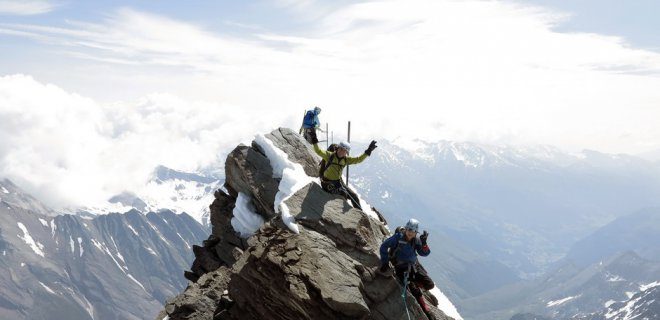
If you’re looking for vertical drama, look east to the Hohe Tauern. The crown jewel is the Großglockner. It reaches a height of 3,798 meters. It is the highest peak in the country.
Mountaineers have been obsessed with this ridge since the early 19th century. The first successful ascent laid the foundation for today’s serious alpine travel destination. In winter, the situation changes. The snow cover deepens. This will become a leading skiing and snowboarding center. You’re not just looking at the top; You are one of the busiest areas for winter sports enthusiasts. The slopes are steep. The runs are long. This is where you go if you’re looking for heights and adrenaline.
Klopein Lake
Walk down the granite to the water. Lake Klopein is located in a quiet valley. It is not noticeable. It doesn’t scream. It reflects.
The water is clear. The surrounding hills are green. This is a contrast to the rugged cliffs of the Großglockner. Here, the pace slows. You can swim in July and August. The beaches are small. The air is calm.
Tourists often miss this place because they are looking for peaks. But the lake offers a different kind of altitude. It’s about the height of the spirit, not just meters above sea level.
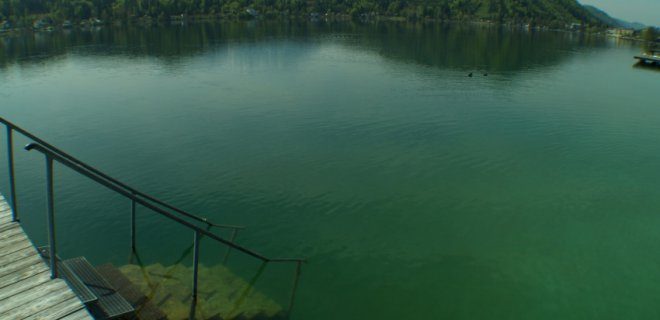
Why Lake Klopein is the hidden gem of South Carinthia
If you are looking for swimming conditions at Lake Klopein that defy the typical alpine cold, you have come to the right place. Located in St. Kanzian at an altitude of 446 meters, this 110-hectare body of water is a thermal anomaly of Carinthia. Although most lakes in the area stay cool, the water in Klopein can reach up to 29 degrees Celsius. Indeed, it is one of the warmest lakes in the region, making it a top contender for travelers looking to escape the heatwave without heading south to the Mediterranean.
The depth of the lake is no joke either. It sinks to a maximum depth of 48 meters, creating a dramatic difference in height that adds to the impression of size. But it’s not just a deep hole in the ground; it is a bustling ecosystem. The lake has a significant fish population and is therefore considered one of the best fishing spots in the region. Anglers flock here not only for the challenge, but also for the quality of the catch.
The water temperature here defies the local climate and offers a rare thermal experience in the Alps.
For those who want to keep their feet dry, the scenery is equally appealing. The lake is bordered by hills that drop steeply into the water, offering a postcard-perfect view. It has become a popular destination for day-trippers and picnickers who want to enjoy the view without the stress of a full swim. Whether you’re casting a line or just spreading a blanket on the shore, the atmosphere is relaxed. The combination of warm water, deep clarity and breathtaking scenery make it a place where it’s easy to forget the afternoon.