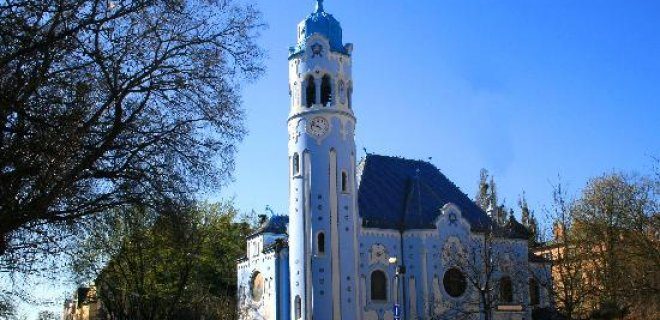
If you are navigating the eastern districts of Bratislava, you might overlook a quiet architectural gem unless you know where to look. St. Elizabeth’s Church, widely known by locals as the Blue Church (Mavi Kilise), stands as a striking example of Art Nouveau design that refuses to blend into the background. Opened to the public in 1908, this Roman Catholic structure offers a visual experience that is distinct from the historic Gothic and Baroque churches found elsewhere in the Slovak capital.
The defining feature is, unsurprisingly, the color. The church’s façade is clad in vibrant blue tiles that create a mesmerizing pattern. This isn’t just a coat of paint; it is an integral part of the structure’s aesthetic identity. The blue tones extend from the exterior walls to the interior vaults and pillars, giving the building its enduring nickname.
Inside, the experience shifts from visual spectacle to architectural depth. The floor plan is oval, a deviation from the traditional rectangular nave that guides your eye upward. The interior is heavily decorated, featuring columns that evoke a Romanesque style while maintaining the fluid, organic lines typical of the early 20th-century Art Nouveau movement. It is a space designed to feel both grand and intimate, with rich detailing that rewards a closer inspection.
For travelers planning a route through Bratislava, understanding the location is key. Situated in the eastern part of the city, it sits apart from the dense tourist traps of the old town center. This relative isolation adds to its charm, offering a peaceful counterpoint to the busier attractions. The blue tiles, the unique oval layout, and the Romanesque-inspired columns make it a worthwhile detour for anyone interested in how religious architecture evolved in Central Europe during the modern era.

Devin Castle: The High Point Above Bratislava
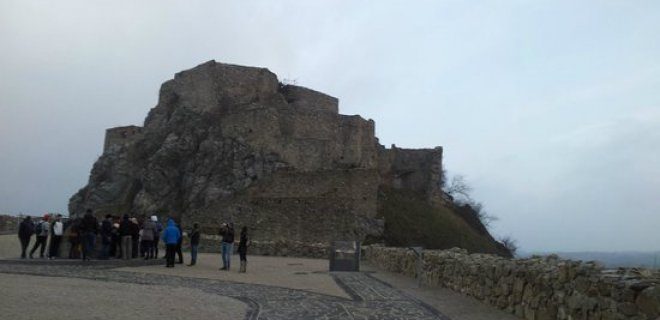
Perched on a 212-meter rock, Devin Castle doesn’t just overlook Bratislava; it watches over it. Located where the Danube and Morava rivers converge, this medieval structure is likely the most visited spot for tourists arriving in the Slovak capital. It’s not just a ruin. It’s a landmark.
Historians believe construction began in the mid-9th century. That makes it old. Really old. The complex includes a small watchtower locals call “Kız Kulesi” (Girl’s Tower). From this height, the view is the real draw. You see the city sprawl. You see the green hills. You see the water meeting water. It’s a perspective you can’t get anywhere else in Bratislava.
But the castle isn’t the only thing drawing crowds. The access itself tells a story.
The Path to Michael Gate and the Old Town
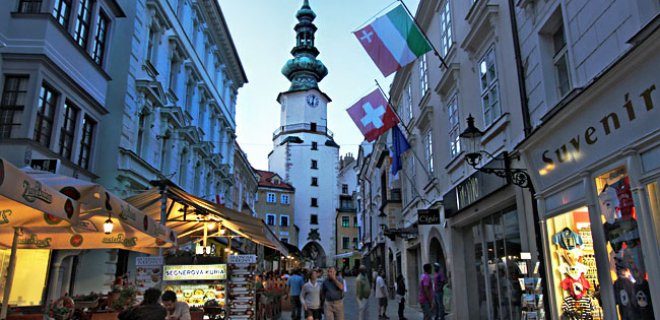
To get a feel for the city’s layers, you have to start at the ground level. Michael Gate (Michalská brána) is the only surviving city gate of the original four that once protected Bratislava. Built in the 13th century, it stands as the oldest fortification in the city.
Why does this gate matter? Because it’s the gateway to the Old Town. Step through it, and you’re instantly transported. The cobblestones are uneven. The buildings are pastel-colored. The air smells like roasted coffee and old stone.
Visitors often rush past it. They shouldn’t. This is where history meets daily life. Locals gather here. Tourists take photos. The gate itself is a blend of Gothic and Baroque styles, a physical reminder of Bratislava’s turbulent past.
Navigating the Old Town
Once through Michael Gate, the Old Town unfolds. It’s small. Walkable. You can see most of the key sites on foot in under two hours, but that’s not the point. The point is the detours.
- Hlavné námestie (Main Square): The heart of the city. Here you’ll find the Old Town Hall and the mythological fountains. The main fountain doesn’t have a specific name, but its statues of Atlas and the Hesperides are iconic.
- St. Martin’s Cathedral: A Gothic masterpiece where Hungarian kings were crowned. The spire is visible from miles away.
- ** UFO Bridge:** If you walk to the riverbank, you can see the cable-stayed bridge and the UFO observation deck on top. It’s a stark contrast to the medieval stone below.
Logistics? Free walking tours start daily from main squares. They’re a good way to orient yourself before diving into the museums. Tickets for cathedral entry are modest, but the views from the tower are what people remember.
Why This Route Works
Starting at Devin Castle gives you the macro view. The landscape. The geography. Then, moving to Michael Gate grounds you in the urban fabric. It’s a shift in scale. From 212 meters up to street level.
This transition is key to understanding Bratislava. It’s not a massive metropolis. It’s a compact, layered city. Every turn reveals a new era. Roman walls. Medieval gates. Baroque palaces. Modern bridges.
The cost of visiting is low. Most sites are free or
Michael Kapısı: Orta Çağ’dan Kalma Tek Giriş Noktası
Burası, Orta Çağ’dan beri surlarla çevrili bu şehrin tek açık kapısı. 13. yüzyılın sonlarına doğru inşa edilen Michael Kapısı’nın adı, hemen bitişiğinde yer alan Aziz Michael Kilisesi’nden geliyor. Zamanla Barok ve Gotik üslupların izlerini taşıyan çeşitli değişikliklere uğramış olsa da, ruhunu korumayı başardı. Kapının üzerindeki kule, tam 51 metre yüksekliğinde. Bratislava’nın en ikonik yapılarından biri olan Michael Kapısı, her yıl binlerce turisti ağırlıyor.
Büyük Meydan
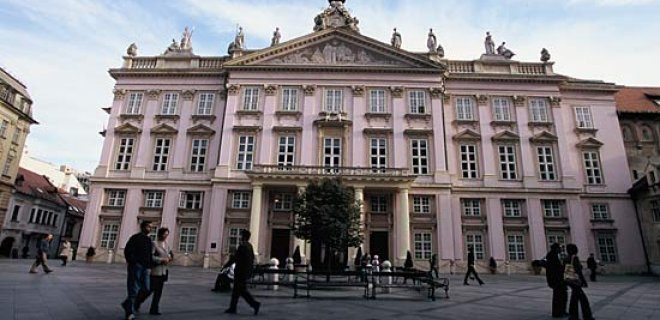
Primate Palace and the Grand Square’s After-Hours Glow
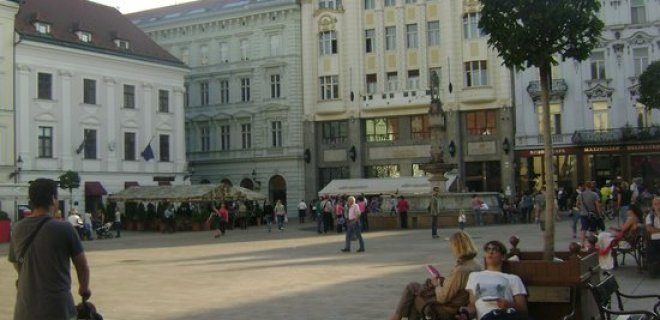
You haven’t really seen the capital until you’ve stood in the Grand Square at night. It’s the city’s most crowded plaza for a reason. By day, it’s a postcard of 15th-century architecture and statues. By night, it transforms. The lights hit differently. The atmosphere shifts from historic to electric.
Surrounding the square are buildings that don’t quite fit the mold. Some are quirky. Some are stunning. They house some of the city’s most luxurious cafes and restaurants. You can people-watch from a terrace with a drink in hand. Or you can dive into the crowd. Either way, the energy is palpable.
And then there is the Primate Palace (Primatialny palác).
It stands as a testament to Baroque elegance. Built in the mid-18th century, it isn’t just another museum. It’s where history actually happened. Specifically, it’s the site of the final session of the Hungarian Diet. Even more crucially, it’s where the Treaty of Pressburg was signed in 1805. Napoleon’s victory. A pivotal moment in European history, sealed in this very room.
Today, it serves as the residence of the President of Slovakia. You can’t wander the halls just because. Access is restricted. But the exterior is worth the stop. The green dome is visible from several points in the old town. It anchors the square’s skyline.
Why this matters for your itinerary:
- Timing matters: Visit the square in the late afternoon. Stay for dinner. Watch the transition from tourist-heavy to local-heavy.
- Logistics: The palace is on the edge of the square. Keep an eye out for the official signs. The entrance is on the side, not always obvious.
- Cost: Viewing the exterior is free. Internal tours are rare and usually require prior arrangement or special events. Don’t budget time for a standard ticket purchase here.
- Comparison: Unlike the castle, which dominates the hill, the square is where the city lives. It’s more intimate. More accessible.
“The Grand Square is the heart of Bratislava. It’s small, yes. But it pulses.”
The contrast is what strikes you. The ancient stone next to the modern glass. The quiet dignity of the palace next to the noise of the crowd. It’s a mix you don’t find everywhere.
Don’t leave the capital without walking this square. Even if you’ve seen the castle. Especially if you’ve seen the castle. The ground level story is different. It’s in the cafes. In the statues. In the way the light hits the cobblestones when the streetlamps flicker on.
Is it the most famous square in Europe? No. But it’s the one that stays with you.
Bratislava Castle: The City’s Crowning Jewel
If you are looking for the postcard view of Bratislava, this is where you find it. Perched high on a limestone cliff overlooking the Danube, Bratislava Castle is not just a building; it is the city’s sentinel. It dominates the skyline, a massive white structure that looks like it was plucked from a fairy tale and dropped onto a hilltop.
Construction began in the 9th century, though what you see today is largely the result of a Baroque redesign in the 17th century. It has survived wars, fires, and neglect. For decades, it sat empty, a hollow shell. But now? It’s back. And it’s worth the climb.
Why Visit?
The views are the main draw. You can stand on the castle grounds and see Slovakia, Austria, and Hungary all at once. The horizon stretches out, flat and wide. It’s peaceful up here. Away from the tram tracks and the cruise ships below. The castle complex itself is a mix of ruins and restored halls. Some parts are under renovation, which adds a certain gritty charm. You can walk through courtyards that have seen kings, rebels, and tourists.
Inside, the Slovak National Uprising Museum tells the story of the 1944 revolt against Nazi occupation. It’s heavy, important stuff. But you don’t have to stay for the history lesson. You can just wander the grounds. Find a bench. Watch the light change on the river.
Getting There
How do you get up there? You have options.
- The Walk: It’s a steep climb from the Old Town. About 20-30 minutes if you’re not rushing. The path is paved, but it’s uphill. Bring water.
- The Taxi: Easy. Tell the driver “Hrad.” You’ll be dropped right at the entrance. Costs around 5-7 euros.
- The Bus: Bus number 39 or 21 from the main square. Cheap. Takes longer. Good if you want to save your legs.
Practical Tips
- Entry Fee: The castle grounds are free. The museums charge around 6-8 euros. Worth it if you like history. Not if you just want photos.
- Best Time to Go: Late afternoon. The light hits the white walls beautifully. Plus, you can catch the sunset over the Danube. It’s magical.
- What to Bring: Comfortable shoes. The cobblestones are uneven. A jacket. It gets windy on the cliff.
The Mythical Guardians
You might see strange statues around the castle. These are the “Slavonic Guardians.” They look like gnomes or dwarves. Legend says they protect the castle from evil spirits. They’re kitschy, sure. But they add character. Take a picture with them. It’s a local tradition.
Nearby Attractions
Once you’re done at the castle, walk back down to the Old Town. The distance is short, but the shift in atmosphere is huge. You go from quiet, historic grandeur to bustling, baroque charm. St. Martin’s Cathedral is nearby. So is the Old Town Hall.
Don’t rush out. Stay for a coffee. There
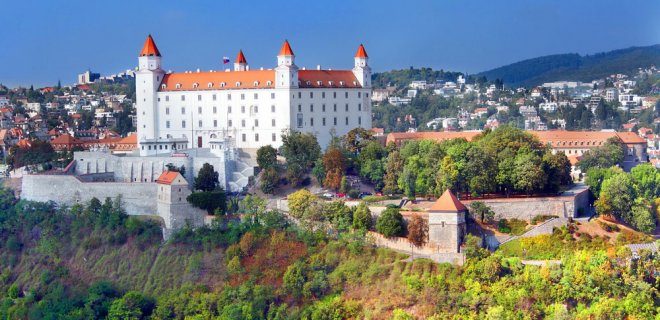
The Old Fortress is not just a landmark; it is the city’s ancient backbone, its origins lost to the mists of pre-Christian times. Perched precariously on a rocky outcrop near the Danube, it commands the skyline. The structure is a stark, rectangular slab of history. Four corner towers pierce the sky.
Eighty meters high. That is a significant drop if you lean too far over the edge, but the view from the top is the real draw. The fortress’s sheer size and strategic placement have long been credited as the reason the city survived. It was the guarantor of safety. Today, the atmosphere is different. In front of the fortress, the Slovak National Museum curates rotating exhibitions. They open them at regular intervals. You walk through ancient history, then step out into modern displays. The contrast is jarring. It works.
Novy Most (New Bridge)
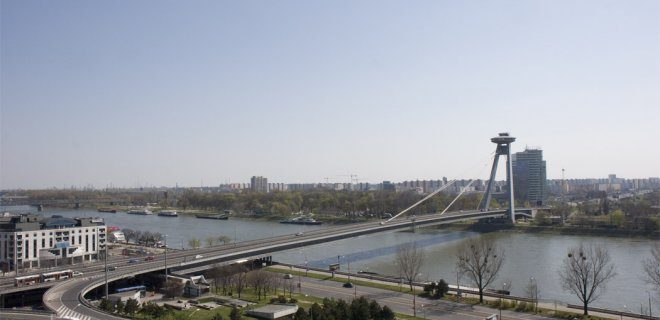
Leaving the fortress behind, you head toward the Danube. The river divides the city, and crossing it is usually a mundane task. Not here. The Novy Most or New Bridge defies the ordinary. It looks less like a bridge and more like a UFO has landed in the middle of the water.
The design is iconic. A single pylon supports a series of cables that fan out like a harp string. It is brutalist yet elegant. Driving across it feels like flying. But you do not need to drive. You can take the elevator up the pylon. The ride takes about two minutes. You ascend rapidly, leaving the traffic noise behind. At the top, there is a circular platform. A restaurant. A bar. Glass walls offering 360-degree views.
Why go up? Because the view from the top of the New Bridge is arguably the best in Bratislava. On a clear day, you can see far down the Danube toward Hungary and far up toward Vienna. The city sprawls below. The Old Town is a cluster of red roofs and spires. The modern districts extend outward. It is a postcard view. Real time.
The restaurant at the top is pricey. Expect to pay for the altitude as much as the food. But you do not need to eat. Standing at the railing, wind whipping your coat, watching the river churn below, is enough. The bridge itself is a feat of engineering. Built in the 1970s, it was controversial then. Now, it is beloved. It is the city’s handshake with the future.
Crossing to the other side, the landscape changes. The riverbank opens up. Parks. Walkways. The water moves slow here, heavy with history. Ships drift by. The atmosphere shifts from the dense, tourist-filled Old Town to something quieter. More local. You can walk along the embankment for kilometers. The path is paved. Well-lit. Safe. It is a favorite spot for evening strolls. Couples. Joggers. Kids on bikes. The rhythm of the city slows down near the water.
If you are visiting in winter, the bridge lights up. Strings of lights trace the cables. The pylon glows. It is a beacon. Visible from miles away. The Old Fortress looks like a dark silhouette against it. The contrast between the medieval stone and the modern steel is striking. It tells the story of the city in one glance. Ancient.
The Slavin Bridge: A 1972 Symbol of Belgrade
You have to see the Slavin Bridge. It spans the Danube with a bold, modern silhouette that has become one of the city’s definitive icons since it opened on August 26, 1972. The structure is straightforward engineering: 431 meters long and 21 meters wide. It doesn’t hide behind ornamentation. It just sits there, concrete and steel, holding up the traffic while defining the skyline.
Why does this specific crossing matter to a traveler? Because from its vantage point, the view cuts through the noise. You get a clear line of sight to the historic landmarks scattered along the banks. The contrast between the contemporary bridge and the older, layered history of the city is sharp. It is one of those spots where you instinctively reach for your camera. Take the shots. Capture the geometry against the river.
“From the bridge, the city’s scenery and historic sites look fantastic.”
The name comes from its location near the Slavin neighborhood, but locals just call it the bridge. It’s not just a transit point. It’s a photo op. It’s a reminder that even functional infrastructure can become a cultural symbol when it’s built with enough presence to change how you see the place.
Go at dusk. The light hits the concrete differently then. The river turns dark. The lights from the historic districts start to flicker on in the distance. You stand on the railing, looking out, and realize that the best view of the city isn’t from inside it. It’s from above, crossing it.
Why the Slavin War Memorial is Bratislava’s Most Underrated Landmark
You might skip it. The hill is a climb, the weather in Bratislava changes on a dime, and the city center pulls you toward the castle or the riverfront. But skipping the Slavin War Memorial is a mistake.
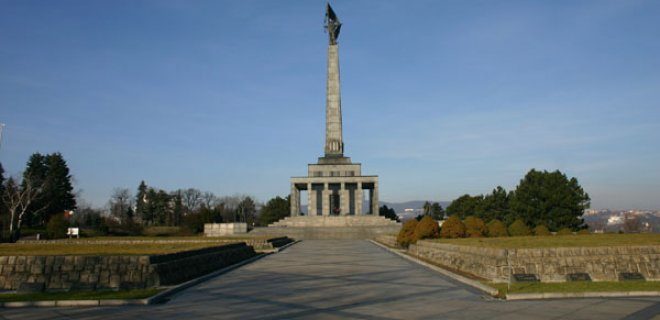
This isn’t just another stone monument. It’s a heavy, imposing tribute to 6,845 Soviet soldiers who died liberating the city during World War II. Erected in 1960, it sits on a strategic high point, overlooking the old town and the Danube. The sheer scale hits you before the history does.
Standing 52 meters tall, the central figure is a bronze soldier. He doesn’t look triumphant. He looks tired. His rifle hangs low. It’s a stark, human choice for a statue that dominates the skyline.
How to Visit Slavin Without Wasting Time
Getting there is part of the experience. You can hike up from the city center—it’s about 15 minutes if you’re fit. Or you can take a taxi. If you’re driving, parking is tricky near the top. Better to park lower down and walk up. The path is paved but steep. Wear good shoes.
The view from the terrace is the real payoff. You see the red rooftops of the old town, the river curving away toward Austria, and the mountains on the horizon. It’s a panoramic postcard.
Why is it significant beyond the view? It’s a reminder of the cost of liberation. The name “Slavin” itself is a nod to Pan-Slavic unity. The soldiers buried here weren’t just a number. They were part of a massive, bloody campaign that reshaped Eastern Europe.
Practical Details for Your Itinerary
- Cost: Free. Always. No tickets, no lines.
- Best Time to Go: Late afternoon. The light hits the bronze differently, and the crowd thins out. Sunrise is dramatic but cold.
- What to Bring: Water. A jacket. The wind on the hill is real.
- Photography Tip: Shoot wide to capture the scale of the soldier against the sky. Close-ups of the inscriptions on the base are powerful too.
It’s not always crowded. Tour buses often miss it or drop people off and leave quickly. That’s your chance. Stand there for a minute. Look at the names. Look at the view.
The memorial doesn’t shout. It waits. And if you take the time to climb up, it speaks.
Is it worth the walk? Yes. Not because it’s famous, but because it’s real. The city below looks different from up here. Quieter. Older. You’ll see why Bratislava has stood for centuries.