The piper pumps the bellows. His other hand works the airbag. Fingers dance. Then tap his thigh for high notes.
You can spot the newcomers immediately. Their mouths are hanging open. They are trying to figure out how one man makes it look so easy.
Fiddles join in. Then flutes. Feet hit the wooden floorboards. The rhythm makes cold pints of Guinness tremble on tables nearby.
This is The Cobblestone. A “drinking pub with a music problem.”
I am a full-time house sitter. I don’t have a local. I don’t have home base. But in Dublin? I find it here. Tom Mulligan took over from his father in the late 80s. He has no TV. No pool table. No food service. Just trad sessions all day.
For years, musicians came here to play. Tourists came to watch. The community built itself in this back room.
Then the threat arrived.
The fight against hotel redevelopment and rent hikes
In October 2021 developers proposed knocking down the building. They wanted a nine-story hotel.
35,000 people signed a petition. Hundreds marched along the Liffey. Dublin City Council rejected it. They cited damage to Irish culture as the reason.
The Cobblestone survived.
Other venues did not.
According to the Labour Party, 52 arts venues closed in Dublin over twenty years. The cause is simple. Rising rents. Aggressive redevelopment. A lack of infrastructure for small-scale culture.
This isn’t just Dublin. Cities worldwide are seeing this pattern.
One voice leads the charge here. Eoghan Ó Ceannabhàin. He is a musician. He runs campaigns for People Before Profit. He won a local election seat (though Social Democrats won the specific one I was tracking, wait – let’s stick to the text: he was a candidate, Social Democrats subsequently won the election/context implies political landscape shifts).
He believes we lose something when we lose the spaces.
Why grassroots venues matter for cultural pipeline
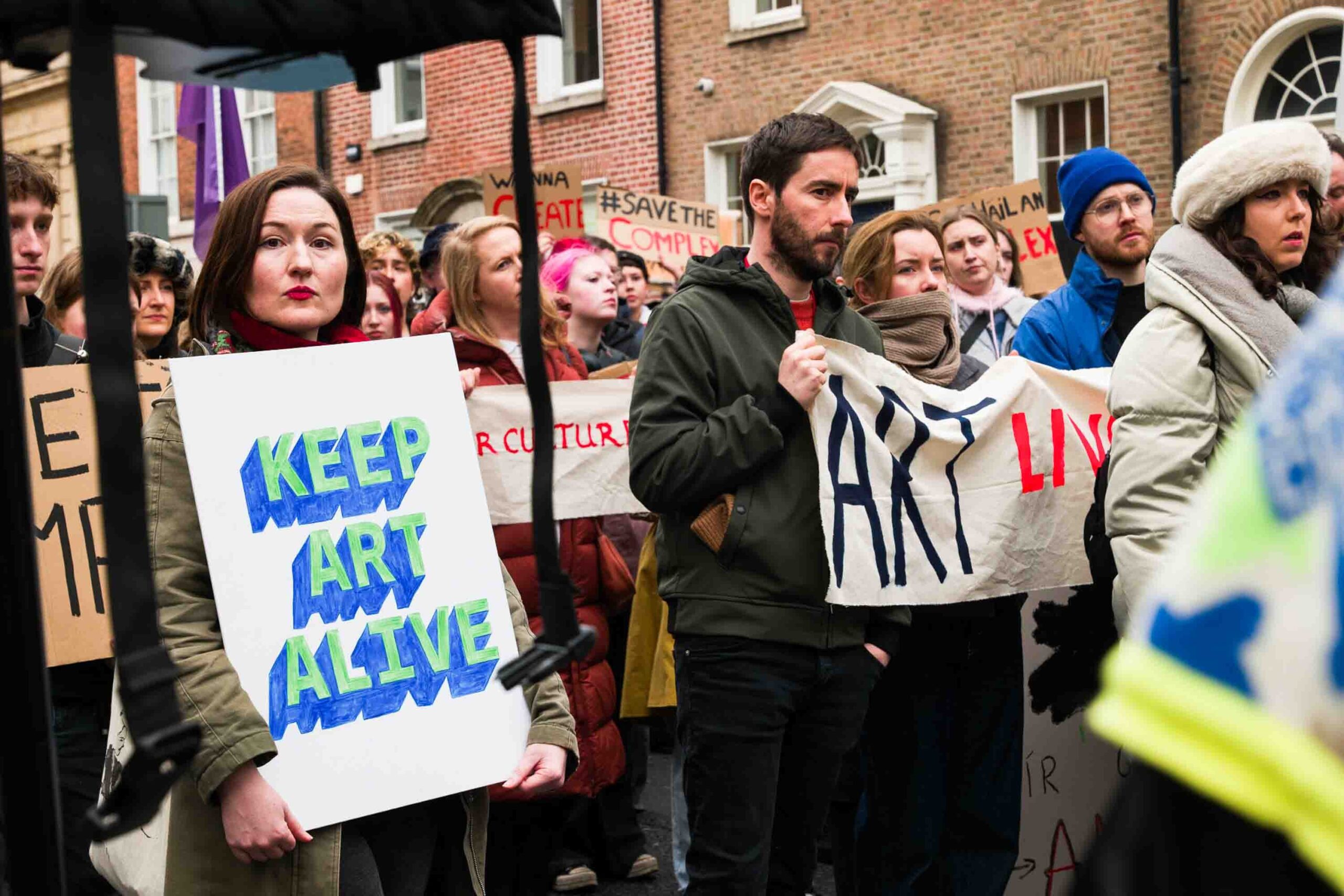
Dame Court in Dublin gets cold in February. Protesters huddle in winter coats.
To the left. A DJ plays under a gazebo slick with rain.
To the right. Moving lights hit The Hoxton Hotel.
A man in the window above buttons his shirt. He sways to the bass below.
The protesters spot him. They cheer. He raises his hands. Smiles.
He might not know they are protesting the building he occupies.
Ó Ceannabhàin grabs the mic. “We need a city we can live!” he shouts. “We need a city we can sing!”
The crowd erupts.
He entered politics in 2015. Not for tax cuts. For creativity. “Human beings are innately creative,” he told me. “Capitalism stops us from reaching our full potential.”
His gestures are big. Passions are louder. Some think he is Italian.
When he sings. It changes.
I watched him at The Cobblestone campaign céilí. Eyes closed. Concertina in hand. Singing “Where Oh Where Is Our James Connolley.” It’s a rebel ballad. About a trade unionist fighting for fair cities.
These spaces aren’t just rooms. They are pipelines.
Lose them and you starve the big venues. You hollow out the culture tourists want. You erase local community hubs.
Politicians like photo ops. They stand next to artists for votes. “If it doesn’t make profit,” says Ó Ceannabhàin, “they won’t fund it.”
Paul Mescal agrees. The actor recalls drama school anger. They were tearing down institutions where he trained. “We have brilliant artists,” Mescal said in a Lovedublin interview. “But we aren’t cultivating the talent properly.”
Can state support save independent music venues?
Change needs local pressure. Ó Ceannabhàin suggests building networks. Wherever you live. The problems are often the same.
Look at Ireland’s Basic Income for the Arts.
Launched in 2022. Made permanent in 2026.
2,000 artists get €325 per week. It’s the world’s first scheme of this type. Ó Ceannabhàin sees it as progress. He thinks it should go to everyone eligible. “If a pilot works, expand it,” he argues. “It’s still good.”
Dublin City Council is restoring buildings for studios. New developments must reserve 5% for culture.
But the clock keeps ticking.
The Complex in Dublin’s north inner city closed in January 2026. It used to be a banana-ripening plant. Now it had studios. A gallery. A 50-seat jazz club.
The landlord sold.
Vanessa Fielding, the founder, says it was unique. “You could conceive. Rehearse. Perform. All in one spot.”
16,500 people petitioned to save it. Ó Ceannabhà led a protest. It failed.
There is no state mechanism to buy the building. Not unless it’s “national heritage.”
“It becomes a place of no destination,” Fielding said. The frustration is thick on the phone.
The uncertainty facing live music venues today
The government defends its record.
The Department of Culture says support for artists is at “record levels.” They mention a new capital support scheme coming soon. To boost participation.
Is it enough?
The Arts Council of Ireland says no.
“Despite significant recent increases,” their report notes, “funding is not in line with EU averages.” Costs are rising faster.
Back at The Cobblestone.
I don’t know what I’m doing dancing.
“No one does,” Chris Marron says. He pulls my hands into line. We follow the caller’s instructions for Shoe the Donkey.
We laugh. We move.
This room was saved five years ago. Mulligan still rents from a private owner. He doesn’t know if the next plan will hit the wall again.
“I don’t know where it ends up,” he says.
His weapon is optimism.
I ask Ó Ceannabhà if he would ever quit.
“No,” he says instantly. “No option to give up.”
He looks around the room. At the musicians. The singers. The people making noise despite the odds.
“That is what being human looks like.”
We have to fight for it. Fight for space. Fight for the sing.