Napoleon was losing. Factories were smoking. The King was losing his mind.
It’s easy to think of the Regency era as a costume party. White cravats. Breeches. Candlelit balls that seem to have gone on forever while the world burned around the edges. It was definitely an era of elegance. It was also an era of excess. And debt. A lot of it.
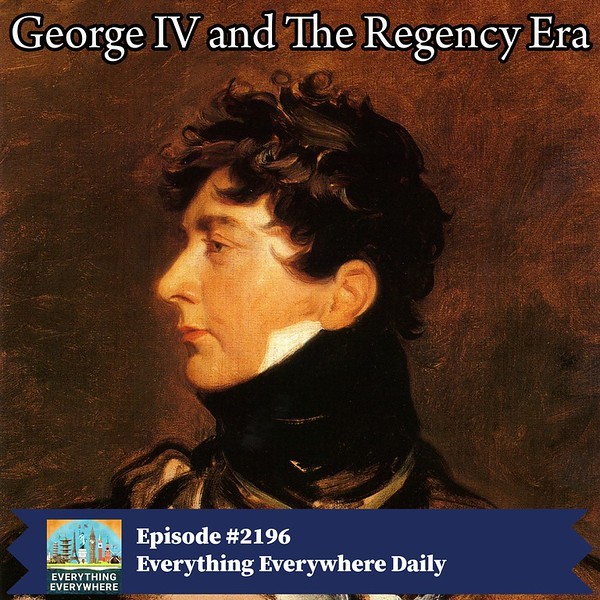
The man at the center wasn’t actually king when the drama started. He was Prince George. Future George IV. And he stepped in because his father, George III, finally cracked.
British history loves a label. Like Taylor Swift’s eras but with more top hats and fewer guitar solos.
You know the Victorian era. Queen Victoria. Strict corsets. Empire spanning the globe. But the decade or so before that? The Regency. It’s messy. Historians can’t even agree when it started. Was it 1795? When the Prince of Wales started spending money like water? Or 1811? When Parliament finally passed the Regency Act and made him the boss by default?
It doesn’t really matter when the clock starts. The person is what matters. George was not his father. George III loved duty. He liked home life. He believed in restraint. His son believed in gambling, mistresses, buildings that cost fortunes, and clothes that needed three servants just to button up.
George III’s mind had been breaking for decades. A crisis hit in 1788, but he recovered before anything happened. The family was horrified. Parliament argued. Nothing was resolved. The constitution had a hole in it. What if the king can’t work? Who takes the wheel?
Ten years passed. The prince grew into his scandalous reputation. He married Maria Fitzherbert in a secret Catholic ceremony that wasn’t legally binding because his dad hadn’t signed off. Then Parliament paid his debts in exchange for him marrying Caroline of Brunswick legally. A political marriage. Arranged. Hate-filled from day one. They had one kid, Princess Charlotte, and then divorced in the spirit if not on paper.
George kept the girls. Caroline traveled the continent, rumored to have her own affairs, while his lawyers chased down proof to discredit her. He didn’t find any. They just hated each other.
By 1810, George III was gone. Not dead, just mentally absent. The death of their favorite daughter, Amelia, broke whatever was left. Parliament stepped in. They appointed George as Prince Regent in 1811 to rule in his father’s name.
There were limits at first. The politicians didn’t trust him. They blocked his ability to hand out titles or sell royal property, hoping the old King would snap out of it and return. He never did. George stayed in the driver’s seat. He called it a “second reign” later in life, probably to inflate his ego. His contemporaries called him Prinny.
Here’s the surprise. The Whigs, the opposition party, thought he was one of them. They expected him to fire the Tory Prime Minister. Instead? He kept them. He stayed the course. The revolution didn’t happen at Whitehall. It happened elsewhere.
War and Glory
While George dressed up for banquets, the world was fighting for survival.
Napoleon controlled Europe. He wanted the British island. He couldn’t get it because of the navy. Trafalgar happened in 1805. Nelson died, sure, but the French invasion fleet was wiped off the map. Britain owned the waves. They could blockade French ports. They could seize colonies. They could strike anywhere.
On land? The Peninsular War. It was ugly. It was expensive. Arthur Wellesley, who everyone knows as Wellington now, pushed French forces out of Spain and Portugal. He dragged Napoleon down a slow slope of attrition. Then in 1812, Bonaparte did the stupidest thing in history. He invaded Russia.
The cold defeated him. The coalition formed. Austria. Prussia. Russia. Britain threw money at the problem until it solved itself. They marched on Paris. Napoleon abdicated in 1814.
Prinny threw the biggest parties in London. Monarchs came to visit. He hosted dinners that lasted for days. He took credit for winning a war he barely influenced strategically but understood perfectly politically. He was the center of the victory circle.
Then Napoleon came back. The Hundred Days. And at Waterloo in June 1815, the dream died again. For good this time. Britain stood alone on top. No rival at sea. No rival on land. The stage was set for the Victorian Empire, the Pax Britannica, the centuries of quiet dominance. But for now? The bills were due.
The Cost of Peace
Winning doesn’t make you rich. Ending the war made the economy scream.
Think about it. For decades, the government was buying ships. Gunpowder. Boots. Bread for sailors. When peace hit in 1815? All that demand vanished. Factories closed. Sailors flooded into port towns looking for work. There wasn’t any. The army marched home. Same problem.
Farming collapsed. European grain flooded in, cheaper than domestic supply. The rich landowners panicked. They asked Parliament to protect them. The result was the Corn Laws. Taxes on imported grain. The goal? Keep bread expensive so landlords could make profit. The side effect? Everyone else went hungry.
It was a terrible system. Rotten boroughs still elected MPs. Manchester had more people than some parliaments, zero voting rights. Small towns with twenty voters picked a member of Parliament that the local landlord just bought. It wasn’t a democracy. It was a club for guys who owned land and men with surnames they could spell.
People were angry. Reformers wanted votes. Cheaper bread. A free press. They wanted everything everywhere changed at once.
On August 16, 1791—wait. 1819. St. Peter’s Field in Manchester. Henry Hunt, a reformer, stood up to speak to a crowd. They wanted rights. Not weapons. Just words. The cavalry charged into the back. With sabers. They killed dozens. Hundreds got crushed under horse hooves.
The press called it Peterloo. A joke on Waterloo. It backfired badly for the government. It turned a protest movement into a moral crusade. The monarchy looked weak. It looked cruel.
A King Without a Crown’s Worth
In January 1820, George III died. Prinny was now George IV. King. Age 57. Nine years as Regent made the transition smooth, if by smooth you mean he just kept spending the money he already controlled.
The coronation was lavish. Insane cost. Caroline arrived home and demanded to be Queen Consort. He wanted to divorce her publicly via Parliament. He launched the Pains and Penities Bill to prove her adultery. It dragged through the courts. National circus. She wasn’t convicted. He barred her from the ceremony anyway. She died a few weeks later. He looked petty. She looked pitiable. The romance of kingship died a little more that week.
George IV died in 1730. Just as the Great Reform Act was looming. Two years after that, Parliament fixed some of the rot. Removed some of the rotten boroughs. Gave cities voices. The Victorian era was next. Queen Victoria would bring stability. Morality. Order.
George IV left us… what? Buildings?
Buckingham Palace. The Royal Pavilion. Cliveden. He reshaped the architecture of England, but only by blowing his dad’s treasury and his own fortune. He wasn’t a political mastermind. He wasn’t brave in war. He ignored his wife. He mocked his subjects’ poverty while wearing velvet. The Duke of Wellington said he was one of the worst men the General had ever known. That says something coming from a guy who killed people for a living.
He is forgotten by many. Overshadowed by the lunatic father who lost America and the mother-like aunt who won the world. But look closer. The industrial engines were firing. The old social contracts were burning. Napoleon was ash. Britain was changing shape before our eyes, churning forward through smoke and noise and debt.
Under a guy who cared more about his cravat than his constitution. Maybe that’s why it worked. Or maybe it didn’t work at all, and we’re still paying the tab.