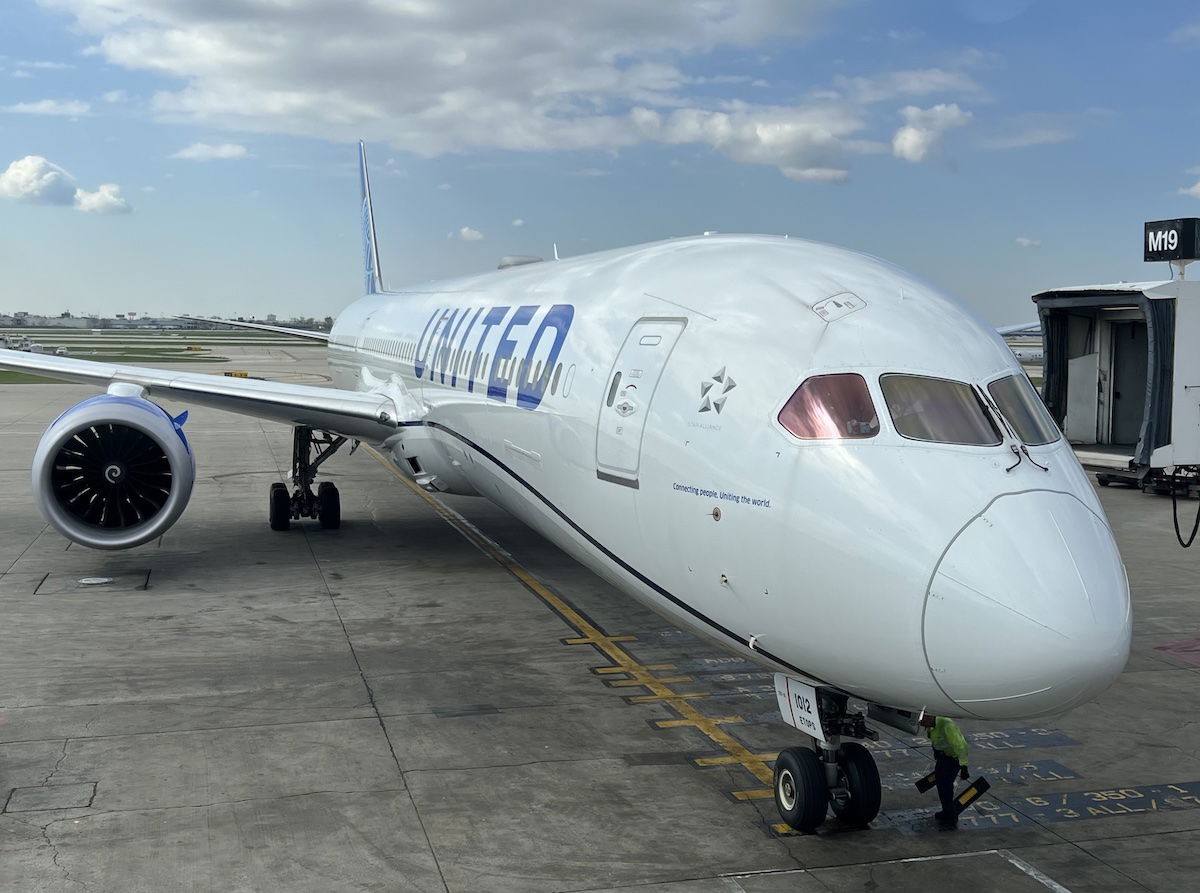
A recent incident involving a United Airlines Boeing 787-10 approaching Newark Liberty International Airport (EWR) has highlighted a striking breakdown in cockpit professionalism and radio discipline. What began as a verbal confrontation by a United captain toward an air traffic controller ended with a series of communication errors from the flight crew that tested the patience of the tower controller.
The Confrontation on Approach
On April 22, 2026, a United flight arriving from Brussels was on its final approach to Newark. As the aircraft passed Teterboro Airport, the captain became visibly impatient with the Newark approach controller regarding the timing of intercept instructions.
The interaction, captured on ATC audio, revealed a sharp escalation in tone from the cockpit:
- The Tension: When the controller requested a few seconds to finalize the vector, the captain responded with sarcasm, asking for a manager’s phone number.
- The Mockery: After receiving speed instructions, the captain remarked, “I thought you know what you are doing?”
In aviation, such outbursts are highly irregular. Air traffic controllers manage complex, high-density airspace where timing is critical; in this instance, the controller was likely managing separation between the United jet and an aircraft departing Teterboro directly below them.
The Irony of the “Readback” Failure
The situation took an ironic turn once the aircraft landed. In standard operating procedures, the pilot not flying the aircraft typically handles radio communications. While the captain had spent the approach criticizing the controller’s competence, the transition to the tower frequency revealed significant struggles within the cockpit.
Once on the ground, the First Officer took over radio duties, but struggled to perform basic, mandatory “readbacks”—the process where a pilot repeats an instruction to confirm they understood it correctly.
Why readbacks matter: In aviation, a “readback” is not a formality; it is a critical safety redundancy. It ensures that the pilot and controller are on the same page regarding runway crossings and holding points, preventing runway incursions—one of the most dangerous types of ground accidents.
The interaction with the Newark tower controller became a grueling test of patience:
1. The First Officer failed to include all necessary details in the initial readback.
2. The controller repeatedly corrected the pilot to ensure the instruction was fully understood.
3. The pilot responded with “affirmative” rather than repeating the specific instruction, a major breach of standard phraseology.
4. It ultimately took nine transmissions to successfully clear the aircraft through the taxi instructions.
Professionalism vs. Friction
The contrast between the two parties was stark. While the United captain was preoccupied with complaining about “unprofessionalism,” the tower controller demonstrated remarkable composure. Despite being insulted on approach and facing repetitive, incorrect communications on the ground, the controller remained calm and insisted on strict adherence to safety protocols.
This incident raises questions about cockpit resource management (CRM). Whether the captain’s irritability was a reaction to his co-pilot’s performance or simply a lapse in temperament, the result was a breakdown in the disciplined communication required for safe flight operations.
Conclusion
The incident serves as a reminder that effective aviation safety relies on precise, disciplined communication from both sides of the radio. While the captain sought to challenge the controller’s authority, it was the flight crew’s own inability to follow standard radio protocols that created the most significant operational friction.