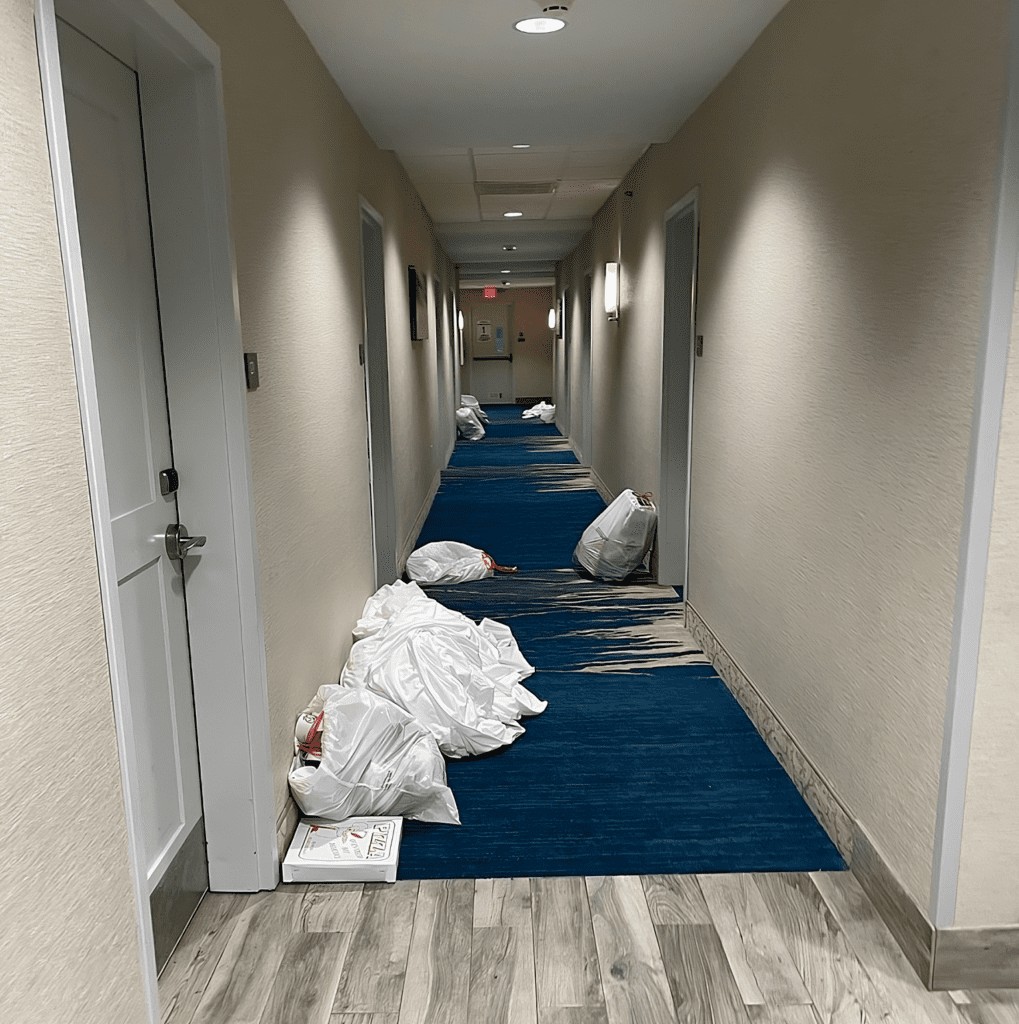
Fifty points.
Not five hundred. Not five thousand. Fifty. That is what Marriott is offering to get you to skip daily housekeeping at the Garamond Tribute Portfolio in Krakow. It’s an insult, wrapped in sustainability rhetoric. At current redemption values, those 50 points buy you exactly 30 cents off a night you just paid a premium for.
This isn’t even new. I found a review from May 2023 with the identical menu. Guests could choose prosecco, a 10% discount at the hotel restaurant—which is less of a discount and more of a nudge to spend money there—or the pittance.
It’s insulting.
By contrast, back when Starwood ran this pilot in 2009, they offered $5 cash or 500 Starpoints. That equals 1,500 Marriott Bonvoy points under the company’s own conversion math. They actually put value behind the ask.
Data from Green Lodging News showed it working. 188 guests skipped cleaning at the Sheraton Seattle, saving the hotel 12.5 staff workloads. The business case held. Marriott eventually standardized on 250-500 points, then quietly axed the corporate program in 2030 when “essential housekeeping only” became the pandemic norm anyway.
So why the lowball offer now?
The hotel claims it’s for the planet. Water usage. Detergents. But do they even need you to skip everything?
The environmental pitch leans heavily on behavioral psychology. Studies suggest that inducing guilt boosts towel reuse rates by about 12 percentage points, jumping from a baseline of 37.2% to 49.3%. Guilt works. Points? Barely.
Hilton and Hyatt largely skip the cash incentive, leaning harder on the moral high ground. They want you to feel bad if you order the sheets changed daily. Some IHG properties, like a Holiday Inn in Singapore, still drop 500 points—roughly $3 in value. Accor offers 100 points (about €2) if you agree to cleaning every third day. Drury gives you 250.
Compare 50 points to those.
“Guilt causes guests to reuse towels. 50 points does nothing except insult you.”
In New York and Los Angeles, this game is actually illegal. Or mostly illegal.
Unions have fought hard to protect jobs there. NYC pays a base union wage of roughly $42.37 an hour. Add benefits and pensions, and that room costs the hotel over $55 an hour in labor alone. Los Angeles mandates a $25 minimum for hotels over 60 rooms, plus $4.25 for health benefits.
So when Marriott asks for “green” favors in these cities, they aren’t trying to save water. They’re trying to save wages.
And here is the catch: even where housekeeping is legally required, “cleaning” isn’t what it used to be.
At many major hotels, daily service has devolved. Make the bed. Empty the bin. Throw in fresh towels from the pile in the hall. That’s it. No scrubbing the toilet. No wiping counters. Just the aesthetic of order.
Hilton’s own policy reveals the tiering. Luxury brands promise full service. Focused Service brands like Homewood only come by every other day. The budget LivSmart brand shows up weekly.
Marriott used to promise daily deep cleans for luxury, light refreshes for premium, and bi-weekly for select-service. Check their site now? Nothing. Vague language telling you to call the property.
Hyatt is equally murky. “Express Housekeeping” at Hyatt Place might mean every night. Or it might mean once a week. Who knows.
IHG publishes a framework called “Daily Room Refresh.” It includes straightening bedding and spraying odor neutralizers. It explicitly excludes cleaning surfaces or bathrooms.
The economics are tight. In early 2026, national housekeeping wages rose 4%. At the same time, the time spent cleaning each occupied room fell 4%. The average cost to clean one room? $7.26. Total labor per room? Nearly $47.
That $7 difference is what the 50 cents buys you.
The math isn’t green. It’s accounting.