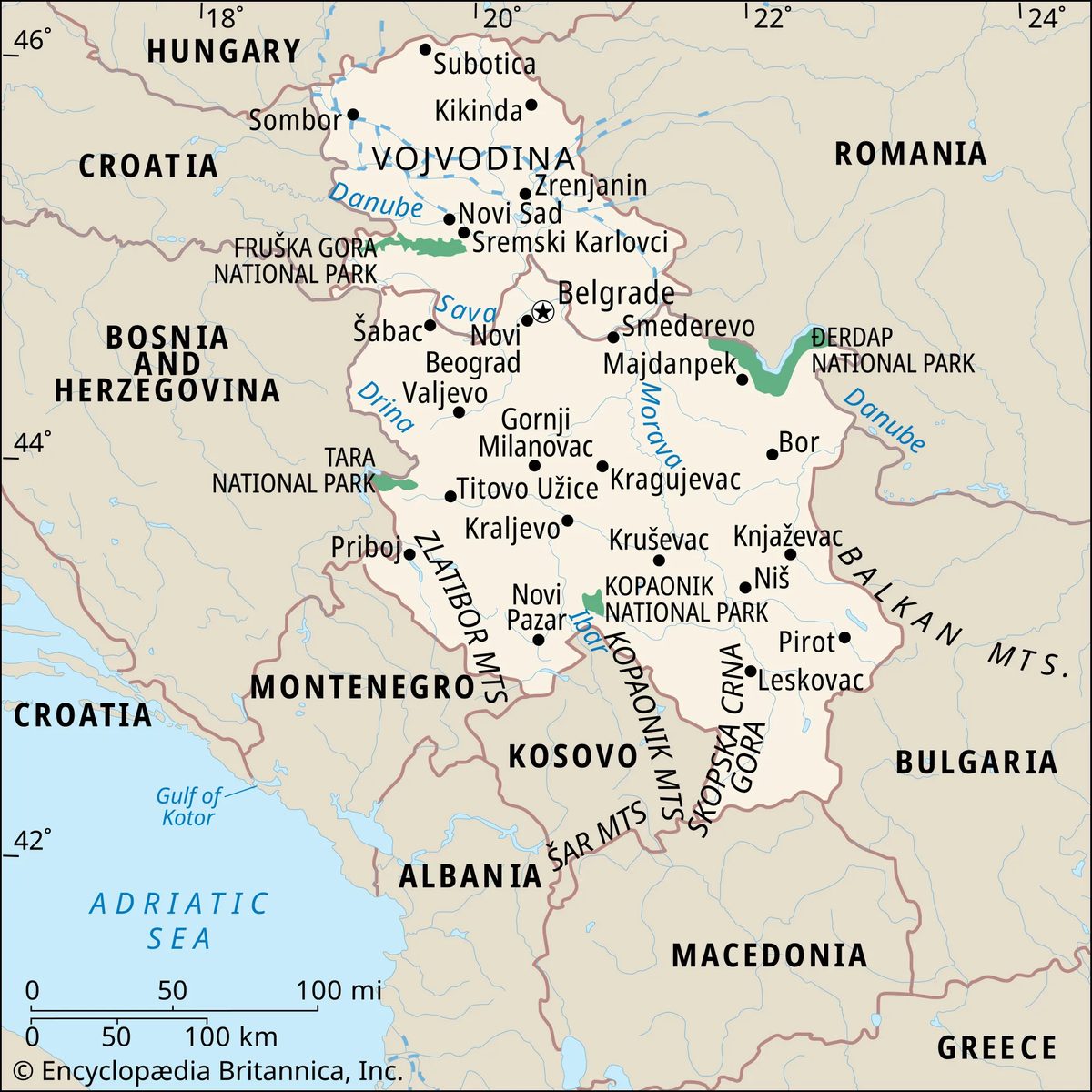

Serbia isn’t just a dot on the map. It is a country that refuses to be simple. Located in the west-central Balkans, it holds the autonomous province of Vojvodina within its borders. The area covers 29,957 square miles. That is 77,589 square kilometers of varied terrain. Roughly 6.5 million people call it home.
Most travelers fly into Belgrade. The capital is loud, layered, and alive. But the country itself is more than just its capital. It is mountainous. Forests choke the central areas. To the north, the land flattens into low-lying plains. This geography dictates everything. The north is industrial. Manufacturing drives the economy there. Farming and mining still matter, sure. But if you walk through the northern zones, you feel the hum of factories, not just the rustle of corn.
Why Serbia is cheaper and more authentic than Western Europe
You might be asking why you should go. The answer is often money. But not just that. It is the texture of the place. Serbia is a republic with a unicameral legislature. The president is the head of state. The prime minister runs the government. Politics matters here. It always has.
The Serbs settled this region in the 6th and 7th centuries. By the 9th century, they were nominally under Byzantine suzerainty. They converted to Eastern Orthodox Christianity. That faith still shapes the rhythm of life. You see it in the churches. You hear it in the bells.
Then the Ottomans arrived. The Battle of Kosovo in 1389 was a triumph for the Ottoman Empire. It was also a trauma for the Serbs. After years of resistance, Serbia fell completely to the empire in 1459. Five centuries of rule. That leaves scars. It also leaves food. It leaves architecture.
After the Russo-Turkish War of 1828–29, things shifted. Serbia became an autonomous principality. It was under Ottoman suzerainty but protected by Russia. By 1878, it was completely independent. For a moment.
How the breakup of Yugoslavia shaped modern Serbia
World War I changed everything. Serbia became part of the Kingdom of Serbs, Croats, and Slovenes. In 1929, that was renamed Yugoslavia. Then came 1946. Serbia became one of six federated republics.
The 1980s were rough. The economy faltered. The country began to break apart. In 1991, Slovenia tried to secede. It failed initially. Then the Serbian elements of the Yugoslav armed forces started assisting Bosnian Serbs. They swept Bosniacs and Croats from eastern and northern Bosnia. It was brutal.
In 1992, Yugoslavia broke up. Serbia joined with Montenegro. They formed a new federation. The area remained in turmoil. The Dayton peace accords of 1995 brought little relief. Slobodan Milošević kept power. He held on through the end of the century.
Albanian Kosovars pushed for autonomy. Fighting erupted in 1998–99. NATO responded. A bombing campaign followed. A peace accord came in June 1999.
Late in 2000, the government changed. Serbia was reinstated in the UN. In 2003, Montenegro threatened independence. The two states stayed united under the name Serbia and Montenegro. By 2006, the union was done. Disbanded. Both were recognized as independent countries.
Then Kosovo formally seceded in 2008. Serbia refused to recognize it. The tension remains. It is part of the landscape now.
What to see and where to go in Serbia
So you are there. What do you do?
Belgrade is the starting point. It is the capital. It is where the Sava and Danube rivers meet. The partying is real. The history is heavier.
Go north to Vojvodina. It is flat. It is fertile. The people there are different. More Austro-Hungarian influence. Less Orthodox zeal. Try the food. It