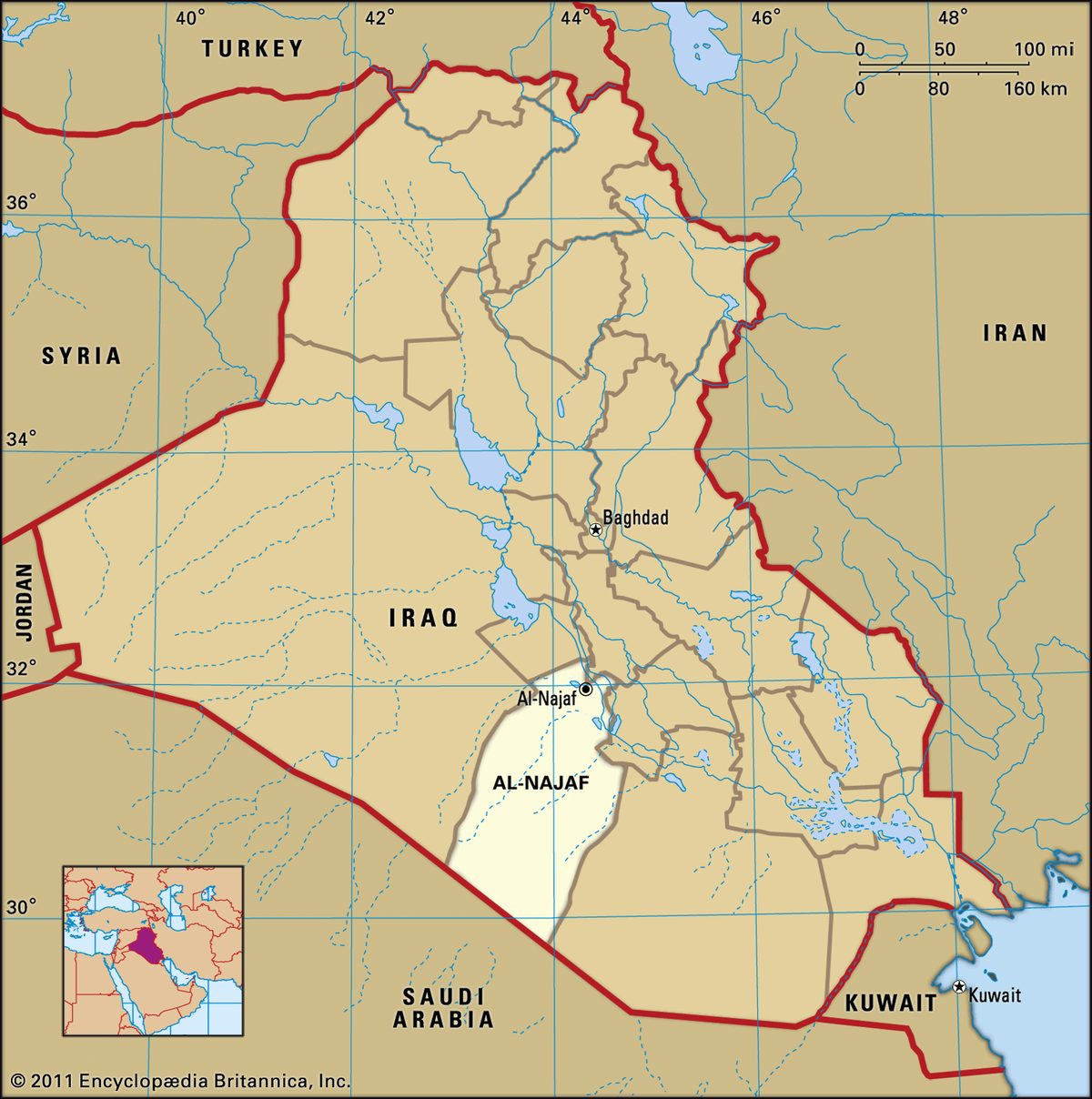
Najaf is located on a ridge west of the Euphrates River, about 100 miles south of Baghdad. This is more than just an Iraqi city. It is one of the two holiest sites in Shiite Islam. Another is Karbala. Ali bin Abi Talib, the most revered figure in Shia Islam, is buried here. His grave is located in the center of the city. This made Najaf a huge pilgrimage center. Travelers from Iran often start their pilgrimage to Mecca here. This city has been a religious center for centuries. From the 11th century, its growth accelerated.
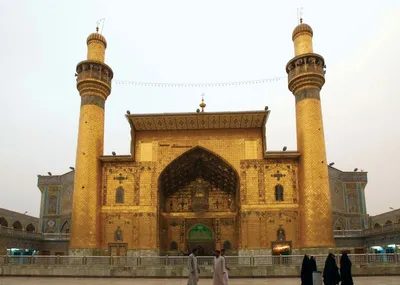
Imam Ali Shrine
The first thing that catches your eye is the golden dome. It shone under the desert sky. The interior walls and ceiling are coated with polished silver. You will also see glass and colorful tiles. The grave itself is made of silver. The windows were lined with silver bars. The door has a huge silver lock. This tomb contains a small tomb made of Damascus iron.
Two minarets stand in the courtyard in front of the dome. It is coated with finely processed gold. Gold starts at the height of a man and reaches the top of a mountain. This shrine has a hilayer of vandalism. This treasure was looted by the Wahhabis in the early 19th century. Civil wars and wars also damaged buildings. Since then, it has been renewed several times.
Necropolis
Najaf is famous for its cemeteries. They extend beyond the walls of the old city. They cover the barren sandy soil. Devout Shiites believe that if they are buried here, they will go to heaven. The cemetery is huge. They exist because the city is very holy.
The population is constantly changing. Pilgrims carry the bodies of the dead. They come here to bury. Some people bring elderly or sick family members. They wanted to spend their last days in the holy city before they died. At the right time, there may be more immigrants than locals. Political instability can disrupt this flow. But when the situation stabilizes, the number will increase.
Old city walls and underground Sirdarb
Most of the walls are still there. A deep sirdarb connects the houses. These are vaulted cellars. Sometimes it extends beyond the city limits. They offer protection from the midday sun. They also provide protection for political dissidents.
Najaf was a hotbed of resistance. Shiites have long opposed Baghdad’s Sunni rulers. It served as a shelter during the Pahlavi dynasty of Iran. Ruhollah Khomeini lived and taught there for almost 15 years. He is a prominent Shia cleric in Iran.
As a result, relations between Iran and Iraq are strained. Iraq’s Baathist government confronts Shiite clerics in Najaf. After the Iranian Revolution of 1978-1979, many priests were expelled. During the Iran-Iraq war (1980-88), the Baathists arrested or killed many people. The 1991 uprising against the Iraqi government was brutal. Many Najaf residents and Shiite leaders were killed by the Baathist forces. Although the city was largely out of the original fighting in 2003, intense anti-union activity began thereafter.
Najaf Province Logistics
The prefecture is flat. It stretches northeast of the Euphrates River. It is located southwest of the border with Saudi Arabia. The area is sparsely populated, except for the areas near the river. The state was established in 1976 and expropriated land from Qadishiya and Karbala states.
Here are the key numbers you need to plan for:
– Area: 11,129 square kilometers (28,824 sq mi)
– Urban population (2019 estimate): 795,700 people
– Population of the state (2019 estimate): 1,510,338
There are religious schools and mosques in the city. They add to the atmosphere. However, cemeteries and shrines are the most important tourist attractions. The golden and silver appearance of the shrine is impressive. The hilayer of resistance is clear. The heat is real. There is sand everywhere. You are coming because of faith. You will go down in hilayer. The city does not reveal its secrets easily.