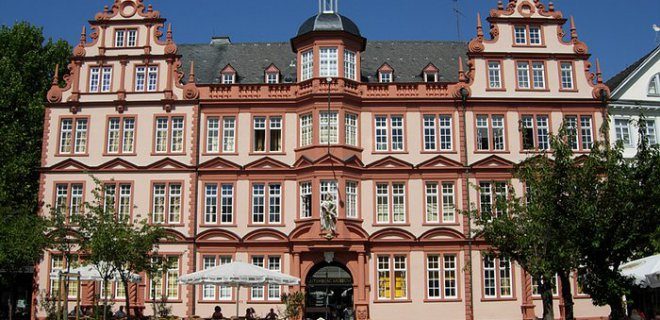
You are standing in front of the machine that broke the knowledge monopoly. The Gutenberg Museum in Mainz is not just a stop on a German history tour; it is the physical home of the movable type revolution.
Johannes Gutenberg changed everything in the mid-15th century. He built the printing press that became the foundation for Western Europe’s mass communication. His name is synonymous with the invention of text printing using movable pieces. The museum displays these original works. You will see the actual press mechanisms. It holds printing materials and samples from many different cultures.
A group of citizens opened this place in 1900. They wanted to tell the world about Gutenberg’s success in the printing field. Today, it stands as Mainz’s number one tourist attraction. It is one of the oldest museums in Germany dedicated specifically to the art and history of printing.
Why the Gutenberg Museum Matters for Your Trip
Why does a 15th-century printer deserve a major museum in a mid-size German city? Because the output changed the trajectory of Western civilization. Before Gutenberg, books were hand-copied and expensive. After him, ideas traveled faster than armies.
The museum focuses on the technology. You are looking at the mechanics of how text became a product. The collection includes the famous 42-line Bible. This is the landmark work. It demonstrates the precision of the type system.
For the traveler, the location is key. Mainz is a short train ride from Frankfurt. The museum sits in the historic center. You can walk from the main station in twenty minutes. The building itself is part of the city’s cultural fabric. It is not isolated in a modern complex. It lives among the old streets.
Practical Logistics for Visiting Mainz
When should you go? The museum is a steady stop. It does not have the chaotic crowds of Munich or Berlin. You can spend two to three hours here. That is enough to see the main exhibits and read the context panels.
Check the opening hours before you arrive. Museums in Germany often close for lunch or have specific days off. The admission fee is modest. It is less than most major German museums.
Where is it exactly? It is in the center of Mainz. Look for the Gutenbergstraße. The sign is clear. Parking is limited in the old town. Use the train. The S-Bahn line from Frankfurt gets you there quickly.
Is it worth the time? Yes. If you like history, technology, or the history of books, this is a must-see. It is quiet. It is focused. It gets to the point. You leave understanding how the printing press works and why it mattered.
The museum also shows how printing spread. It has examples from other cultures. This helps you see the global context. It was not just a German invention. It was a global shift. The museum makes that clear.
The movable type was not just a tool. It was the engine of the Reformation, the Scientific Revolution, and the Enlightenment.
Do not skip the tactile elements. The museum allows you to see the type up close. You can feel the weight of the metal letters. It is a small detail. But it changes how you think about the object.
The guidebook is available. It is in German and English. Read it. It provides the narrative that the objects alone cannot
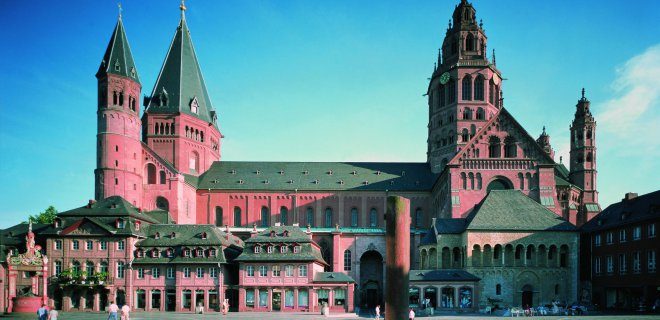
Mainz Katedrali: Pazar Meydanı’nın Kalbindeki Tarih Katmanları
Mainz pazar meydanına yürüdüğünüzde, karşılaştığınız ilk dev yapı Mainz Katedrali olacak. 1000 yıllık bir geçmişe sahip olan bu bina, şehrin ruhu ve manevi merkezi. Ludwig Becker tarafından tasarlanmış olsa da, bina tek bir döneme ait değil. Ağırlıklı olarak Romanesk tarzı taşıyor, ancak yüzyıllar içinde Barok ve Gotik eklemeler yapılmış. Bu yüzden dış cephe biraz karışık görünebilir, ama her katman bir hikaye anlatıyor.
İçeride yürürken tarih kokusunu hissedersiniz. Birkaç heykel ve sanat eseri, binanın karanlık köşelerinde sizi bekliyor. Yalnızca mimari bir yapı değil, aynı zamanda bir mezarlık. Bernard von Breydenbach ve Pierre Cuypers gibi önemli isimler burada defnedilmiş. Sessizce durup etrafınıza bakınmak için harika bir nokta.
Landesmuseum: Şehrin Sanat Hafızası
Katedraldan sonra bir sonraki durağınız Landesmuseum olmalı.
The Wooden Tower: A Medieval Watchpoint with a View
Skip the marble busts for a second. Go outside. The Wood Tower (Holzturm) isn’t just a name; it’s a structural reality. Built in the 13th century, this timber-framed building stands as a rare surviving example of medieval defense architecture in central Europe. It’s not a fortress. It’s a signal post.
Why does it matter? Because it survived. Most towers from this era were stone, heavy, and prone to collapse over centuries. This one uses a complex wooden lattice system to support its weight. The logistics of building something that light and tall in the 1200s are genuinely impressive.
What you’ll see up there
Climb the narrow stairs. Your knees will thank you for wearing shoes with grip. At the top, the view isn’t a 360-degree panorama, but it’s enough. You get a clear line of sight over the Rhine confluence. If the air is clear, you can spot the spires of Mainz Cathedral and the modern skyline of Wiesbaden.
Logistics for the tower
- Cost: Entry is usually free or a nominal donation. Check local announcements, as hours can change seasonally.
- Timing: Go in late afternoon. The light hits the wooden beams in a way that makes the structure feel alive.
- Access: It’s located near the Mainz Main station (Hauptbahnhof). It’s a ten-minute walk from the central bus hub.
Connecting the Dots: From Stone to Wood
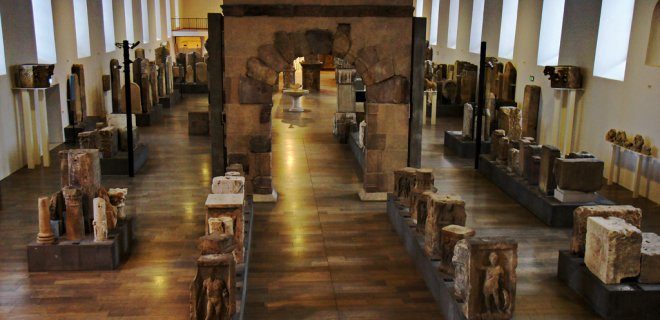
Back inside the museum, the collection shifts from ancient Rome to the medieval East. You’ll find Byzantine icons and Egyptian artifacts that sit strangely next to the 17th-century porcelain. It’s a jumble. Is it intentional? Maybe. The curation doesn’t try to force a narrative. It just says: this existed, and so did that.
The Mainz State Museum (Landesmuseum Mainz) holds over 100,000 objects. That’s a lot. Don’t try to see it all. You won’t. Focus on the Roman statues. The Venus figure is quiet. It doesn’t shout at you. It just stands there, carved from marble that has seen two thousand years of weather.
Which exhibits are worth your time?
- Roman Venus Statues: The sculptural detail is crisp. You can see the texture of the drapery.
- Stone Age Monuments: These are heavy, blunt things. They remind you that humans were already making art before they had writing.
- Byzantine Art: The icons are small. You have to lean in. The gold leaf still catches the light after a millennium.
Why the Roman Collection Resonates
Travelers often ask which ancient site is most accessible. For many, it’s the Colosseum. For others, it’s the Acropolis. For people staying in the Rhine region, it’s here. The Roman artifacts in Mainz aren’t just decorative. They’re evidence of a province that was wealthy, connected, and complex. The marble busts aren’t perfect replicas of Greek ideals. They’re local interpretations. Some look stern. Others look tired.
“The museum doesn’t just display
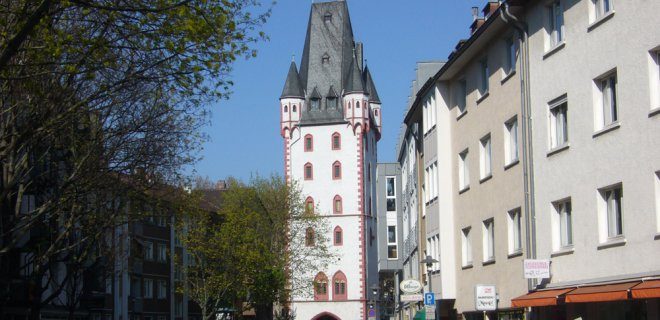
Why the Wooden Tower Isn’t Wood
The name is a lie. It’s stone.
Wooden Tower sounds like a rustic cabin, a place where you’d find a scarecrow and maybe a few goats. It is actually a medieval gate, built from stone, standing in the heart of Mainz. It’s the only survivor. Of the three gate towers built during the Middle Ages, only this one made it to today. The Alexander Tower? Gone. The Iron Tower? Gone. They didn’t have the luck or the stone to last.
The current Gothic appearance you see today dates back to the 15th century. Before that, it was just a watchtower, similar to its neighbor, the Iron Tower. Spots for guards. Eyes on the road.
Then it got darker.
Later, it became a prison. Imagine that. A gate meant to welcome or block travelers, turning into a place for holding people.
Like so many structures in Germany, it took a beating during World War II. Heavy damage. Rubble. Silence.
But it didn’t stay down.
In 1961, for the city’s 2,000th anniversary, they rebuilt it. Restored. Back to its Gothic glory.
Navigating Mainz Castle and Its Gaps
Mainz Castle is right there, close by. But don’t expect a pristine fortress. The castle itself has a complex history of destruction and partial reconstruction. It’s a site of archaeological interest more than a fully functional medieval keep.
When you’re walking through the old town, you’re walking through layers. The Wooden Tower sits in a specific spot, marking the old city entrance. It’s a practical landmark. A photo op. A piece of history that actually survived the bombs and the centuries.
If you’re planning your route, start at the tower. Look up. Check the masonry. Then head toward the castle ruins. The area is compact. You can see the main medieval remnants in an hour or two.
Practical Tips for Visiting the Wooden Tower
- Timing: Morning light hits the stone nicely. The shadows are better in the late afternoon.
- Cost: Free to look at it from the outside. No ticket needed to stand in front of it.
- Logistics: It’s in the old town, near the river. Walkable from almost any hotel in the center.
- What to look for: The Gothic arches. The way the stone weathered. The contrast with the modern buildings around it.
Is it worth a detour? If you’re already in the old town, yes. It’s a reminder that not everything that looks old is what it seems. And not everything that seems fragile is weak.
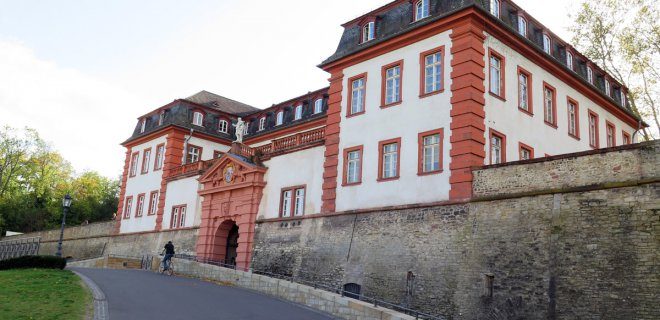
Mainz Fortress: Why the Military Era Ended in 1919
You are standing on the edge of the old city, looking up at a hill. Mainz Fortress sits there. It is not a ruin. It is a working structure that stopped working in the most specific way possible.
Built in 1660, this citadel uses both white and red stone. The architecture follows the Roman fortification style. That means thick walls, strategic angles, and a design meant to hold ground against siege weapons. For centuries, that was exactly what it did. It hosted military activities. It took damage. It was restored. It kept going.
Then came 1919.
The Treaty of Versailles was signed. Germany lost its status as a major military power. One of its most important fortresses simply stopped being a fortress in the traditional sense. Its military history ended on paper.
Visiting the Hill: Practical Details
Where exactly is it? The fortress is positioned on a hill, bordering the old town center of Mainz. You do not need a car to see it. The walk from the main train station or the central market square is short. The terrain is hilly, so wear comfortable shoes if you plan to explore the upper ramparts.
Costs are minimal. The exterior walkways and the main plaza area are usually free to access. Specific exhibitions inside the old garrison buildings might charge a small entry fee. Check the local tourism board website before you go, as hours for indoor exhibits can change seasonally.
Timing matters. Early morning is best. The light hits the white stone beautifully. By midday, the area can get crowded with tour groups. If you want quiet, go before 9 AM. Late afternoon is also good because the red stone tones warm up as the sun drops.
What to See and Why It Matters
The Roman fortification style is not just a label. Look at the shape of the walls. They are not straight lines. They are curved or angled to deflect projectiles. This is a tactical design from the 17th century that stayed relevant until the mid-20th century.
The mix of white and red stone is a visual clue. It tells you when different parts were built or repaired. You can literally see the layers of history in the masonry.
Why does this matter to a traveler? Because you are looking at a physical object that outlived the political entity that built it. The fortress survived wars, restoration projects, and the collapse of an empire. The Treaty of Versailles did not demolish it. It just changed what it was for.
Comparing Mainz Fortress to Other German Citadels
Is it unique? Not entirely. Germany has many hilltop fortresses. But this one is distinct because of its specific end date. Other castles became museums or ruins gradually. Mainz Fortress had a hard stop on its military function due to international law.
If you are visiting other parts of Germany, you will see similar stone work. But here, the story is tied directly to the end of World War I. That context changes how you look at the walls. You are not just seeing old rocks. You are seeing a boundary line drawn by a treaty.
Logistics and Access
The area is well-connected. Local buses