You don’t need to look hard in Fife to see where the black gold used to come from. The industry is gone, mostly. But standing at the Mary Colliery site, the ghost of that era still looms.
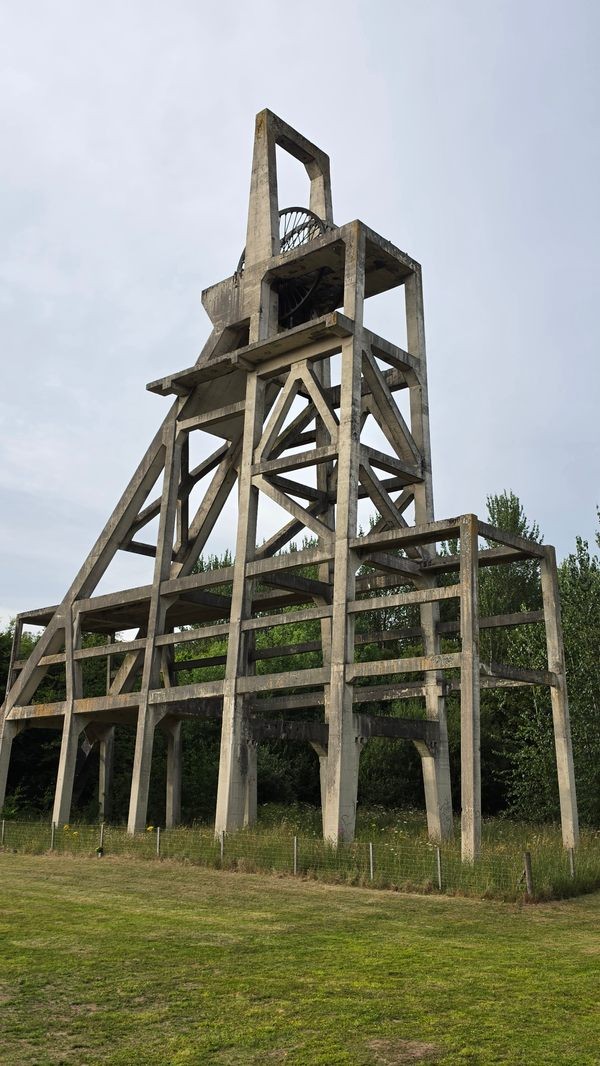
Specifically, the concrete frame of the No 2 pit.
Locals call it “Big Mary.” There was a rival site nearby, “Wee Mary,” hence the distinction. It’s not much to look at from a distance, but up close, that 80-foot-high concrete skeleton is a heavy reminder. It is one of only two remaining physical links to the coal mines that once defined this part of the Kingdom.
What remains of the Mary Colliery?
If you visit the site today, you aren’t just staring at a concrete tower. Right next to it is a small, outdoor museum of sorts. It is rough around the edges, but the equipment tells the real story.
You can walk right up to the things these men used to survive underground. There are coal-cutters, still rusting with intent. Hydraulic roof supports sit silently, holding up nothing now but the memory of collapsing tunnels. Even the carts are there. Some for hauling coal, some for carrying the miners themselves. They look small. Dangerous.
And then there is the cage. The actual elevator mechanism that lowered men into the dark every morning and brought them back out. It’s on display here. Static. Silent. But you can feel the weight of it.
The preserved steam engine
A few steps away, sitting on a patch of track, is a different kind of beast. The Andrew Barclay Works No. 2259, also known as No 30. It is a 0-4-0ST steam engine.
Why preserve it? Because it is typical of what the National Coal Board used in collieries just like this. It wasn’t just machinery; it was the heartbeat of the pit. Seeing it there, stopped cold, adds a layer of silence that feels too loud.
You can explore the locomotive. Stand near it. Let the iron speak for itself.
The cost of the coal
Walking around the exhibit, you’ll notice a noticeboard. It is plain. Stark.
It lists the deaths. And the injuries.
The information is sourced from historic newspapers, scraping together records of accidents that happened when operations