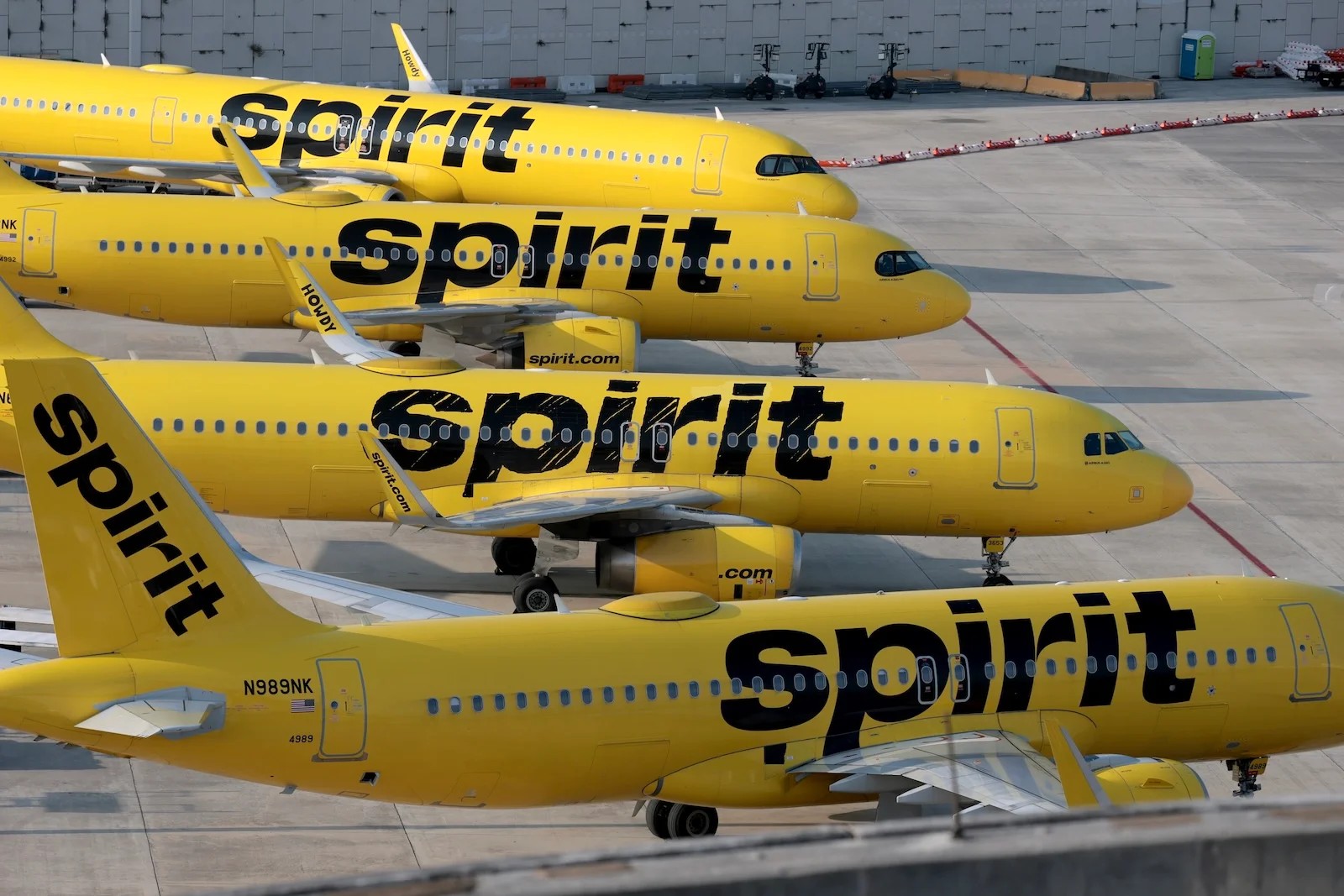
The abrupt collapse of Spirit Airlines on May 2 has sent shockwaves through the US aviation market, creating a significant vacuum in budget travel options. In response, major carriers and regional competitors are rapidly adjusting their schedules to capture displaced passengers. While Spirit accounted for less than 2% of domestic flight capacity, its sudden exit has forced a strategic reshuffling across the industry, with airlines like Delta, JetBlue, and Frontier stepping in to service former Spirit hubs.
The Strategic Response
Data from aviation analytics firm Cirium reveals that eight major carriers—including American, Avianca, Breeze, Delta, Frontier, JetBlue, Southwest, and United—have added flights to markets previously dominated by Spirit. However, this expansion is not characterized by aggressive new hub development. Instead, airlines are reinforcing existing networks, focusing on cities where they already have operational infrastructure.
Key Insight: No airline has opened a new base or hub specifically to replace Spirit’s footprint. The current strategy is defensive and opportunistic, focusing on adding capacity to established routes rather than taking on the high risk of launching new operational centers.
Spirit’s five largest destinations by seat volume were Fort Lauderdale (FLL), Orlando (MCO), Newark (EWR), Detroit (DTW), and Atlanta (ATL). Consequently, the most significant schedule changes are concentrated around these hubs. For instance, Delta is bolstering its presence in Detroit, JetBlue is expanding in Fort Lauderdale, and Southwest is increasing frequency in Orlando and Las Vegas.
Who Is Expanding Where?
The following breakdown details how specific carriers are adjusting their schedules to fill the gap left by Spirit’s departure.
Delta Air Lines
Delta is focusing on high-volume connections between its hubs and popular leisure destinations, particularly in Florida.
* Boston (BOS): Adding daily flights to Southwest Florida (RSW), Miami (MIA), and Orlando (MCO), with services starting in December.
* Detroit (DTW): Increasing daily flights to Atlanta (ATL) and Orlando (MCO) starting in July.
* Orlando (MCO): Adding daily service to Atlanta (ATL) and New York LaGuardia (LGA) in November.
JetBlue Airways
JetBlue is making significant moves out of its Fort Lauderdale (FLL) hub, expanding both domestic and international connectivity.
* Domestic Expansion: New or increased service to Austin (AUS), Baltimore (BWI), Charlotte (CLT), Columbus (CMH), Dallas (DFW), Detroit (DTW), Houston (IAH), Indianapolis (IND), Nashville (BNA), and Raleigh-Durham (RDU). Most of these changes begin in July.
* International Growth: New daily services to Barranquilla, Colombia (BAQ), and Cartagena, Colombia (CLO) starting in October, alongside increased flights to Puerto Rico and the Dominican Republic.
Frontier Airlines
Frontier, a fellow low-cost carrier, is aggressively filling gaps in Spirit’s former network, particularly around Detroit (DTW) and Las Vegas (LAS).
* Detroit (DTW): Launching new daily service to Fort Lauderdale (FLL), Las Vegas (LAS), and Philadelphia (PHL), while adding flights to Dallas (DFW) and Orlando (MCO).
* Las Vegas (LAS): Increasing weekly flights to Burbank (BUR), Kansas City (MCI), Los Angeles (LAX), and Reno (RNO).
* Orlando (MCO): Adding or launching service to Baltimore (BWI), Boston (BOS), Charlotte (CLT), Columbus (CMH), Memphis (MEM), Nashville (BNA), New Orleans (MSY), Pensacola (PNS), and Richmond (RIC).
American Airlines
American is modestly increasing frequency on high-demand trunk routes.
* Chicago O’Hare (ORD): Adding daily flights to Atlanta (ATL), Fort Lauderdale (FLL), and New York LaGuardia (LGA).
* Philadelphia (PHL): Adding two daily flights to Fort Lauderdale (FLL).
United Airlines
United is focusing on connections between its hubs and key leisure markets.
* Houston (IAH): Adding two daily flights to Fort Lauderdale (FLL) starting in July.
* Los Angeles (LAX): Launching five-times-weekly service to Fort Lauderdale (FLL) in November.
* Newark (EWR): Adding daily flights to Detroit (DTW), Las Vegas (LAS), and Raleigh-Durham (RDU) in November.
Breeze Airways
Breeze is introducing new service from Atlantic City (ACY), targeting underserved leisure routes.
* New Routes: Daily service to Orlando (MCO) starting in July, with additional thrice-weekly and twice-weekly services to Southwest Florida (RSW), Myrtle Beach (MYR), and Palm Beach (PBI) rolling out between October and December.
Avianca
Avianca is expanding its Latin American connectivity from Fort Lauderdale.
* International: Adding a daily flight to Bogotá, Colombia (BOG), starting in June.
Southwest Airlines
Southwest’s response is distinct, focusing on long-term planning rather than immediate schedule adjustments.
* Future Service: New routes from Las Vegas (LAS) to Boston (BOS), Knoxville (TYS), Miami (MIA), and Philadelphia (PHL) are scheduled to begin in March 2027. While these are not direct replacements for specific Spirit routes, a spokesperson confirmed the additions are a strategic response to the market shift caused by Spirit’s collapse.
What This Means for Travelers
The immediate impact of Spirit’s closure is not a shortage of flights, but rather a consolidation of options. Major carriers are absorbing the demand, but this shift may lead to higher average ticket prices in the short term, as budget-conscious travelers are forced into more expensive fare buckets.
Furthermore, the lack of new hub development suggests that the industry is currently in a holding pattern. Airlines are cautious about overextending themselves, preferring to test demand on existing routes before committing to major infrastructure investments. For travelers, this means more choices from established brands, but potentially fewer ultra-low-cost options until a new low-fare competitor emerges or existing budget carriers lower their prices to compete for Spirit’s former customer base.
In summary, the aviation industry is adapting to Spirit’s absence through incremental schedule adjustments rather than radical structural changes, prioritizing stability and existing network strength over aggressive expansion.