


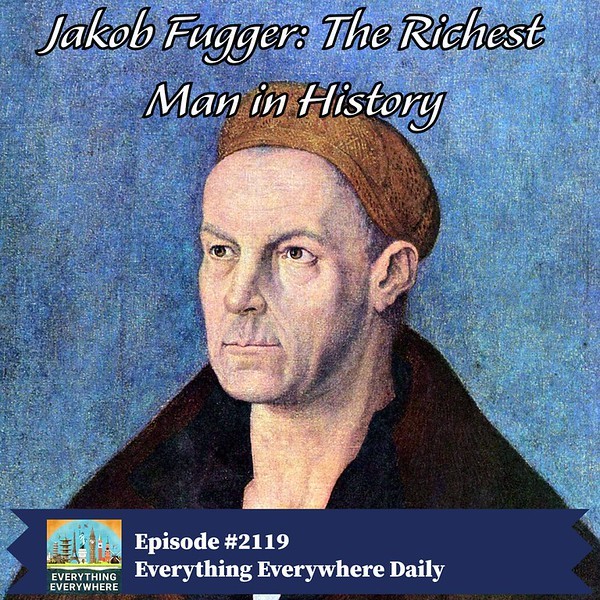
When we discuss history’s wealthiest figures, our minds typically drift toward ancient emperors like Augustus or modern tech titans like Elon Musk. However, 500 years ago, a merchant banker from the German city of Augsburg wielded a level of economic influence that rivaled the monarchs he financed.
Jakob Fugger “the Rich” was not a king, yet he functioned as the silent engine behind the most powerful dynasties in Europe. Through a combination of strategic vertical integration, international banking, and political bribery, he helped transition Europe from a fragmented medieval economy into a modern system of global finance.
From Clergy to Capital: The Rise of a Strategist
Born in 1459, Jakob Fugger was originally destined for a life in the Church. A family tragedy—the death of a brother—forced a pivot in his career, leading him at age 14 to join the family business.
His true education, however, took place in Venice. By apprenticing in Italy, Fugger mastered the most advanced bookkeeping and commercial practices of the era. This period was transformative; he realized that the real path to wealth lay not in simply reselling goods like silk or spices, but in controlling the sources of production and the flow of credit.
Building a Monopoly: Mines and Markets
Fugger’s primary strategy was vertical integration —a concept modern corporations still use today. Instead of merely trading commodities, he sought to own the infrastructure that produced them.
- The Silver and Copper Monopoly: Fugger secured control over vital mining regions in Tyrol and present-day Slovakia. By providing massive loans to cash-strapped rulers like Archduke Siegmund, he used debt as a lever to acquire silver and copper mines as collateral.
- Control of the Supply Chain: By owning the mines, he forced operators to sell directly to his firm, bypassing middlemen. This gave him a de facto monopoly on copper, a resource essential for the era’s burgeoning military technology, including cannons and bayonets.
- Global Reach: He moved beyond European borders, investing directly in the spice trade by establishing manufactories in Lisbon and contributing to Portuguese expeditions to India.
The Banker to Emperors and Popes
Fugger understood a fundamental truth of power: sovereigns are perpetually broke. By becoming the primary creditor to the Habsburg dynasty, he moved from being a mere merchant to a political kingmaker.
His most audacious move occurred during the imperial election of 1519. To ensure the election of Charles V as Holy Roman Emperor, Fugger provided roughly two-thirds of the massive bribes required to secure the throne. He was so confident in his leverage that he later wrote a blunt letter to the Emperor, reminding him that his crown was effectively bought with Fugger gold.
His influence extended to the Vatican as well. The Fugger family acted as a financial bridge to the Roman Curia, financing:
* The construction of St. Peter’s Basilica.
* The recruitment of the Swiss Guard.
* The administration of indulgences.
Note: This connection to the sale of indulgences inadvertently helped trigger the Protestant Reformation. Fugger’s agents collected the revenues from these spiritual “certificates,” a practice that became a primary grievance for Martin Luther.
A Complex Legacy: Philanthropy and Power
Fugger was not merely a seeker of profit; he was a man who understood the importance of legacy. In 1521, he established the Fuggerei in Augsburg—a social housing project for the poor. Remarkably, the terms of this foundation have remained unchanged for 500 years: residents pay just one florin per year and are required to offer three daily prayers for the Fugger family.
While his exact net worth is impossible to calculate with modern precision, historians estimate his wealth at roughly 2% of Europe’s entire GDP. In today’s terms, that would be upwards of $500 billion.
Conclusion
Jakob Fugger was the architect of a new era. He proved that capital, when wielded with enough sophistication, could be more influential than even the most absolute monarchy. He did not just participate in the economy; he redesigned it, moving the world toward the interconnected, credit-driven financial landscape we recognize today.


