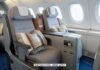
Delta Air Lines has released specific details regarding its upcoming cabin overhaul, marking a significant evolution in its flagship Delta One service. While the airline previously announced a broad commitment to cabin redesigns in 2024, these new specifications reveal a strategic pivot toward maximizing privacy, technology, and high-yield passenger comfort.
The New Delta One Experience: Privacy and Personal Space
On the surface, the next-generation Delta One suites maintain the familiar pod-style layout with lay-flat capabilities. However, the redesign focuses heavily on the “micro-experience” of the individual traveler. Key upgrades include:
- Enhanced Privacy: The suites will feature slimmer walls to maximize usable space and, most notably, full privacy doors.
- Increased Comfort: Each guest will have approximately 6.5 feet of personal space, along with dedicated storage for shoes and carry-on luggage.
- Tech-Forward Amenities: Every suite will be equipped with a 24-inch 4K screen, Bluetooth connectivity, and wireless charging capabilities.
- Improved Layout: To optimize the view and comfort, all outer seats will now face the window, eliminating the aisle-facing orientation found in older models.
- Onboard Convenience: A new self-serve snack station will allow guests to access refreshments outside of scheduled meal services.
A Strategic Pivot: Quality Over Quantity
Perhaps more significant than the seat design itself is Delta’s changing approach to cabin configuration. The airline is moving toward a model that prioritizes high-paying passengers over total passenger volume.
Starting with the Airbus A350-1000 fleet, nearly half of the cabin space will be dedicated to Delta One and Premium Select seating. This represents a 15% increase in premium seat capacity.
This shift reflects a broader industry trend among major US carriers: as the demand for premium travel grows, airlines are increasingly willing to sacrifice the number of economy seats they can carry in exchange for the higher profit margins generated by luxury travelers.
The Regulatory Hurdle: Will the Doors Actually Work?
While Delta has promised privacy doors, their implementation faces a significant legal obstacle. Under FAA Rule 14, Section 25.813, all evacuation paths must remain unobstructed. The law strictly prohibits installing doors that cross an egress path (such as aisles or passageways) between a passenger seat and an emergency exit.
This regulatory constraint is why many US airlines have historically relied on fabric curtains rather than solid doors to separate cabin classes. Whether Delta can engineer a solution that satisfies both the desire for privacy and strict federal safety mandates remains a critical question for the 2027 rollout.
Rollout Timeline
The new Delta One suites are scheduled to debut in early 2027, with an ongoing retrofit program planned for older aircraft.
Conclusion: Delta is doubling down on the premium market by redesigning its cabins to favor luxury and privacy over passenger density, though federal safety regulations may still dictate the final design of these new suites.