Water buffalo with eyes like cannonballs. Horns like sickles. They stare at me from the tangled dark. Unblinking. Waiting.
Lý Thị Cha knows why they look. I don’t. I guess clumsiness? Maybe fear?
“No,” she says. Dancing up the slope, laughing at my expense. “It is because you smell.”
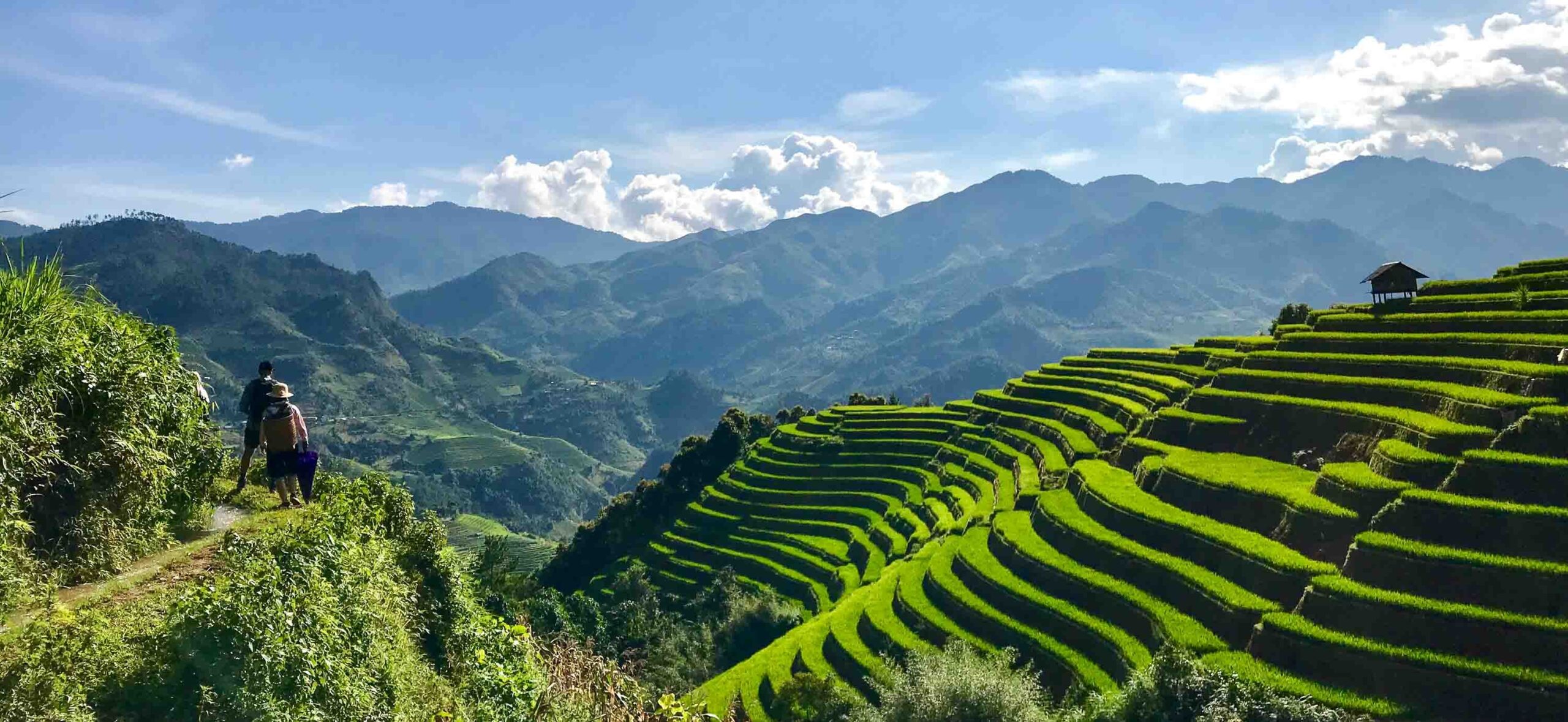
Fair point. Hiking the Vietnamese highlands leaves you muddy and sweating. But then Mẩy Linh calls the herd into their wooden shack. Behind her, a dozen terraced rice fields catch the sky. Clouds. Jungle peaks. It reflects everything but my armpit.
The ground beneath our feet
Indigo leaves crushed in my palms turn skin blue. Wild ferns become toy animals. Mountain berries burst on the tongue. Then there is the mud.
Spending an hour barefoot, shins deep, planting rice while Mẩy Linh cackles. She is a Dao grandmother. She knows these slopes better than I know my own bathroom. Lý, my H’mông guide, watches it all.
This isn’t a curated park. This is life.
They work for ETHOS. An outfit arranging hikes and homestays since the nineties. Without locals like them? Nothing here. No access. No understanding.
Too many shoes, too few houses
Sa Pa is tiny. Ten thousand people live in the town itself.
But five million visit every year.
Think about that. Five million.
Dubrovnik gets those numbers and has four times the population. Sa Pa chokes. Loud restaurants. Construction noise that never stops. Traffic jams in streets that were never meant for cars. The center of town feels less like a destination and more like a bottleneck.
Yet step away. Go uphill. The silence returns.
The villages here are quiet. The terraces carved into stone by highlander hands remain. It is a patchwork of cultures. Dao. Giáy. H’mông. Kinh. Tày. Ethnically messy. Culturally rich.
Mai Thanh Hoa co-directs ETHOS. She tells me from her office where walls hang with traditional fabric.
“Without the locals, there is no tourism.”
She sees the change. But the core remains. The H’mông and Dao still hold their ground. They are proud.
Dinner with the hills
Lý and Mẩy Linh harvest the mountain during the hike. Ferns. Leaves. Herbs.
Night falls. I stay in a Dao house. Fifty years old. Authentic creaks in the floorboards.
Mẩy Linh brews a herbal bath. Traditional cure. You sit. You soak. The mountain goes into your pores.
Then food. Foraged greens. Purple sticky rice. Chicken grilled over wood fire. Tofu soup that smells like rain and bamboo. We drink rice wine. Bad wine. Good wine? Hard to tell after the third glass. We speak in fragments. Dao. H’mông. Vietnamese. English.
“You pronounce Dao well,” Lý says. Smirking. “Your H’mong is terrible.”
We laugh. For a moment the karaoke from the town below fades out.
The friction of progress
Music thumps up the valley floor. Loud. Relentless.
Lý speaks bluntly about the Kinh. The majority.
“The karaoke bars belong to them,” she says. “Vietnamese for Vietnamese.”
She doesn’t hate it. But it conflicts. H’mông sleep early. Wake early. The night life stays on. They adapt. They live with the noise.
The guides bother her more.
Specifically, outsiders guiding here.
“I am Vietnamese,” she says. “That does not mean I should guide in the Mekong.” She has never seen it. Why should someone who doesn’t know Sa Pa lead her home?
“People come to learn about our culture,” she argues. “We built those terraces.”
Right now, local guides need only a card. A permit. Earned through workshops.
Paper tigers and legal risks
This card system started in 1994. It lets illiterate locals like Mẩy Linh work.
She walks the sun. She talks English. She knows where the dangerous paths hide. Literacy is irrelevant to the mountains.
But rules change.
Nguyen Trung Ken works for Topas Travel. He’s seen decades of tourists come and go.
He admits the card system has holes. Flaws.
“But the benefits?” He leans forward. “The locals walk through rain. They wake before dawn. They work hard. They know the land.”
He worries. Rumors say the government wants to scrap the cards. Introduce formal tests.
Why? One bad accident. A tourist falls. A guide with only a card is blamed. Authorities tighten the noose. Literacy requirements kick in. The cards vanish.
Mày Linh loses her license. Because she can’t take a written exam. Not because she can’t lead.
ETHOS knows this risk. They run extra visual workshops. No reading. Just acting.
“What happens if you fall?” they ask. Guides act it out. They explain. They learn by doing.
Muddied waters
Waking up hurts. Headache from wine.
Mist clears the air. The valley looks different in gray light. Quiet. Heavy.
Before we hike home we pass construction. Concrete pouring into the earth.
A hydroelectric dam.
Lý says it will bring power. Light. Good? Yes.
But the terraces below it? Gone. Flooded. Drowned for energy.
Is it metaphor or reality? Development eats tradition. It always has.
The mountains won’t move. The rice will grow back next year. The buffalo will continue their blank, judging stare at sweaty visitors.
But the access? The voices guiding you through the ferns and the fog?
That is changing. Fast.
And not always for the better.
Will we still let them guide us?