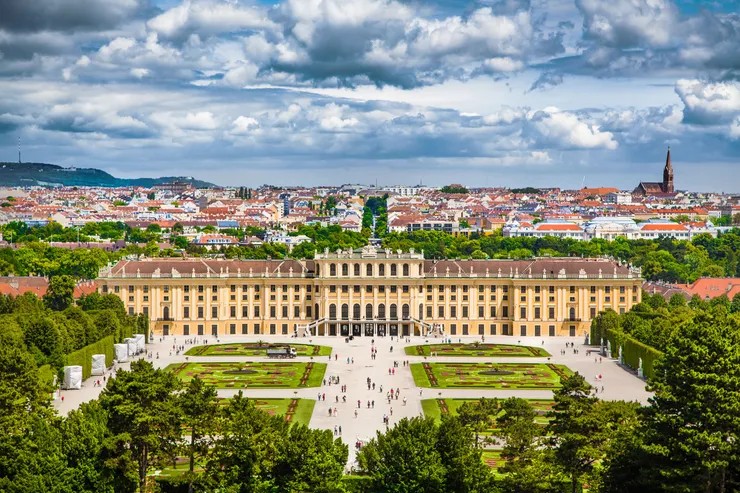
Located on the banks of the Danube, Vienna is a huge metropolis where ancient history and modern cosmopolitan life combine. The Austrian capital is characterized by layers of empire, artistic genius and political influence. It’s not just a place to look. Here, the weight of the centuries is felt everywhere on the cobbled streets and boulevards.
From Celtic Faction to Imperial Power
This city has deep roots. The Celts inhabited the area long before it became the center of the world. In the first century BCE Rome had turned it into a military base. Over the next thousand years, the government of Vienna changed frequently. The Franks ruled in the 6th century. In the tenth century, the Magyars won. It became an important trade center during the Crusades.
Then came the Habsburgs.
In the years 1558–1806, Vienna was the capital of the Holy Roman Empire. It was the center of the Austrian Empire until 1867 and then the center of the Austro-Hungarian Empire until its collapse in 1918. This imperial legacy left an indelible mark on the city’s architecture and culture. In 1814 and 1815, the Congress of Vienna reconstructed the map of Europe within the palace walls.
War, occupation and resilience
The 20th century brought destruction. From 1938 to 1945, during World War II, Vienna was the administrative center of German Austria. Allied forces bombarded the city several times. The Soviet forces took over the city in 1945. Until 1955, the city was jointly occupied by the Soviet Union and Western Allied forces.
But even in its darkest times, Vienna retained its cultural charm. In the 1970s, strategic arms limitation negotiations between the United States and the Soviet Union took place here. Diplomacy has always been woven into the city’s fabric.
Cultural Center
Vienna is widely regarded as the music and art capital of Europe. It is the birthplace of Franz Schubert, Johann Strauss II and Arnold Schoenberg. Wolfgang Amadeus Mozart, Ludwig van Beethoven, Johannes Brahms and Gustav Mahler all settled here. The sounds of waltzes and classical symphonies still echo in the concert halls.
Visual arts also did well. Sigmund Freud trained here and changed the way we understand the human psyche. Gustav Klimt painted his golden masterpieces on these streets. Oskar Kokoschka and Josef Hoffmann added their voices to the artistic chorus. If you are planning a trip to understand the development of modern thought and aesthetics, Vienna is a must visit.
Modern Vienna: Business and Beyond
Today, Vienna is more than just a museum. It is the commercial and industrial center of Austria. The headquarters of major international organizations are located here. The headquarters of the International Atomic Energy Agency is located here. So is the UN Industrial Development Organization. Vienna is also the headquarters of the Organization of the Petroleum Exporting Countries (OPEC).
For tourists, this means city that is both historic and that are actively involved in global affairs. You can walk through halls and places where emperors once ruled.