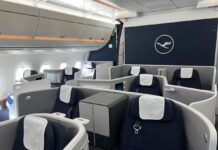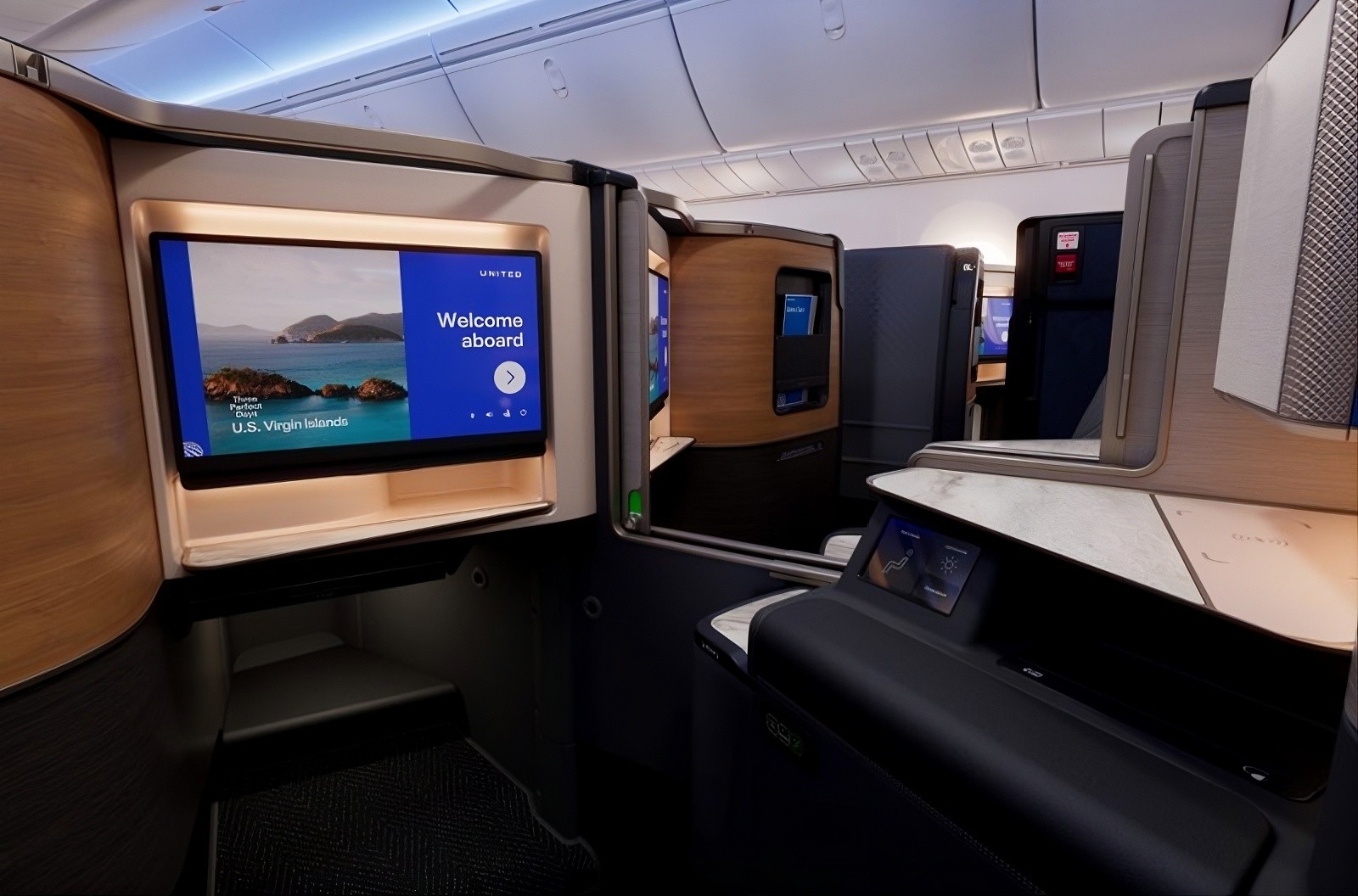
United Airlines has revealed the interior of its first Boeing 787-9 featuring a significantly upgraded cabin layout, dubbed “United Elevated.” Internal photos shared with employees showcase the airline’s shift toward a more premium-focused design, with expanded business and premium economy sections. This move reflects a broader industry trend: airlines are increasingly prioritizing higher-yield cabins to boost revenue on long-haul routes.
Redesigned Cabin Layout
The new 787-9 configuration features 222 seats:
– 64 business class seats, including 8 enhanced ‘Polaris Studio’ suites.
– 35 premium economy seats.
– 123 coach class seats.
This represents a net increase in premium seating capacity compared to previous configurations, with 16 additional business class and 14 more premium economy seats. Coach seating has been reduced to accommodate the expansion. The company is not planning to retrofit existing aircraft with these updates.
Key Features: Polaris Studio and Self-Serve Snack Bar
A standout feature is the ‘Polaris Studio’ – an enhanced business class section offering additional space and comfort. Another notable addition is a self-serve snack bar, providing passengers with convenient access to refreshments throughout the flight. These amenities aim to elevate the passenger experience, especially on long-haul routes.
Rollout and Initial Routes
United plans to host media events in March to showcase the “United Elevated” product. The aircraft will initially operate domestically before transitioning to international routes, including flights to London Heathrow and Singapore. The airline expects to receive 3 more upgraded 787-9s within the next six weeks, with 30 total deliveries scheduled by 2027. All future 787 deliveries will include this new interior.
Connectivity: Starlink Integration
The new aircraft is equipped with Starlink high-speed internet, enhancing connectivity for passengers. This integration aligns with United’s broader strategy to prioritize in-flight technology, first deploying retrofits on regional and domestic jets.
This shift towards premium cabins reflects a strategic move by airlines to maximize revenue from higher-paying customers, even as it potentially reduces capacity for economy travelers. The long-term impact on passenger accessibility remains to be seen.