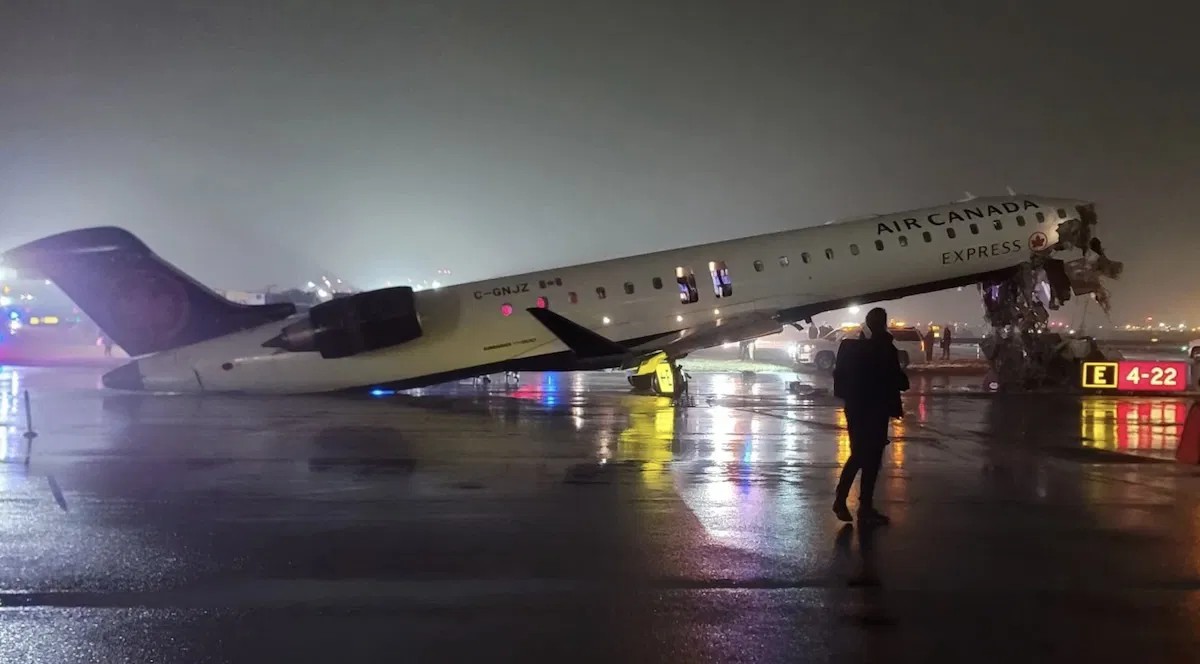
A tragic accident at New York’s LaGuardia Airport (LGA) on March 22, 2026, resulted in the deaths of two pilots and critical injuries to firefighters when an Air Canada Jazz CRJ-900 collided with a fire truck on runway 4. The incident underscores the critical importance of air traffic control (ATC) precision, especially when handling multiple emergencies simultaneously.
The Accident
At approximately 11:40 PM, the Air Canada Jazz CRJ-900, arriving from Montreal (YUL), was in the final stages of landing when it struck a fire truck that had been granted permission to cross the runway by an ATC controller. The impact left the aircraft with a severely damaged cockpit, while the fire truck was overturned and extensively wrecked. The flight, carrying 72 passengers out of a possible 76, was nearly full.
How the Collision Occurred
The collision stemmed from a clear ATC error. The controller, under pressure from another unfolding emergency involving a United Airlines flight (UA2384) experiencing repeated takeoff failures, mistakenly authorized the fire truck to cross runway 4 while simultaneously allowing the Air Canada plane to land. Audio recordings reveal the controller’s panicked attempts to abort the fire truck’s movement moments before the crash – but it was too late. The controller later admitted to being distracted by the other emergency, stating: “we were dealing with an emergency earlier, and I messed up.”
Context and Implications
This incident highlights the pressures faced by air traffic controllers, particularly in understaffed environments where they must manage multiple crises at once. LaGuardia Airport isn’t particularly busy at night, but even a small lapse in concentration can have catastrophic results. The controller was handling a separate emergency involving UA2384, which had aborted two takeoff attempts before requesting emergency services.
The fact that the controller was working alone raises questions about staffing levels and potential fatigue, both of which can degrade performance. Aviation safety relies on layers of redundancy, but even the best systems can fail when stretched too thin. This isn’t an isolated case; controllers have been operating under immense workloads for years, with increasing fatigue as a result.
Conclusion
The collision at LaGuardia serves as a grim reminder that even seemingly minor errors in ATC can lead to fatal consequences. The accident has already claimed the lives of the Air Canada pilots and left firefighters critically injured. Investigations will likely focus on controller workload, staffing protocols, and the systemic pressures that may have contributed to this preventable tragedy.