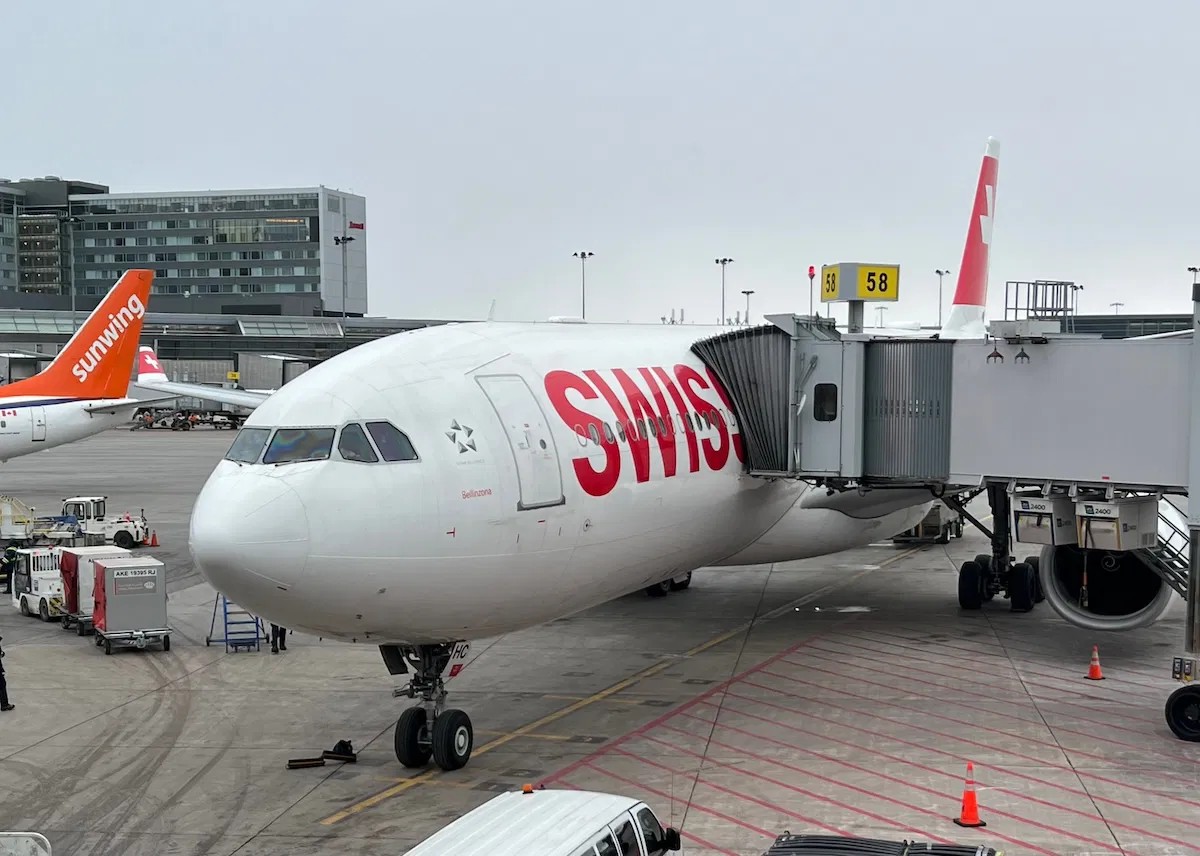
Lufthansa Group’s latest financial results reveal a striking disparity in performance across its subsidiaries. While the group as a whole reports record revenue, profitability is unevenly distributed. SWISS stands out as the clear winner, achieving a 9.3% profit margin – ten times higher than Lufthansa’s meager 0.9%. This imbalance raises questions about Lufthansa’s operational efficiency and strategic direction.
The Profitability Breakdown
The 2025 results show a sharp contrast in margins:
- SWISS: €600 million profit on €6.48 billion revenue (9.3% margin)
- Eurowings: €132 million profit on €3.08 billion revenue (4.3% margin)
- Austrian: €81 million profit on €2.54 billion revenue (3.2% margin)
- Brussels: €28 million profit on €1.65 billion revenue (1.7% margin)
- Lufthansa: €148 million profit on €17.1 billion revenue (0.9% margin)
This means SWISS is not just more profitable, but nearly 2x as profitable as Lufthansa, and even more so when compared to Austrian, Eurowings, and Brussels. The disparity is significant enough to prompt a reevaluation of resource allocation within the group.
Why Lufthansa Struggles
Several factors contribute to Lufthansa’s underperformance:
- Delayed Fleet Renewal: The airline’s reliance on older, less efficient aircraft due to ongoing delays in the Boeing 777-9 delivery has hindered its profitability.
- Cabin Upgrade Issues: The rollout of new Allegris cabins has been plagued by setbacks, increasing costs and reducing cabin density.
- Competitive Weakness: Lufthansa has struggled to establish clear competitive advantages, while rivals like Air France have made strides in product improvements.
These challenges combined create a perfect storm that undermines Lufthansa’s margins. Meanwhile, SWISS benefits from a more focused strategy and potentially stronger operational execution.
Centralization Paradox
Lufthansa Group’s move toward centralized management in Frankfurt seems counterintuitive given the results. Subsidiaries with greater autonomy consistently outperform Lufthansa, suggesting that reducing independence may stifle profitability rather than boost it. The group’s CEO, Jens Ritter, acknowledges the need for “structural changes,” but the current approach appears to contradict the financial data.
Future Outlook
Despite the challenges, Lufthansa Group management remains optimistic about a turnaround in 2026. However, given the persistent performance gap, skepticism is warranted. The irony is that the airline seems to use profitability issues as justification to outsource functions to subsidiaries with lower labor costs. The path forward remains uncertain, and whether Lufthansa can close the gap with its more profitable counterparts remains to be seen.
In conclusion, Lufthansa Group’s 2025 results highlight a stark contrast in financial performance. The flagship airline lags significantly behind SWISS and other subsidiaries, raising fundamental questions about its operational strategy and future direction. The group’s ability to address these imbalances will determine whether Lufthansa can regain its competitive edge.