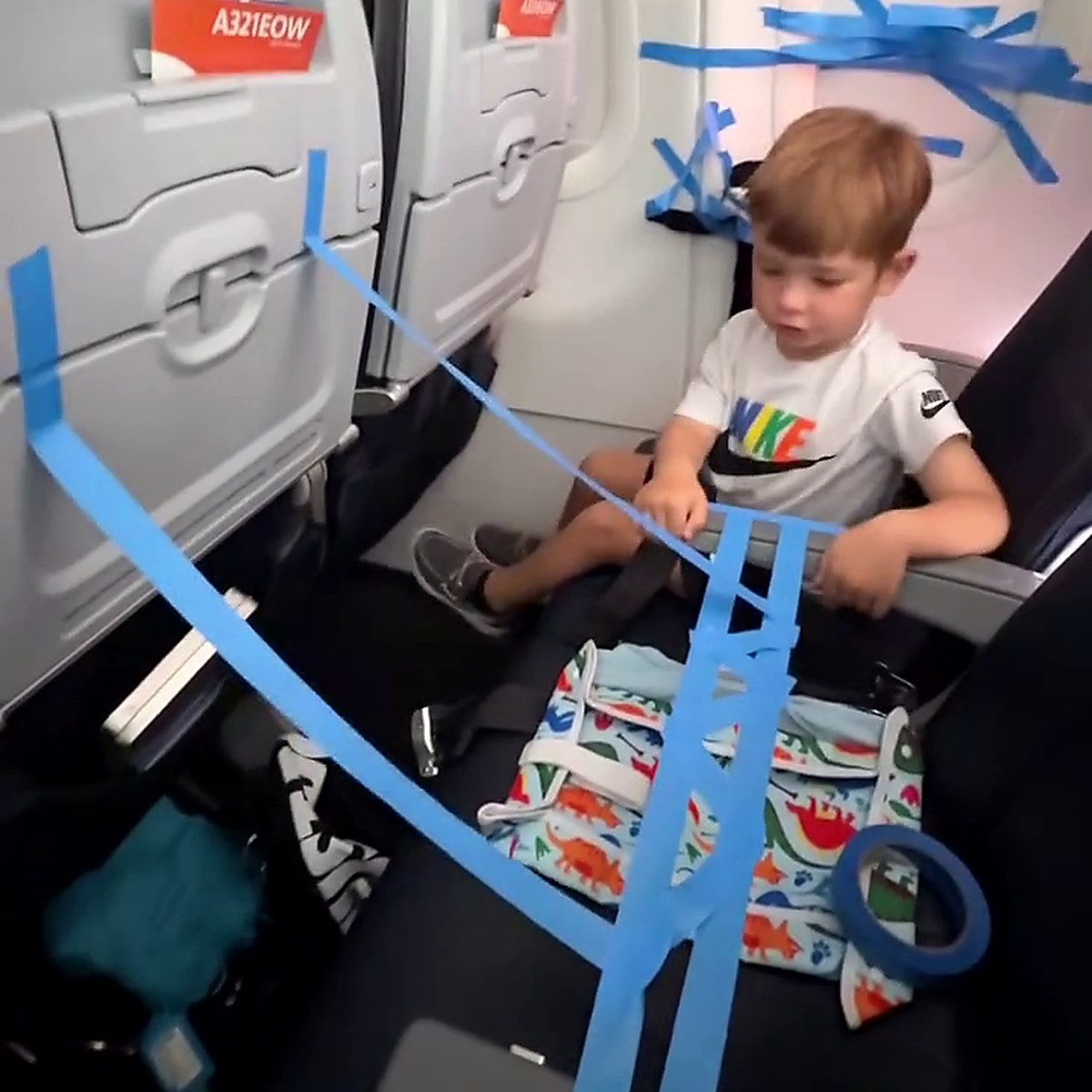
A family travel influencer recently shared a controversial tip for keeping toddlers occupied on flights: a roll of painter’s tape. The idea? Let kids stick, peel, and re-stick the tape on their seat and tray area, creating “roads, shapes, letters, and games.” The post quickly sparked debate, with reactions ranging from outrage to grudging admiration.
The Tape Strategy Explained
The method involves letting a toddler freely apply strips of blue painter’s tape across the seat, tray table, armrests, and even the adjacent wall or window. The influencer framed it as a “cheap, no-screen” alternative to toys. The core appeal is simplicity: a quiet, contained child during a flight.
Why This Matters: The Flight Experience Problem
The uproar highlights a persistent tension in air travel: how do parents manage young children in a confined space? Many passengers prioritize peace and quiet, while others simply want basic cleanliness and respect for shared spaces. The debate isn’t just about tape—it’s about the broader struggle between individual comfort and collective courtesy on airplanes.
The Three Camps: Reactions to the Hack
Responses fell into three main categories:
- The Strict Enforcers: Some argued that children should remain still and quiet, accusing parents of laziness and treating the cabin like a playroom. Extreme reactions even included sarcastic suggestions like “tape your child to the chair.”
- The Pragmatists: Others acknowledged that a quiet, occupied toddler is preferable to a screaming or running one. This camp saw the tape as an imperfect but functional solution. It’s a trade-off: a minor mess versus a major disruption.
- The Cleanliness Advocates: The loudest criticism centered on potential residue and the burden left for cleaning crews. Opponents argued that planes aren’t personal play areas and safety requires clear surfaces for egress.
The Fine Print: Tape, Residue, and Responsibility
Painter’s tape is marketed as residue-free, though real-world results vary. The key is responsible use: collect used tape in a bag, clean up thoroughly before deplaning, and avoid sticking it on surfaces that aren’t yours. This isn’t a new issue; passengers have long debated whether erasable crayons are acceptable, only to leave messy residue anyway. Other incidents, like sticker guns left behind in first class, show the issue is broader than just tape.
The Bigger Picture: A Recurring Problem
The debate isn’t isolated. The same frustrations surface with crayons, stickers, and even food messes. The root problem is a lack of clear expectations for children’s behavior in public spaces. Airplanes, like restaurants or movie theaters, require a degree of self-regulation from both children and their parents.
The controversy over painter’s tape is a symptom of a larger issue: how to balance individual convenience with collective responsibility in the increasingly crowded and confined world of air travel.