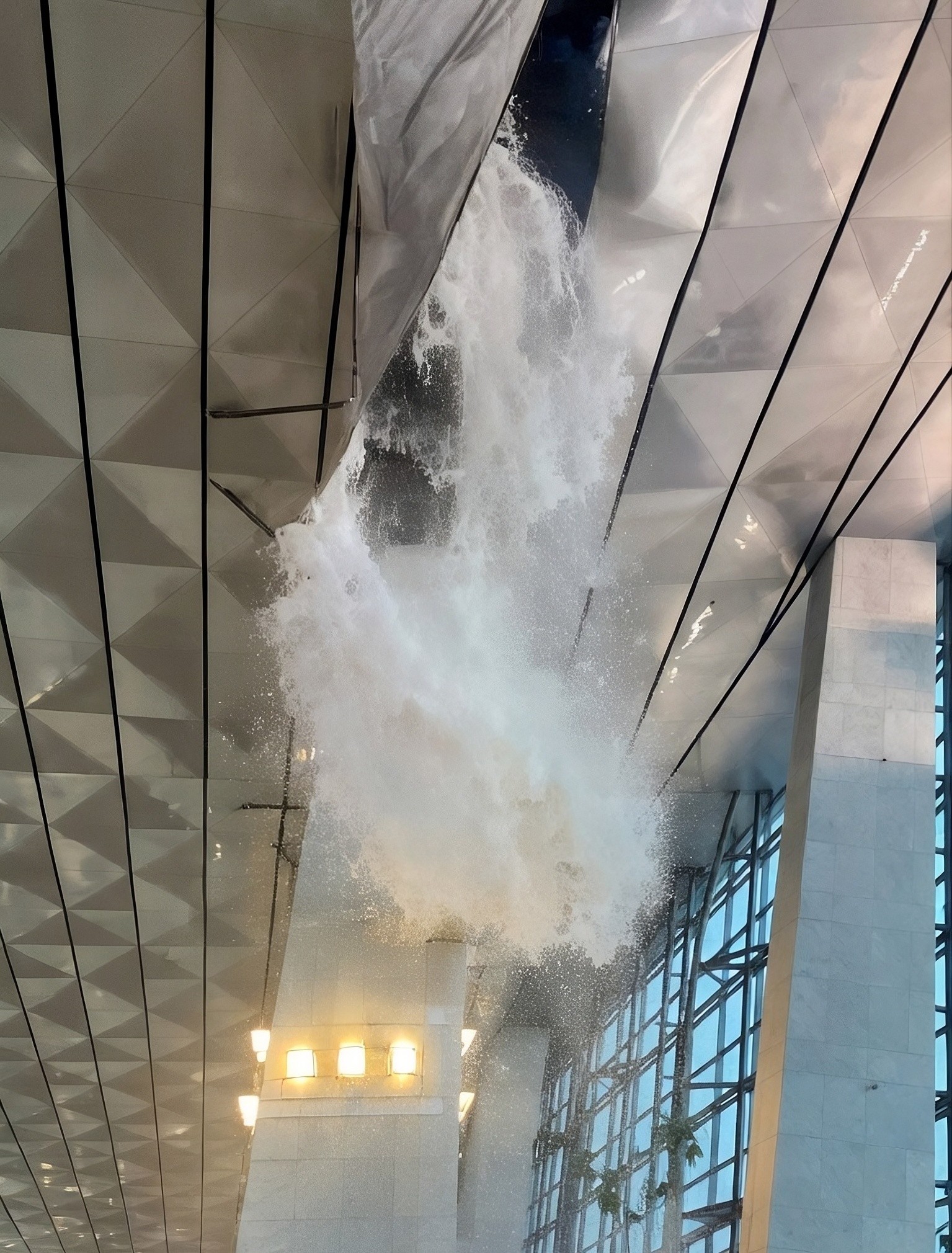
A sudden ceiling collapse at Jakarta’s Soekarno-Hatta International Airport has caused significant operational chaos, disrupting approximately 40 flights following a period of intense, heavy rainfall.
The Incident at Gate 7
The structural failure occurred at roughly 1:45 p.m. local time on Monday. Following days of persistent heavy rain, the ceiling near Gate 7 gave way, resulting in a localized “waterfall” effect that lasted about five minutes.
While the area was populated with passengers at the time of the collapse, no injuries were reported; travelers were able to evacuate the immediate vicinity before the debris fell. Airport staff responded by restricting access to the affected area and initiating cleanup procedures.
Widespread Flight Disruptions
The ceiling collapse was not an isolated issue; it coincided with severe weather conditions that paralyzed much of the airport’s operations. The storm forced a massive reshuffling of flight schedules, affecting a total of 40 flights in the following ways:
- 12 flights were diverted to alternative airports.
- 14 flights were forced into holding patterns.
- 13 flights performed “go-arounds” (aborted landings).
- 1 flight returned to the apron.
A Pattern of Infrastructure Challenges
This incident raises serious questions regarding the long-term resilience of the terminal’s infrastructure. The airport has a documented history of structural and environmental issues:
* 2016: A previous ceiling collapse occurred in this same terminal.
* 2017: The facility faced significant flooding problems.
The recurrence of these issues suggests that despite previous repairs, the airport may still be struggling to cope with the increasing frequency and intensity of extreme weather events.
Global Context: Extreme Weather and Aviation
The disruption in Jakarta highlights a growing global trend: extreme weather is becoming a primary threat to aviation stability. While the structural failure in Jakarta points to maintenance and infrastructure vulnerabilities, similar disruptions are being seen worldwide due to climate-driven events:
- Fort Lauderdale, USA: Recently faced total shutdowns due to “1,000-year” storm events.
- Phoenix, USA: Experienced terminal roof damage caused by intense dust storms.
These events demonstrate that whether the cause is aging infrastructure failing under pressure or unprecedented meteorological shifts, the aviation industry is facing an era of increasing unpredictability and operational risk.
The repeated structural failures at Soekarno-Hatta suggest that localized maintenance may no longer be sufficient to withstand the intensifying patterns of heavy rainfall in the region.