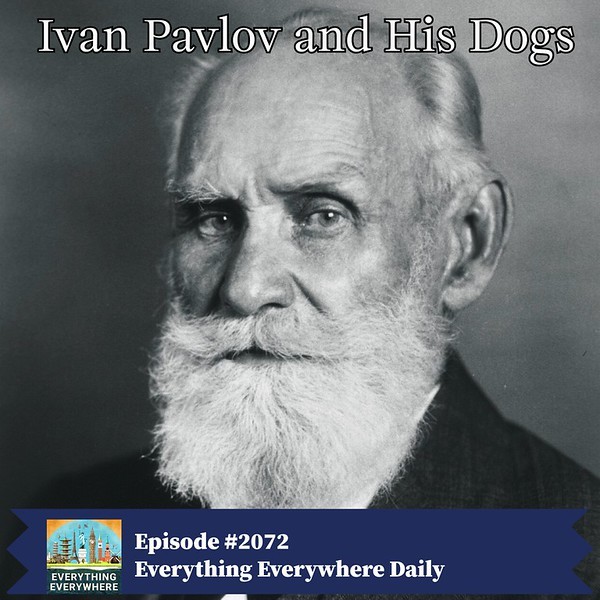
At the dawn of the 20th century, a Russian physiologist named Ivan Pavlov made a discovery that would reshape our understanding of learning and behavior. What began as digestive research unexpectedly unveiled that animals – and humans – could be trained to associate stimuli, a breakthrough with far-reaching implications for psychology, education, and even marketing.
From Physiology to Psychology: An Accidental Revolution
Ivan Petrovich Pavlov (1849-1936) was born into a religious family in Ryazan, Russia, the first of ten children. Initially drawn to theology, he abandoned religious studies to pursue science after encountering the works of influential Russian thinkers like Dmitry Pisarev and Ivan Sechenov. He excelled at the University of Saint Petersburg, earning a prestigious award for his research on the pancreas.
Pavlov’s early career focused on physiology. He earned a Nobel Prize in 1904 for his groundbreaking work on digestion, meticulously studying how animals processed food. However, it was a chance observation during these digestive experiments that would alter his trajectory.
The Dogs, The Bells, and the Breakthrough
Pavlov noticed that his test dogs began salivating before receiving food. They responded to cues like footsteps or lab coats, anticipating the meal. This led him to conclude that the dogs had learned to associate these stimuli with food. He termed this phenomenon “psychic secretions” – essentially, the mind’s ability to predict and react to events based on past experience.
To prove this scientifically, Pavlov designed a controlled experiment using a bell as a neutral stimulus. He repeatedly paired the bell’s sound with the presentation of food. Over time, the dogs began to salivate at the sound of the bell alone, demonstrating a learned association. This became known as classical conditioning.
The Core Concepts of Classical Conditioning
Pavlov identified three key components in his experiments:
- Unconditioned Stimulus (UCS): The naturally occurring trigger (food) that elicits a response.
- Unconditioned Response (UCR): The automatic reaction to the UCS (salivation when food is present).
- Conditioned Stimulus (CS): A previously neutral stimulus (the bell) that, through association with the UCS, triggers a response.
Repeated pairing of the CS and UCS leads to a conditioned response (CR) – salivation at the sound of the bell, even without food. Pavlov further discovered that the timing of stimulus presentation matters (temporal contiguity). Presenting the bell too far apart from the food would weaken the association. He also demonstrated that extinguishing the response through repeated bell presentations without food was possible, though spontaneous recovery could occur after a rest period.
Beyond the Lab: Real-World Applications
Pavlov’s work has had a profound impact on psychology and beyond:
- Therapy: Techniques like exposure therapy for phobias and systematic desensitization utilize classical conditioning to reduce anxiety.
- Addiction Treatment: Aversion therapy pairs harmful substances (alcohol, drugs) with unpleasant stimuli (nausea-inducing drugs) to discourage use.
- Marketing: Brands use associations (catchy jingles, attractive visuals) to create positive conditioned responses in consumers.
- Education: Rote memorization techniques (flashcards) reinforce associations between questions and answers.
- Behavioral Psychology: B.F. Skinner’s operant conditioning, building on Pavlov’s work, explores how rewards and punishments shape behavior.
The Legacy of Pavlov
Ivan Pavlov’s research laid the foundation for behavioral psychology, transforming the field from subjective speculation to objective scientific inquiry. While his experiments were conducted in a controlled environment, the principles of classical conditioning remain relevant today, explaining how learning occurs through association in both animals and humans.
Pavlov’s accidental discovery not only revolutionized psychology but also exposed how easily the mind can be conditioned, a phenomenon that continues to influence our behaviors, choices, and perceptions in the modern world.