Hong Kong Airlines’ business class on the Airbus A330-300 offers a functional experience, but falls noticeably short of regional leaders like Cathay Pacific. This review covers a recent 3.5-hour flight from Hong Kong (HKG) to Tokyo Narita (NRT), undertaken due to limited availability and inflated prices on other carriers during the Lunar New Year peak. The airline, owned by Hainan Airlines, has faced financial struggles and scaled back operations in recent years, resulting in a product that prioritizes basic functionality over refinement.
The Lounge Experience: A Poor First Impression
The Club Autus lounge in Hong Kong sets a low standard for the overall experience. Basic maintenance is lacking—two of three urinals and one bathroom stall were out of order, and showers were closed. The lounge design feels dated and gimmicky, with pillows bearing phrases like “Revenge Travel.” Food and beverage options are limited, with no fresh fruit, pastries, or even milk for coffee. This stark contrast to Cathay Pacific’s superior ground services highlights a clear disparity in investment and priority.
Seating and Cabin Condition: Functional, But Worn
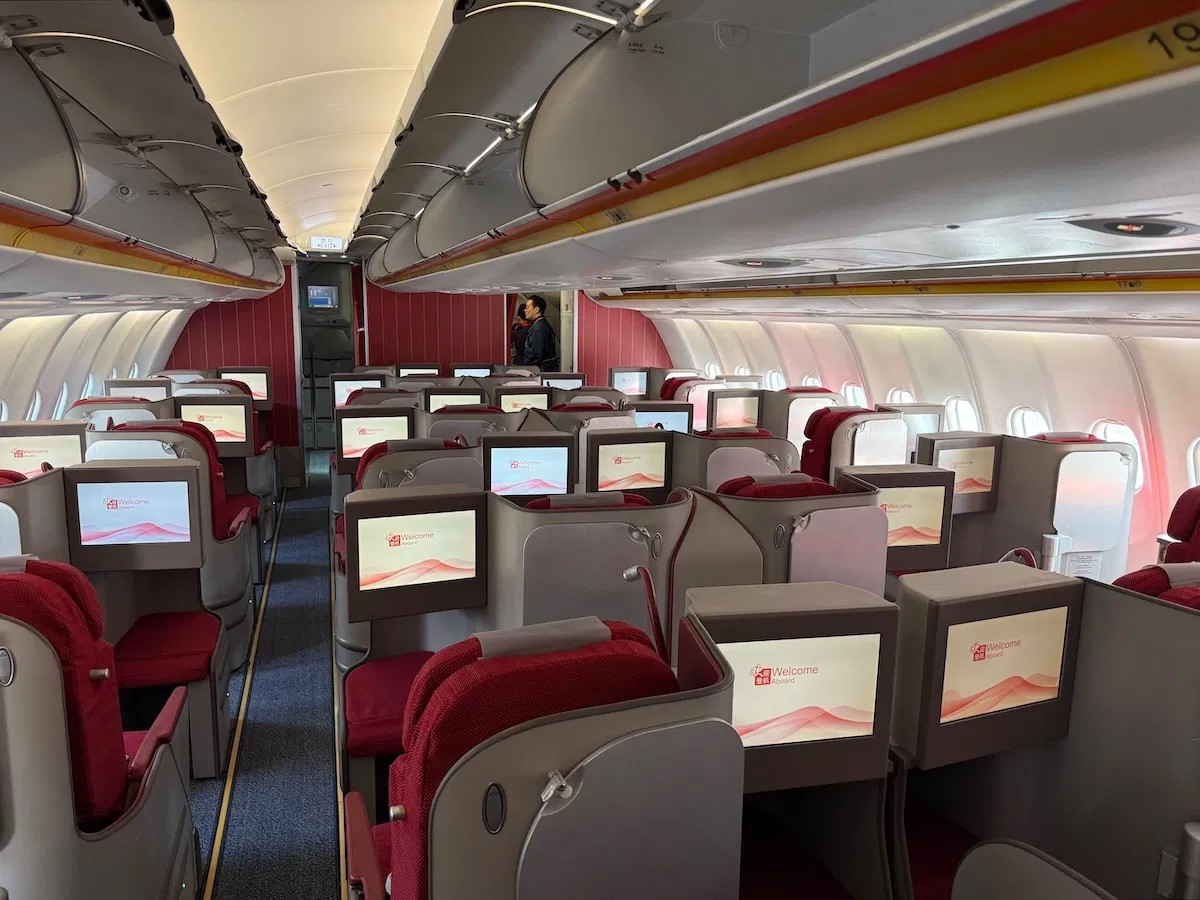
Hong Kong Airlines’ A330 business class features a staggered seating configuration with 32 seats. The cabin feels cramped due to the aircraft’s relatively narrow fuselage, making aisle access difficult. The interior design mirrors Hainan Airlines’ aesthetic, but shows clear signs of wear; one passenger’s reading light was held together with tape. While adequate for shorter regional flights, this product would be significantly less appealing on longer routes like Vancouver to Hong Kong.
Entertainment and Connectivity: Basic at Best
Seatback monitors provide entertainment, but the selection is limited. More critically, Hong Kong Airlines does not offer in-flight Wi-Fi. This absence is acceptable on short hops, but becomes a significant drawback on longer flights where connectivity is now expected.
Service and Amenities: Decent, Though Not Exceptional
The cabin crew was friendly and accommodating, though not at the level of service provided by Cathay Pacific. Passengers receive pillows, blankets, and slippers. Breakfast service includes a choice of three options, including a Chinese congee meal with shredded chicken and dried scallop. Charles de Cazanove Brut Champagne is served. While adequate, the lack of espresso-based coffee is a minor detail that reflects the overall cost-conscious approach.
Bottom line: Hong Kong Airlines’ A330 business class is a viable option when schedules or prices are favorable, but it doesn’t compete with industry leaders like Cathay Pacific. The airline’s product prioritizes basic functionality over refinement, making it suitable for shorter flights but less attractive for long-haul travel. Passengers should manage expectations accordingly.