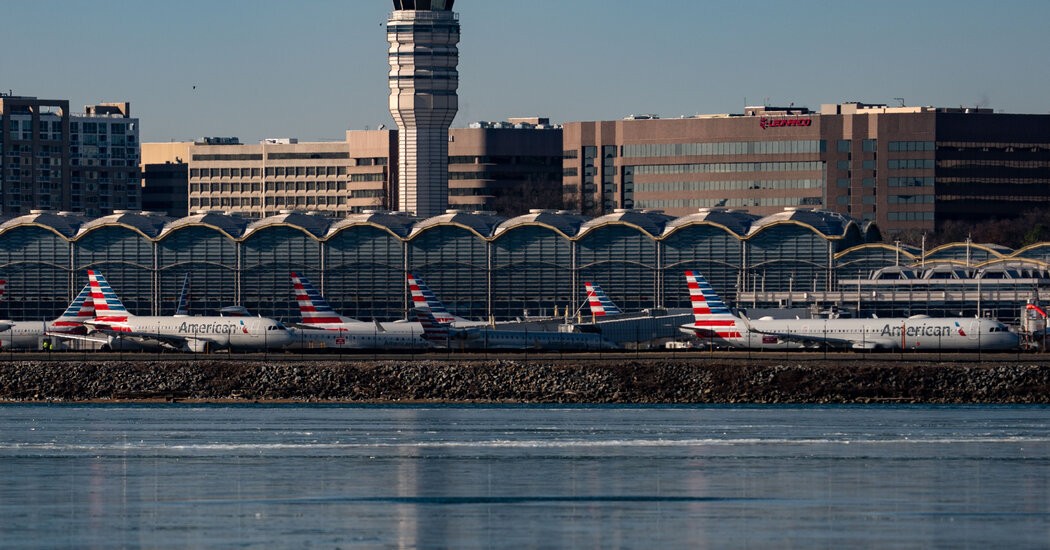
A malfunctioning circuit board triggered a significant air traffic disruption on Friday, halting flights at three major airports serving the Washington, D.C., and Baltimore metropolitan areas. The incident, centered at the Potomac TRACON air traffic control facility in Warrenton, Virginia, stemmed from a strong chemical odor linked to an overheating component.
Initial Disruption and Airport Impacts
Around 4:50 p.m. Eastern Time, the Federal Aviation Administration (FAA) issued ground stops for Ronald Reagan Washington National Airport (DCA), Washington Dulles International Airport (IAD), and Baltimore-Washington International Airport (BWI). Transportation Secretary Sean Duffy later confirmed that Richmond International Airport (RIC) was also affected. Flights were temporarily suspended as air traffic controllers evacuated the Potomac TRACON due to the hazardous smell.
Root Cause and Resolution
The source of the odor was identified as an overheated circuit board within the control facility. The faulty component was quickly replaced, and emergency responders confirmed that no controllers were in immediate danger. By approximately 9 p.m. ET, operations began to normalize, transitioning from ground stops to delays. Airports in Dulles and Richmond returned to normal operations more quickly than others.
Lingering Delays and Passenger Chaos
Despite the resumption of flights, significant delays persisted well into the night. The FAA projected delays lasting until midnight at DCA and 1 a.m. at BWI. Passengers experienced widespread disruptions, with many flights either delayed by several hours or outright canceled. One passenger, Grace Wilkins Maxwell, spent over an hour onboard a plane at Dulles before being deplaned, with no clear timeline for resuming her trip to Louisville.
Communication Breakdown and Passenger Frustration
Passengers at DCA voiced strong dissatisfaction with the lack of clear communication from airlines and airport authorities. Maureen Dewey, stranded with her family en route to Hartford, reported that her fully boarded flight was canceled without explanation. Many passengers were left waiting for hours, uncertain about their travel plans.
The incident underscores the critical dependence of modern air travel on reliable infrastructure. Even a single malfunctioning component in a control center can cascade into major disruptions across multiple airports. The lack of transparent communication during the event compounded the issue, leaving passengers feeling abandoned and uninformed.
The FAA is working to mitigate the remaining delays, but residual cancellations and disruptions are expected in the days ahead.