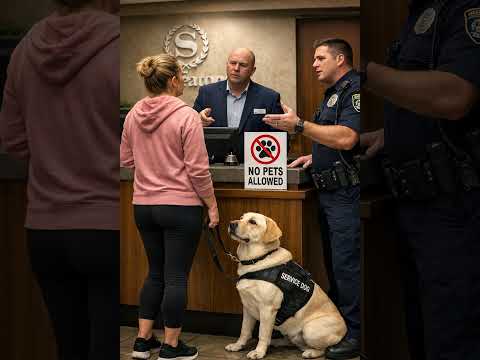
A confrontation at a Sheraton Atlanta hotel captured on video shows a manager denying a guest a room because of her service dog, despite legal protections for individuals with disabilities. The incident, which quickly escalated, required police intervention to explain the distinction between service animals and pets.
The Confrontation
The guest, who filmed the exchange, directly questioned the manager about the refusal, pressing for a clear answer. The manager insisted the hotel “is not pet friendly” and demanded the guest leave the property, effectively denying her reservation. The hotel’s stated policy, however, contradicts federal law.
Legal Protections for Service Animals
Under the Americans with Disabilities Act (ADA), hotels – classified as public accommodations – must allow service animals, regardless of a “no pets” policy. The law permits only two specific questions: whether the dog is required due to a disability, and what work or task it has been trained to perform. No documentation or proof is required.
The manager in this case appears to have disregarded these protections, treating the service dog as a standard pet and enforcing a blanket “no dogs” rule. Marriott’s own website acknowledges this distinction, explicitly stating “Service Animals are welcome without a fee or documentation.”
Enforcement and Consequences
While the incident likely constitutes an ADA violation, meaningful consequences are rare. Individuals can sue for injunctive relief (a court order forcing compliance) and legal fees, but compensatory damages are not available. The Justice Department (DOJ) does sometimes intervene, especially in repeated violations. Hotels face penalties of up to $236,451 for subsequent offenses, as demonstrated by settlements with hotels in Norwalk, Nashville, and Killeen, Texas.
Georgia law provides additional protections, with penalties reaching $2,000 fines and 30 days in jail. However, local enforcement is often inconsistent.
Why This Matters
This incident highlights a persistent problem: hotels and businesses routinely violating ADA protections for service animals. Despite clear legal standards, the lack of significant penalties and inconsistent enforcement allows discrimination to continue. The incident underscores the need for greater awareness of ADA rights and more aggressive prosecution of violations.
In practice, many disabled individuals rely on service animals for basic functioning, making such denials a significant barrier to access and equal treatment. The case serves as a reminder that legal protections exist but are often ineffective without rigorous enforcement.