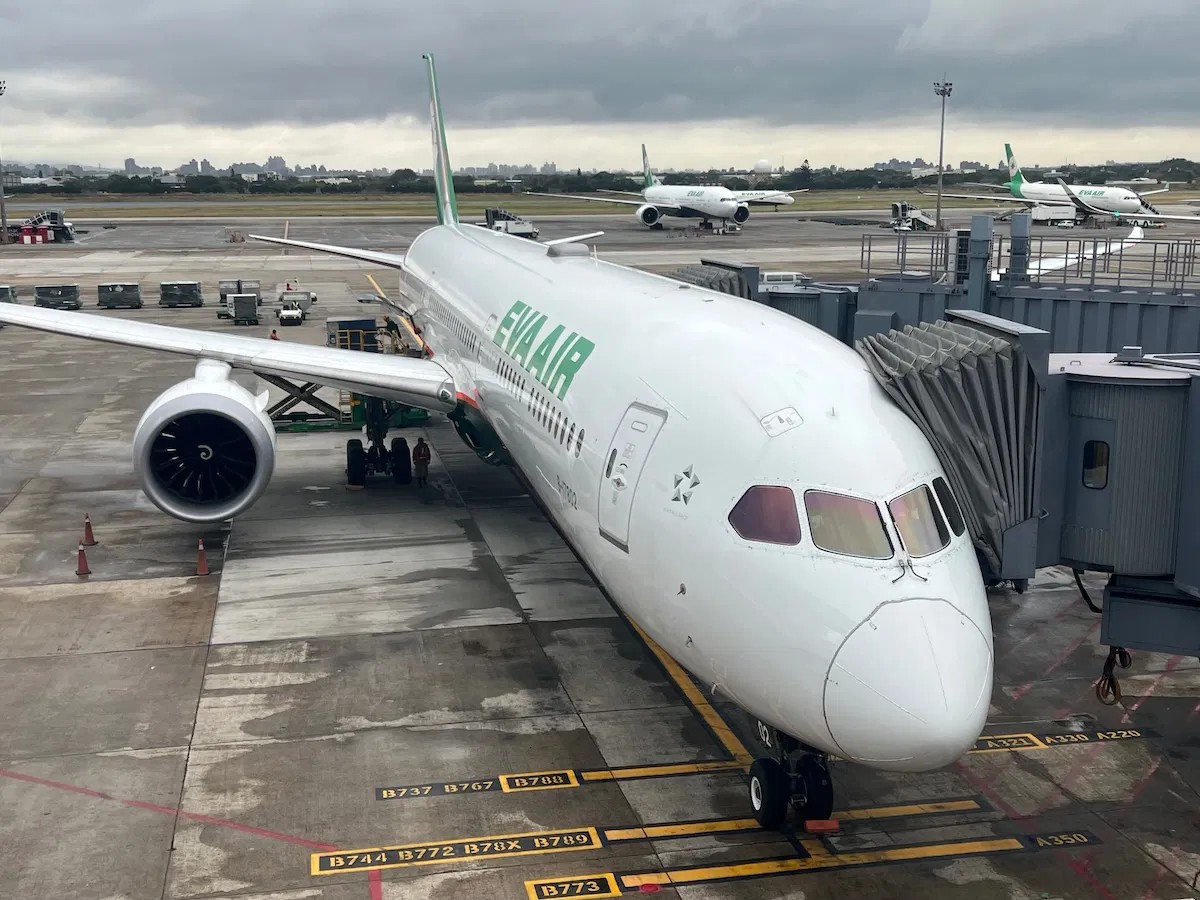
EVA Air has announced plans to launch a new four-times-weekly service between Taipei (TPE) and Washington Dulles International Airport (IAD) beginning in July 2026. The route, operated with Boeing 787-9 aircraft, will be among the airline’s longest, covering 7,864 miles and potentially taking longer than its Houston (IAH) service due to airspace restrictions.
Route Details and Aircraft Configuration
The new route will utilize a three-class 787-9 configuration, accommodating 278 passengers: 26 in business class, 28 in premium economy, and 224 in economy. While the exact launch date remains unconfirmed, EVA Air expects the schedule to mirror its existing Taipei-New York (JFK) service, featuring evening departures and arrivals.
Strategic Rationale for Expansion
EVA Air’s decision to add Washington Dulles as its tenth North American destination is driven by several factors. Primarily, the airline cites high demand from business travelers in the political, military, financial, and technological sectors concentrated in the Washington D.C. area.
The airline also anticipates roughly 60% of passengers on the new route will be transit travelers originating from other Asian and global destinations, leveraging EVA Air’s established network. The flight’s viability is further enhanced by its Star Alliance partnership with United Airlines, which operates a major hub at Dulles, allowing seamless connections within the U.S. and beyond.
Competitive Landscape and Market Factors
Taiwanese aviation is highly competitive, with EVA Air facing rivalry from China Airlines and Starlux Airlines. Launching the Washington Dulles route allows EVA Air to secure a first-mover advantage over its competitors. Despite a relatively small Taiwanese population (14,000) in the Washington D.C. area, the airline believes the overall business and transit demand will sustain the route.
The expansion into Washington Dulles signals EVA Air’s continued commitment to strengthening its North American presence and capturing a larger share of the lucrative transpacific market.
EVA Air’s decision underscores the growing demand for air travel between Asia and the U.S. East Coast, as well as the airline’s strategic positioning within the Star Alliance network to maximize connectivity and revenue potential. The route is expected to be commercially viable due to a mix of point-to-point passengers and connecting traffic, solidifying EVA Air’s position as a major global carrier.