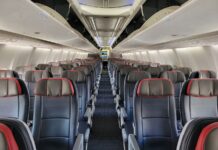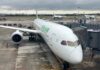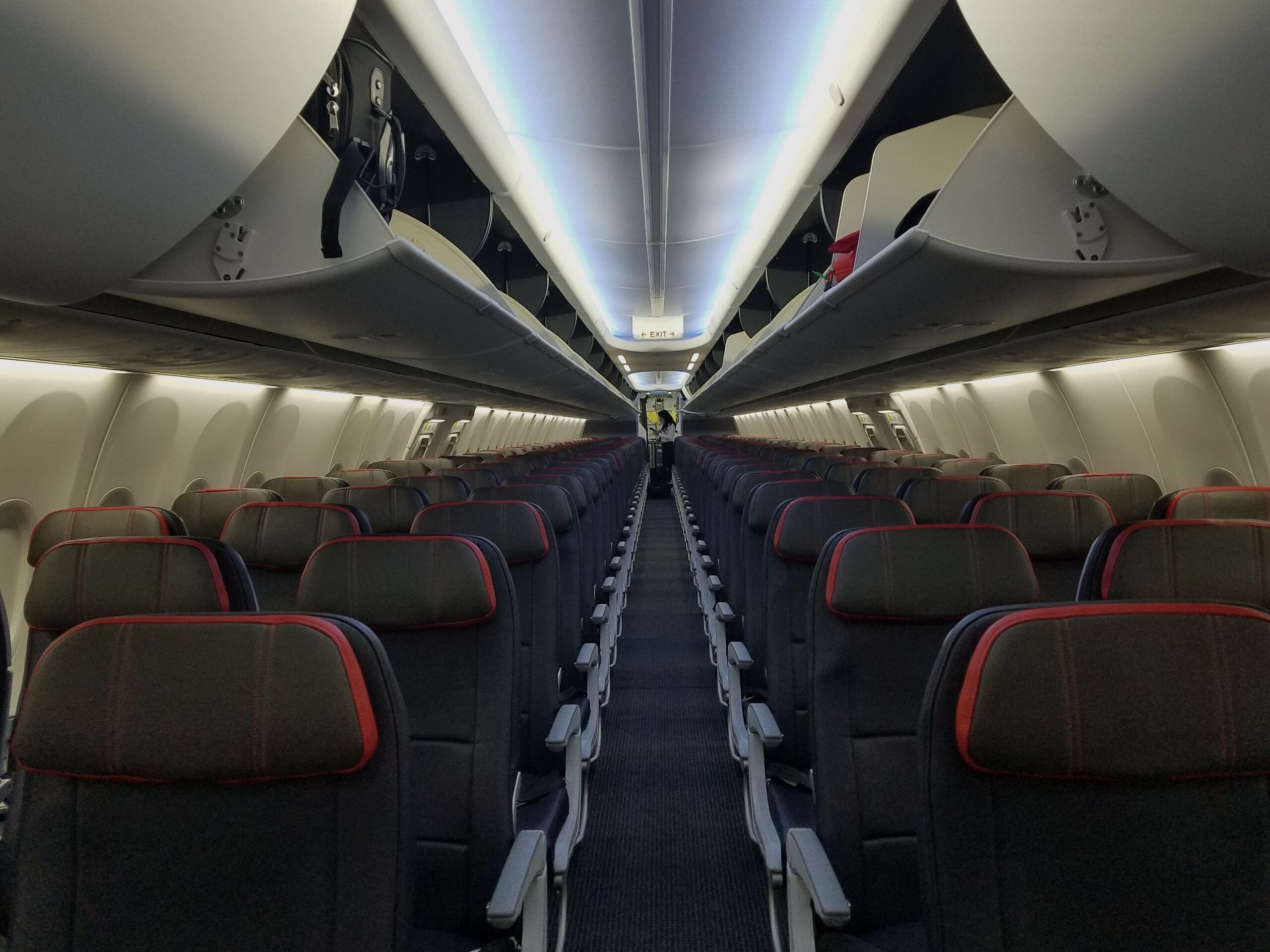
An American Airlines flight from Miami to Quito, Ecuador, was forced to make an emergency U-turn over Cuba on Saturday night after a passenger became violently disruptive. The Boeing 737 MAX, flight 2259, declared a 7700 emergency code – used for hijacking or similar threats – and returned to Miami approximately 74 minutes into the journey.
The incident was severe enough that the aircraft went into a temporary “lockdown” due to the passenger’s behavior, which required at least four people to restrain them. A Level 4 disturbance was reported on board, indicating a high degree of risk and chaos. Upon landing, technicians inspected the plane’s brakes to ensure safety, as the aircraft would have been significantly heavier than normal due to the remaining fuel load from the aborted flight.
This incident highlights a growing trend of unruly passenger behavior in air travel, with several similar cases occurring recently. Just months prior, another American Airlines flight experienced a passenger attempting to harm their father with poison and attacking crew members, resulting in the individual being restrained with duct tape. Another passenger was similarly restrained after attempting to open an emergency exit mid-flight.
The recurrence of such events raises questions about security protocols, mental health screening for passengers, and the pressures that contribute to extreme behavior in enclosed travel environments. These incidents disrupt operations, endanger crew and passengers, and underscore the need for improved strategies to prevent future occurrences.
Ultimately, these events reflect the unpredictable nature of human behavior and the challenges of maintaining order in high-stress environments like commercial aviation.