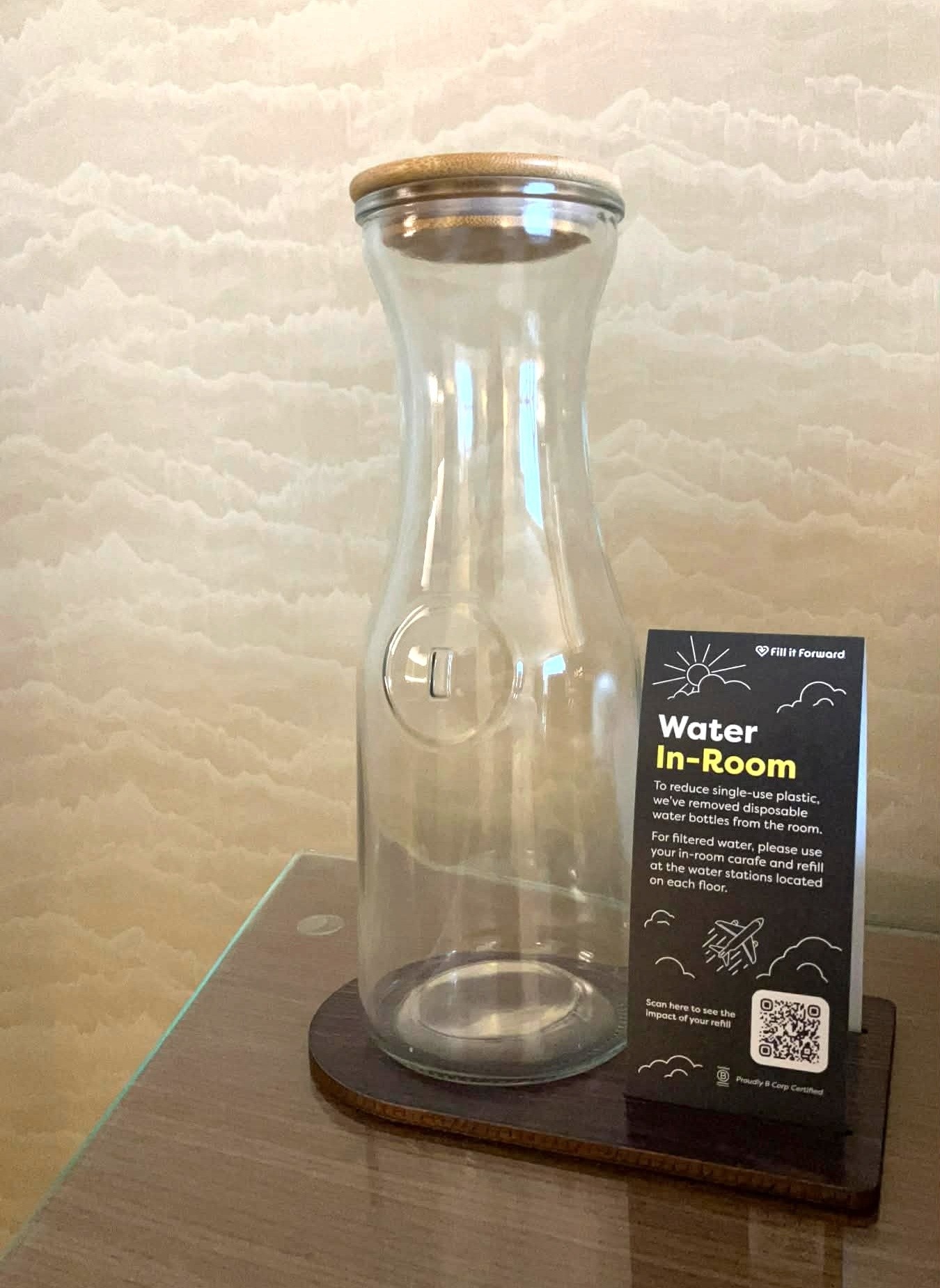
A recent shift in guest amenities at the Westin Detroit Airport has sparked a debate regarding the thin line between environmental responsibility and aggressive cost-cutting. The hotel has replaced its traditional complimentary bottled water with an empty glass carafe, instructing guests to refill it at communal water stations located in the hallways.
While the hotel frames this move under its “B Corp” certification and “Fill it Forward” initiative, the change is raising significant questions about service standards and the true intent behind “green” hospitality.
The Guest Experience Gap
For travelers, particularly those staying at airport hotels who are often exhausted and dehydrated, the removal of in-room water is more than a minor inconvenience; it is a degradation of basic hospitality.
The transition from sealed, predictable bottled water to a communal refill system introduces several points of friction:
- Convenience vs. Effort: Guests must now leave their rooms to access hydration, turning a basic amenity into a “hallway errand.”
- Sanitation Concerns: Relying on reusable glass carafes and public stations raises questions about cleaning rigor and the perceived hygiene of the water provided.
- Perceived Value: At premium price points—sometimes exceeding $500 per night—the removal of low-cost items can make a luxury stay feel “cheap,” undermining the brand’s prestige.
The “Greenwashing” Dilemma
The core of the controversy lies in whether these changes are driven by genuine environmentalism or simple revenue optimization. Critics argue that if the primary goal were truly to reduce plastic waste, hotels could implement more seamless, high-quality alternatives, such as:
- Boxed water or canned water options.
- Sealed glass bottles provided in the room.
- A hybrid model offering one complimentary bottle alongside refill stations.
By choosing the least convenient option for the guest, hotels risk being accused of “greenwashing” —using environmental rhetoric to mask the removal of services that once distinguished full-service hotels from budget alternatives.
The Erosion of Brand Equity
This trend reflects a broader shift in the U.S. hotel industry. Major chains are increasingly stripping away small, inexpensive amenities—ranging from bottled water to daily housekeeping and bedside alarm clocks—to boost short-term margins.
This strategy presents a long-term risk to brand equity. When the “predictability of quality” disappears, the value of the hotel brand diminishes. If a premium brand begins to feel indistinguishable from a select-service property or an Airbnb, guests lose the incentive to book directly through official channels, ultimately devaluing the very brands the chains are trying to expand.
“When the brand no longer stands for quality and predictability, guests no longer go to the website to book properties carrying its flag.”
Conclusion
The move toward “sustainable” amenities is a double-edged sword. While reducing plastic is a necessary global goal, doing so by increasing guest effort and decreasing perceived value may lead to a permanent decline in brand loyalty and hospitality standards.