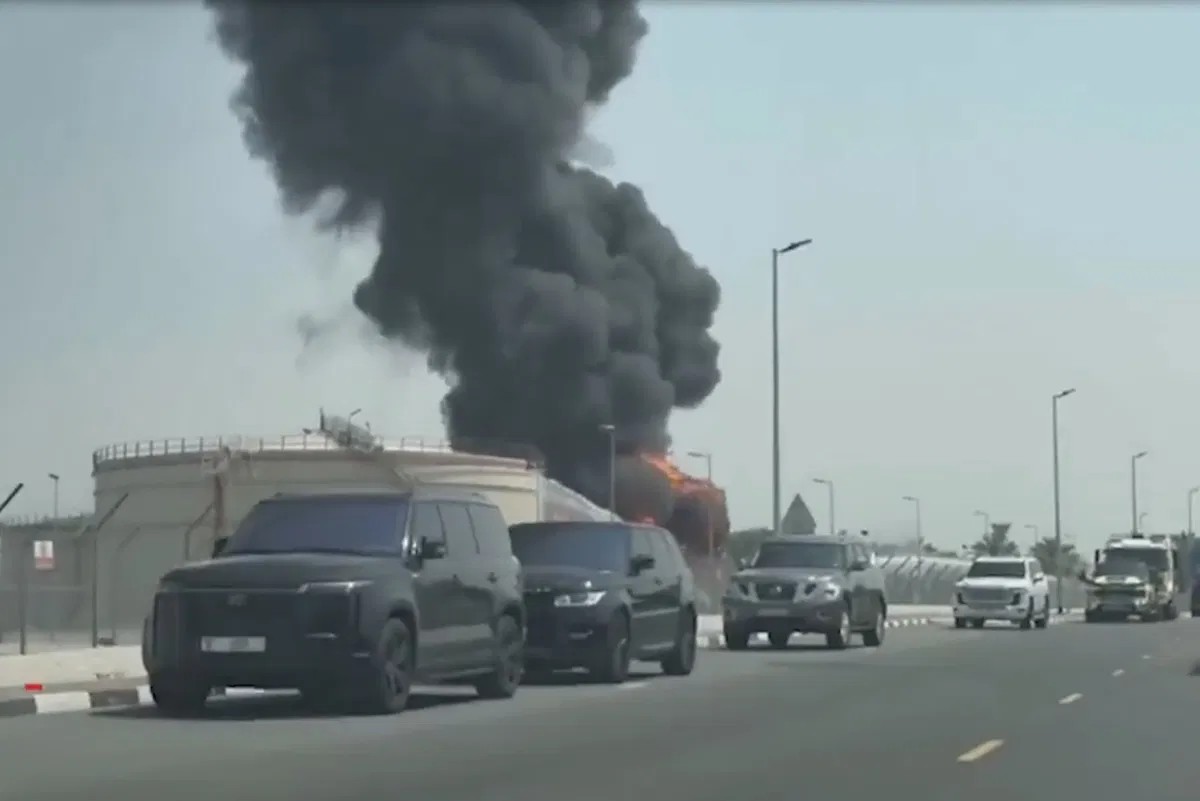
Recent escalations in regional conflict have led to a significant disruption in air travel, with Dubai International Airport (DXB) facing repeated attacks that culminated in the suspension of all foreign airline operations. The incidents, beginning in late February 2026, raise serious questions about the stability of critical infrastructure in the United Arab Emirates.
Repeated Drone Attacks Disrupt Operations
On March 16, 2026, Dubai Airport sustained its third drone attack in as little as three weeks. The latest incident involved a drone strike near the airport’s fuel storage facilities, triggering a fire that took over twelve hours to contain. This follows earlier attacks on February 28th, where a drone directly hit the terminal, and on March 7th, where another drone narrowly missed both the terminal and an aircraft.
These attacks have forced repeated operational suspensions, though the full extent of the damage remains unclear due to tight government control over information.
Foreign Airlines Banned Amid Safety Concerns
In response to the latest attack, Dubai authorities have suspended all flights operated by foreign airlines “until further notice.” A memo circulated to international carriers cited “the prevailing situation within the region and in the interest of the safety of airlines, crew, passengers, employees, and the public” as justification.
The decision to allow domestic carriers like Emirates to continue operating while banning foreign airlines remains unexplained, although some speculate that it may be related to fuel availability.
Emirates Flights Diverting for Refueling
Following the reopening of the airport, many Emirates flights have been observed making additional stops en route to their destinations. While no official reason has been given, this is widely believed to be a workaround for limited fueling capacity caused by the damage to the airport’s fuel tanks.
This suggests a significant constraint on Dubai’s ability to fully resume normal operations, even as it prioritizes its own carriers.
Long-Term Implications for Dubai’s Aviation Hub Status
Dubai’s status as a global aviation hub relies heavily on its reputation for safety and reliability. These attacks pose a serious threat to that image, particularly concerning its role in “sixth freedom” traffic – the carriage of passengers between two points via a third location.
The repeated disruptions could lead to long-term damage to confidence in Dubai as a transit point, potentially shifting traffic to competing hubs. The region has seen conflict before, but this level of direct targeting is unprecedented for the UAE.
“The UAE has always been well regarded for safety, despite the conflicts that sometimes arise in the region. But this is unlike anything they’ve ever seen.”
The situation underscores the vulnerability of critical infrastructure to asymmetric threats and highlights the broader implications of regional instability on global aviation networks.
In conclusion, the drone attacks on Dubai Airport have triggered an immediate operational crisis and raise questions about the long-term viability of the city as a major international air travel hub. The suspension of foreign airline operations, coupled with the ongoing refueling challenges, suggests a prolonged period of disruption for the region’s aviation sector.