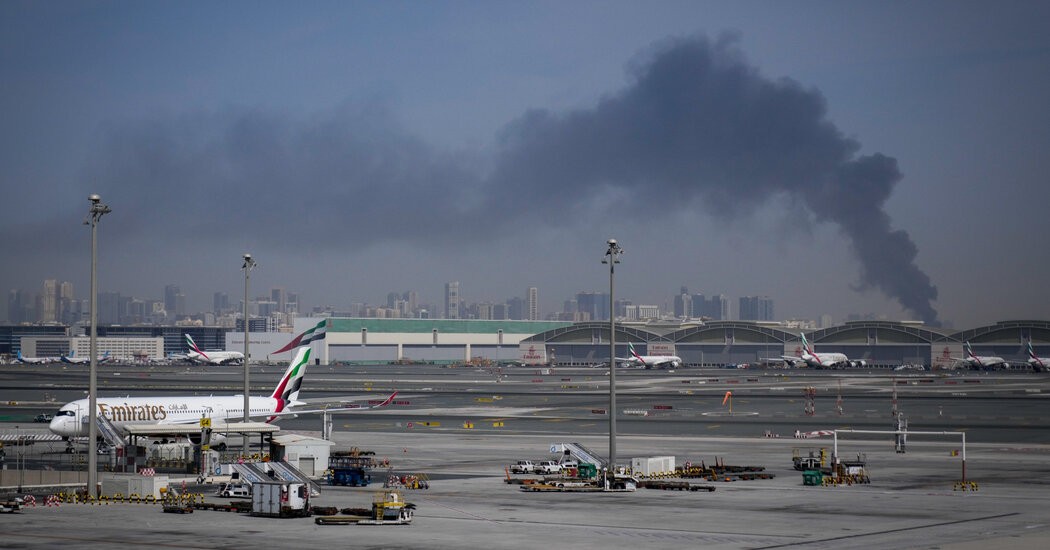
The ongoing conflict in Iran is severely impacting major airlines in the Persian Gulf, including industry giants like Emirates, Qatar Airways, and Etihad Airways. These carriers, built on decades of strategic growth, are now contending with the most significant operational challenge since the COVID-19 pandemic: tens of thousands of flight cancellations that have disrupted travel for millions worldwide.
The Strategic Importance of Gulf Hubs
For years, Emirates, Qatar Airways, and Etihad Airways have dominated long-haul transit routes due to their prime geographic location. The airlines’ home bases in Dubai, Doha, and Abu Dhabi sit at the crossroads of global air travel, making them ideal transfer points for passengers flying between continents – from New York to New Delhi, or London to Sydney. This strategic positioning has allowed them to capture a substantial share of the market.
Government Support and Operational Expertise
The success of these airlines isn’t solely due to geography. Strong financial backing from their respective governments, combined with hiring top-tier international talent, has given them a competitive edge. This is why some airlines in the region with similar geographic advantages have lagged behind.
The Scale of Disruption
Data from Cirium, an aviation analytics firm, shows that the disruption is substantial. Gulf carriers control roughly one-third of travel between Europe and Asia, and nearly half of all flights between Europe and Australia/the Southern Pacific. Last year alone, 227 million passengers transited through the region, highlighting the critical role these airlines play in global connectivity.
Implications and Recovery
The current crisis underscores the fragility of relying on concentrated air travel hubs. When major airports or routes are disrupted, the entire system falters. The long-term effects on passenger confidence, airline finances, and route restructuring remain uncertain.
The future viability of these airlines will depend on their ability to adapt to geopolitical instability, diversify routes, and potentially restructure operations to mitigate future disruptions.
The Persian Gulf airlines have proven resilient in the past, but the severity of this crisis demands a strategic response to ensure long-term sustainability.