There’s a lot more to Bologna than just pasta and pork rinds. This is a vertical city.
The skyline is dominated by around 200 medieval towers. Most of them were built in the 12th and 13th centuries. It is not made for beauty. They were made for war.
Think of them as your personal fortress. Wealthy families compete for height. A taller tower means more power. These serve two purposes. Defense against neighbors. Attack on rivals.
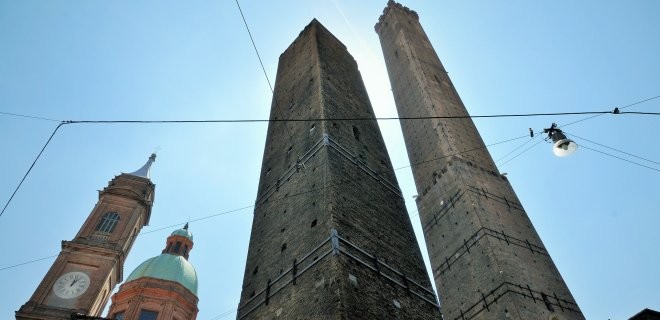
Now there are only a few left. The most famous combination is Asinelli and Garisenda.
Asinelli is the taller of the two. It is slightly skewed. Garisenda is thin. It is inclined.
Visiting these towers is a test of physical strength. Climb the narrow wooden stairs. The air is getting thinner. This view is worth seeing.
Why you should climb the towers of Bologna
You might wonder why climb when you can just look up.
The answer is perspective. Bologna sits in a bowl. Bricks and stones can be seen from the street. From above you can see the whole plain.
These towers are the oldest landmarks in the city. They define the historical center. Walking on the lower porch feels different when you know what’s there.
Garisenda is dangerous. It is tilted at an angle of 4 degrees. For security reasons, public access is prohibited. You can only see it from the street.
The Asinelli is open. There are 498 steps. The ascent takes about 30 minutes. Stop at the observation deck. The stairs are very narrow. Not suitable for people with claustrophobia.
How to visit Asinelli Tower
Let’s get there early. Tourists arrive by noon.
The tower is located near Twin Towers Square. Located in the heart of the old town.
Tickets cost around 10 euros. Pay at the ticket office. Cash or card accepted.
Please bring water. The climb is steep. Wear comfortable shoes. Large luggage is not allowed.
The ascent is slow. The stairs are uneven. Some steps are missing. You pass other climbers. Some stopped for a break. Some people turn back.
At the top you can enjoy the panoramic views. You can see the red roofs of Bologna. The Apennines can be seen in the distance. On a clear day you can see for miles.
The descent was easier, but still tiring. Your legs will burn.
Is it safe to climb any tower?
Only Asinelli can be climbed. Garisenda is for viewing only.
There are also other towers in the city. Some are private homes. Some are businesses. You can’t climb them.
Asinelli is the only public option. It is the tallest existing tower in Bologna. The height is 97 meters.
The height of Garisenda is only 48 meters. It looks like it’s about to fall. It doesn’t. It is very stable. Just leaning.
Where else can you see medieval architecture?
Besides the towers, Bologna is full of history.
The University of Bologna is the oldest university in the Western world. Founded in 1088.
Piazza Maggiore is the main square. Surrounded by pal
Basilica of San Petronio: a Gothic giant
Enter the Basilica of San Petronio and you immediately feel smaller. It is an impressive building with a height of 132 meters and a width of 66 meters. These figures are not just for demonstration. They secured the building’s reputation as the fifth largest church in the world. Although there is a sense of unity on the outside, the internal history is complex. The cathedral was finally completed in 1479, but the story did not end there. Since then, it has been restored, renovated and rebuilt several times, leaving behind an architecture that is a testament to Bologna’s resilience.
For tourists, this is a must stop. Whether you’re a local or a visitor from around the world, the Basilica of San Petronio is a central pillar of the city’s cultural life. But don’t just look at the walls. look up
At the back of the ship are frescoes by artists such as Parmigianino. These depict scenes from Dante’s Divine Comedy, particularly Paradise and Inferno. These are not just paintings. These are visual interpretations of the Italian poet’s most famous works. Take your time here. Read the plaques. Let the imagery sink in before you move on.
Once you have absorbed the interior, it’s time to climb to the roof. Yes, there is a terrace.
The view from the top of the Basilica of San Petronio is one of Bologna’s best kept secrets. It offers panoramic views of red tiled roofs, twin towers and the surrounding plains of Emilia-Romagna. It’s quiet there. The bustle of the square below gradually subsides. You are above the city, literally and figuratively. If you are visiting Bologna for the first time, now is the time to orient yourself.
Piazza Maggiore: The heartbeat
Descending from the roof takes you back to ground level and straight to Piazza Maggiore, the heart of it all. It’s more than just a square. This is Bologna’s living room.
Surrounded by the cathedral, the City Palace and the Basilica of Our Lady of San Luca (visible in the distance on a clear day), the square is where history meets everyday life. You’ll see students carrying backpacks, couples sharing ice cream, and locals playing chess on the porch. The atmosphere is electric yet relaxed.
Why do you come here? For the architecture alone, it is worth the trip. The Basilica of Santo Stefano (often referred to as “seven churches in one”) is just a short walk away, but the highlight is Piazza Maggiore. This is the starting point for your trip to Bologna.
Plan to spend at least an hour here. Sit on the steps of the Palazzo Comunale. As the sun sets behind the Asinelli Tower, you can see the shadows lengthen. Listen to the sound of plates crashing in a nearby restaurant. This is the vibe of Bologna: Warm, inviting and deeply rooted in the past.
If you’re planning a trip to Italy, skipping Bologna is a mistake. If you are in Bologna, you cannot ignore Piazza Maggiore. It is the center. It’s the heart. This is where you get to know the city.
Piazza Maggiore is the heart of Bologna. You can’t miss it. It is vast, chaotic and dynamic. This square has been the heart of the city since the 15th century, when the historic buildings around its edges were first built. In the middle of it all, the energy never goes away. People come and go even at night. During the day it is full of locals drinking coffee and tourists wondering where to start. Here events happen one after the other. Concerts. Markets. Political rallies. It is a space that can respond to all the changes in the city.
This square is within walking distance of most of Bologna’s must-sees. No need for a bus. You don’t have to plan your day around transportation. Just go out and walk around. The historic center is compact. Landmarks are very close. This layout will change the way you experience the city. You linger. You backtrack. You find a gelato shop you didn’t know existed.
Palazzo Re Enzo
The original Palazzo del Podestà was increasingly crowded. In 1245, the city needed more space to cope with its chaotic administration. So they built an annex. At that time the locals simply called it New Palace.
It is now known as Palazzo Re Enzo.
The building has been expanded and renovated over the centuries. It still stands in Bologna, with its 13th-century skeleton intact. It’s one of the buildings you can’t miss while walking through the historic center. This is more than just a museum piece. It is a hard fact that Bologna existed long before it became known for its gastronomy.
Why it’s important for travel
Most tourists rush to see the two towers or eat and drink inside the quadrangle. They skip the palace. This is wrong.
The palace is more than just a building. Here Emperor Frederick II’s son Enzo of Sardinia was imprisoned for 26 years. He never escaped. He died within its walls. The silence there was heavy. You can feel the weight of a man who is a political pawn in a game much bigger than himself.
“This palace reminds us that history is not always victory. Sometimes it is imprisonment.”
What did you see inside?
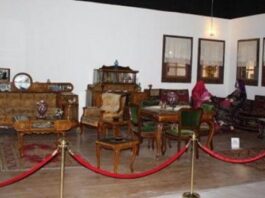
On the ground floor is the Museum of the History of Bologna. This is not a bunch of old swords gathering dust. See the carefully planned evolution of this city from a medieval municipality to a modern university town.
You will find:
– The Stemma : City emblem carved in stone. It has been around since the 13th century.
– Medieval artifacts : Tools, documents and everyday objects that show people’s life during the construction of the palace.
– The building itself : Look at the outside. Masonry and stone combinations are typical of Bologna’s medieval design. The upper windows is simple but elegant. It is not made for luxury. These are made for power.
Logistics: when and how to go
The museum is typically open from Tuesday to Sunday from 9:00 a.m. to 7:00 p.m. Closed on Mondays. Tickets are cheap, about 5 euros for adults. Students get in for less. There are often discounts for seniors and children.
It takes about an hour to read the labels. You can also stay longer if you are interested in local history. The exhibition is presented in Italian and English. If you’re not good at Italian, don’t worry. The visuals are the most important.
How to get there
The palace is located in the city center. It is located near Piazza del Nettuno and the Palazzo del Podestà. You can walk from almost anywhere in the historic center. The terrain is flat. There are no stairs. Easy access.
Why should you care?
Bologna is a city with many layers. The food is superficial. The tower is the horizon. The palace is the foundation.
Here the political heart of the city once beat. Prisoners are kept here. Laws are made here. If you want to understand bologna, you can’t just eat lasagna. You need to stand in the room where Enzo was held. look at the
Tracing the Bologna Millennium
The Bologna History Museum is more than just a dusty archive. It is a museum full of history. It is a direct window into the soul of the city. You came expecting a static presentation, but you get a story. Exhibitions are not just about presenting objects. They will tell you about Bologna’s recent history and its distant echoes. It’s layered. deep.
What’s one of the best ways to digest all of history? Sit down. You watch. The museum shows visitors an animated film that summarizes Bologna’s thousand-year timeline into an easy-to-understand visual story. This is very clever. It makes the complex feel accessible.
The building itself has also been renovated. It looks very modern now. clean lines. Better lighting. It fits the city’s reputation as a mix of old and modern.
Costs and logistics
Planning is important, so let’s talk numbers.
The entrance fee to the Bologna History Museum is 10 euros. From there it costs around 350 Turkish Liras, but if you want to two hours of immersive context, it costs 10 euros. When you think about the price of a decent lunch, you can understand the significance of this city.
It is worth noting that Bologna’s history is often obscured by its neighbors. Venice has canals. There were Renaissance masters in Florence. But bologna? It is the oldest university town in the Western world. The museum helps you understand this weight. It’s not just about old buildings. It’s about the idea of the university itself, which started here.
Why visit?
You might be wondering if this fits your tight travel schedule. If you are traveling between Rome and Venice, why stop here?
Because context changes everything. Then when you walk through Bologna’s porticoes, you see more than just architecture. You see the results of centuries of trade, conflict and academic revolution. Museums provide the “why” behind the “what”.
This animated film is a highlight for many. This is not a boring lecture. This is a visual journey. It connects the dots between the Etruscans, the Romans, the Middle Ages and modern times.
Practical tips
- Time it right: Reserve about 1 hour. Maybe more if you linger in the galleries.
- Combine it: The museum is located in the city center. It can easily be combined with a visit to the twin towers or a walk along the porticoes.
- Skip the rush: It’s not always crowded. If you visit in high season, you might have the space to yourself. This is unusual in Italy.
Outside the museum
Due to its gastronomy, Bologna is often called “La Grassa” (the fat), but it is also known as “la dotta” (the learned). This museum reinforces this duality. This is not just a place where you can admire ancient swords and pottery. It’s a place to understand the intellectual heartbeat of the city that shaped Western education.
If you want to learn more about Italy’s lesser-known historical centers, you’ve come to the right place. Ticket prices are reasonable. The rewards are great.
You leave with more than just photos. You left with a story. In a country where history is everywhere, knowing what stories to listen to can make all the difference to your sightseeing and travel experience.