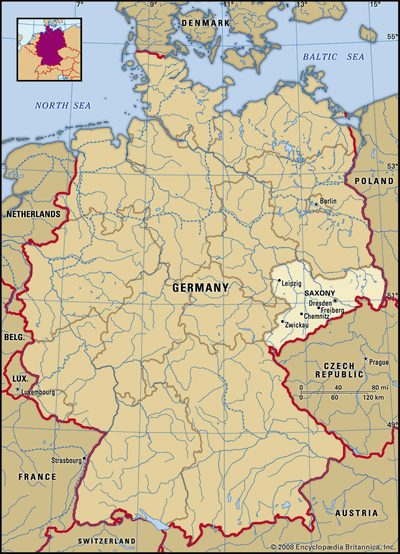
If you’re planning a trip to East Germany, Saxony should be at the top of your list. It’s not just the state; It is a landscape characterized by sharp contrasts. In the east, it borders Poland. In the south, just beyond the mountains, lies the Czech Republic. The north is bordered by Brandenburg, while Bavaria, Thuringia and Saxony-Anhalt border the rest. The capital Dresden serves as the cultural anchor, but the real attraction is the terrain. More than 4 million people live in this area, which covers 7,109 square miles. The density is high, but the space feels open, especially if you know where to look.
Geography and the Saxon Switzerland National Park
The map shows that Saxony is hilly. The reality is more dramatic. The Northern European plain covers only the extreme northern strip. Most of the country rises to the Ore Mountains, commonly known as the Ore Mountains. This area extends about 100 miles along the southern border. Here you will find altitudes of over 4,000 feet. The climate becomes harsher the higher you go.
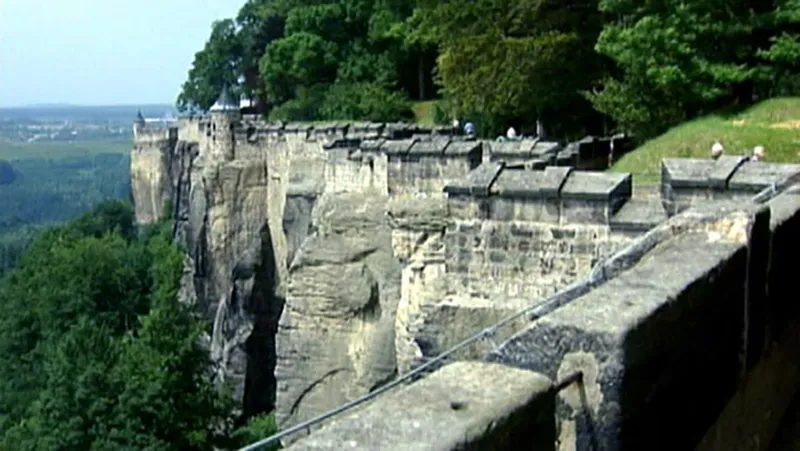
However, Saxony-Switzerland is an excellent destination for every traveler. It is located northeast of Dresden and hugs both banks of the Elbe. This is not just a landscape; It’s a national park. The landscape is a mix of deep gorges and steep sandstone hills. It’s picturesque in a way that seems almost staged, though completely natural. The Elbe cuts through the country from southeast to northwest, shaping each valley. The Mulde, a major tributary, contributes to the hydrology, but the Elbe is the lifeline.
Saxony-Switzerland offers some of Europe’s most spectacular sandstone formations, easily accessible by public transport from Dresden.
Urban centers and the Sorbian minority
Saxony is one of the most populous federal states in East Germany, although the number has been declining since the mid-20th century. Between 1960 and 2000, the population fell by a fifth. The fall was real. Today, more than 90 percent of the residents are ethnic Germans.
However, there is a special cultural category that is often overlooked by casual tourists: the Sorbs. They are a native Slavic minority living mainly in Lusatia. Their presence gives the area a unique historical structure. You can see their influence in place names, festivals and traditional crafts. Outside of this small community, the foreign population is relatively small compared to West German cities such as Berlin or Frankfurt.
Leipzig and northern agriculture
As you head north from Dresden, the mountains give way to fertile plains around Leipzig. This region is one of the most productive agricultural regions in East Germany. The soil is rich. You can see wheat, barley and sugar beet fields stretching to the horizon. Rape, peas and fodder plants alternate according to the seasons.
Dairy products are big here. Butter and cheese production is an important local industry. The closer you get to the Ore Mountains in the south, the lower the fertility drops. The pastures there support cattle breeding instead of agriculture. Forestry also has its own role, especially in the hilly western part. As you drive through North Saxony, pay attention to the patchwork of farmland. It’s a stark contrast to the harsh south.
the Ore Mountainsti mining heritage
You can’t talk about Saxony without discussing its industrial past. the Ore Mountains has a long history of mineral mining. Uranium was mined here for decades, especially during the Cold War. This industry has stagnated. This was replaced by expensive cleaning. The goal was to reduce mining waste pollution, especially in Aue and Zwickau.
Today, lignite is the only important raw material that is still mined in significant quantities. The companies are located in Lausitzfeld near Hoyerswerda and in the central German field near Leipzig. Employment in this sector has fallen sharply since German reunification. Production volumes have decreased.
However, there is a silver lining. Air quality has improved dramatically as mining and the use of lignite have decreased. The fog that once hovered over industrial areas is disappearing. For tourists, this means clearer views of the Ore Mountains and healthier air for hiking. It is a tangible sign of environmental recovery in an area heavily affected by mining.
When and how should we visit
Timing is important. Saxon Switzerland National Park can be accessed all year round, but the best hiking conditions are in spring and autumn. In summer it can be crowded, especially near the Bastei bridge. Winter brings snow to the Ore Mountains and turns the landscape into a ski resort, although the roads can be difficult.
Movement is uncomplicated. Dresden has good air and train connections to Prague and Berlin. From there, local trains go to Leipzig and the foot of the Erzgebirge. Renting a car gives you the flexibility to explore smaller villages, but the train network is reliably accessible

Industrial change in Saxony: From textile industry to technology
Saxony’s economic landscape after reunification is a study in contrasts. The industrial sector suffered greatly and lost jobs and capacity as old structures adapted to the difficulties. But despite the scars, the state is still one of East Germany’s economic powerhouses. In fact, it is one of the few regions in the East where sectors of the new economy have seen real growth. For example, microelectronics has expanded significantly and offers a counter-narrative to the general stagnation. But don’t let the growth numbers fool you into thinking the pain is over. Unemployment has been stubbornly high since the mid-1990s and is a constant shadow over the recovery.
Today, the range of industries is wide. Electronics, machines, medicines and car parts form the backbone of modern production. Food processing, publishing and textiles are still included, although their importance has changed over time. However, if you look at the story, the story starts with fabric. Textile production was once the crown jewel, and was heavily concentrated in Chemnitz and Zwickau, as well as smaller towns that grew up around the factories. Those days are largely over. Although production continues to some extent, employment in this sector has fallen sharply. It is now a ghost industry, seen primarily in the architecture, not the workforce.
Precision in Dresden and Leipzig
Dresden, the state’s largest city by area, has reinvented itself for high-tech manufacturing. It’s not just about culture anymore; It is a hub for optical and electronic precision equipment. Here you will also find production facilities for silicon chips, which contribute to the general boom in microelectronics. For travelers interested in the intersection of history and cutting-edge technology, Dresden offers a tangible glimpse into this transition.
By comparison, Leipzig is the most populous city and has a stronger industrial pulse. It is a center of printing and publishing – a nod to its historical roots – and a center of heavy engineering. The automotive industry is also important here. If you head south towards Zwickau, you will find another important car center in the town of Mosel. The supply chain is deep, and the presence of these factories affects everything from local employment to the everyday rhythm of the region.
Traditional handicraft in the mountains
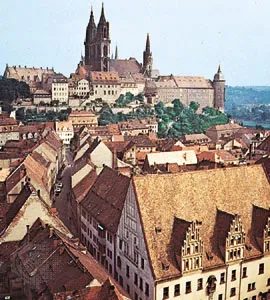
Not all Saxony’s manufacturing output is elegant and digital. In the Erzgebirge, especially in towns like Seiffen, the tradition continues. Meissen is, of course, world famous for its porcelain and ceramics, a historical center where fine products are still made. But take a closer look at the smaller villages. You will find workshops where traditional wooden toys and Christmas decorations are made. It’s not just about tourist traps; they are part of a continuous craft tradition that has withstood industrial upheavals. For the tourist, visiting these areas offers a different perspective – skills that have not been lost, but adapted. The economic picture is at the same time complex, fragmented and durable.

The heart of Saxony’s shopping network
Leipzig, Dresden, Chemnitz, Plauen, Zwickau and Meißen form the urban backbone of the region. These are not just places on a map; They are the hubs of regional services that keep the local economy going. However, if you are planning a trip or a business venture, two cities stand out: Leipzig and Dresden. Both have international airports and offer direct access for travelers who value convenience.
However, Leipzig operates on a different frequency. It is a national transportation giant. Its location at the intersection of important railway and highway routes makes it the logistics center of the country. This is not a new story. For centuries, Leipzig has hosted large fairs that have attracted buyers and sellers from all over Europe.
Shopping and infrastructure in Leipzig
The real change happened after German reunification. Retailers saw an opportunity. Leipzig’s central location on the transport network, together with the region’s large population and the temporary relaxation of land use rules, triggered a building boom. Large shopping centers in the suburbs were created, which turned the suburbs of the cities into shopping centers.
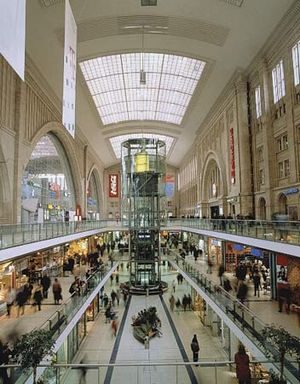
However, the activity does not only take place on the outskirts of the city. The city’s huge inner-city train station has been completely renovated. It’s not just a place to catch a train anymore. It’s a shopping mall. Travelers can browse quality shops before the next connection. The station has two purposes: a traffic center and a commercial center.
Leipzig’s central train station has been converted and serves as both a train station and an attractive shopping area.
Because of this combination of trade and transit, Leipzig remains a popular stopover for travelers traveling through Germany. It provides more than a platform; it offers an experience. For travelers, this means they can eat, shop and travel in one continuous flow. For companies, this means visibility and accessibility that smaller cities simply cannot match.
Beyond the Big Two
Although Leipzig and Dresden are in the headlines, other cities play an important role. Chemnitz and Zwickau are industrial bases with deep roots in the manufacturing sector. Plauen has a long history in the lace and textile industry. Meissen is famous for its porcelain and attracts tourists interested in craftsmanship and history. Each supports the regional service sector by providing specialized workers and local expertise to support larger urban centres.
As you drive through the area, you can see the infrastructure that supports these cities. The roads are well developed and the train connections are frequent. You can move from one city to another without feeling like you’re leaving the economic zone. This connectivity is a key advantage for anyone planning a multi-city trip.
Why it matters for your trip
Understanding this network will change your plans. You don’t have to think of each city as a separate destination. For example, you can settle in Leipzig and travel by short trains to Dresden, Meißen or Chemnitz. The infrastructure enables day trips. Leipzig and Dresden airports offer flexibility in terms of arrival and departure, especially if you are traveling from outside Germany.
Due to Leipzig’s trade fair history, the city’s event calendar is also characterized by large events. If you visit during the fair, prices may increase and hotels are booked quickly. Planning around these dates can save you money and stress. Alternatively, visiting between fairs offers a quieter and more authentic overview of the city’s everyday life.
The renovation of the Leipzig train station is proof
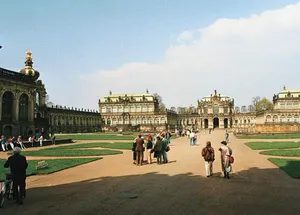


Dresden was not left in ruins. Not really.
Anglo-American bombing in 1945 reduced much of the city to ruins, but an obsession with restoration kept the spirit of its former glory alive in the minds of planners and architects. In the years after the war, the reconstruction of the Saxon Royal Palace, the Zwinger and other important sites began. German reunification opened the floodgates for finance. The Frauenkirche rose again, a testament to how quickly resources could be mobilized after the borders were opened. Today, the Dresden Elbe Valley is a UNESCO World Heritage Site in 2004. It includes the castle gardens, the Frauenkirche and the historic center and combines baroque elegance with the natural curve of the river.
Why the Elbe Valley is important on your itinerary
You don’t just drive through the Elbe. You cruise it. Or you walk it.
The valley has a special landscape density that can hardly be found anywhere else in Germany. Sightseers often base themselves in Dresden, but continue to move downstream. Pillnitz Castle is a must. The terraced garden by the river, sloping down to the water, feels more Italian than Saxon. Radebeul is very close and has a completely different appeal. The Karl May Museum celebrates the author of Western novels, a special cultural export from the heart of Saxony. If you are planning a Elbe cruise, this section is the highlight. The water is calm, the vineyards climb the slopes and the architecture seems to have been preserved in an amber hue.
Beyond Dresden: border towns and shared heritage
Tourism in Saxony is not only about the capital. The eastern edge of the state offers a different texture.
Görlitz looks like a movie location. It is often referred to as “Little Berlin” and has hosted productions like The Grand Budapest Hotel. The medieval architecture is intact and was not affected by the leveling heavy bombardment of Dresden. Bautzen is equally fascinating, as its Sorbian culture gives the Germanic stone a Slavic touch. Freiberg offers mining history and cathedral views, while Meissen is famous for porcelain, a luxury that shaped the region’s prosperity for centuries.
Then there is Muskauer Park. This is not your typical city park. It was declared a UNESCO World Heritage Site in 2004 and was created by Prince Pückler-Muskau in the early 19th century. It is a masterpiece of landscape gardening, but it has a unique political status. The park is located on the border between Germany and Poland. It is jointly maintained by both countries and is a rare example of cross-border cultural heritage management. You can walk from one country to the other without noticing any change in the trees. The English Garden side is on the German side of the river Neisse; The Russian garden is on the Polish side.
Logistics for the traveler
You can move around the Saxony region easily by train. Deutsche Bahn effectively connects Dresden, Leipzig and smaller cities such as Görlitz and Bautzen. If you like the road, the roads in the Elbe Valley are scenic but can be narrow. Rental cars are
Politics and Power in the Modern State
Saxony’s government revolves around the Landtag, the state parliament, and a minister-president who usually emerges from the largest party within it. But the political landscape hasn’t always been smooth. In 2004, the election of extreme right-wing politicians from the National Democratic Party (NDP) to the state parliament caused real controversy. It wasn’t just a local squabble; it sparked concern across Saxony and the rest of Germany.
The 2004 election of the National Democratic Party signaled a deep political fracture that rippled far beyond the state borders.
Where to Study and Find Culture
If you are a traveler interested in academia or arts, Saxony is packed with options. Leipzig and Zwickau are both university towns. Dresden, Chemnitz, and Freiberg each host their own technical universities.
For culture, the action centers in two cities: Dresden and Leipzig.
Dresden is dense with history. You will find historic buildings, major museums, and significant musical groups all in close proximity. The city holds renowned art collections and the famous Semper Opera House. It is a heavy hitter for classical arts.
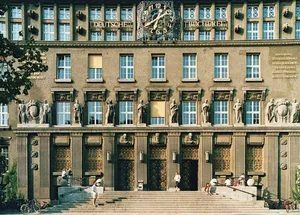
Leipzig offers a different vibe. It is home to the Deutsche Bücherei, one of Germany’s major national libraries. The city also hosts the Gewandhaus Orchestra, which enjoys national acclaim. Parts of the national Academy of Sciences are located here too.
The Road to Reunification
The modern state of Saxony is a product of 1990. It was re-created when East Germany reunified with West Germany. The new state pulled together the former East German districts of Dresden, Chemnitz (which was formerly called Karl-Marx-Stadt), and Leipzig. It also included a small slice of the Cottbus district.
These districts themselves were formed in 1952, carved out of historic Saxony. That region has been a key part of German history for nearly 2,000 years. Its importance really took off in the 15th century.
Saxony, and its capital Dresden, saw their best centuries from the 16th to the 18th. They prospered. But later, their relative power within Germany faded. The rise of Brandenburg-Prussia and the city of Berlin shifted the center of gravity.
Leipzig holds a special place in this narrative. The people there are proud of their role in late 1989. Massive, peaceful demonstrations in the city helped topple the communist dictatorship. Those protests ultimately opened the door for German unification.